-->
Showing posts with label Peter Bland. Show all posts

Monday, November 9, 2020

Something New

We feature each fortnight Nicholas Reid's reviews and comments on new and recent books.  

“WANTING TO TELL YOU EVERYTHING” by Elizabeth Brooke-Carr (Caselberg Press, $NZ24:99); “NOWHERE IS TOO FAR OFF” by Peter Bland (The Cuba Press, $NZ25); “MY HONEST POEM” by Jess Fiebig (Auckland University Press,  $NZ24:99); “THE SAVAGE COLONISER BOOK” by Tusiata Avia (Victoria University of Wellington Press, $NZ25)
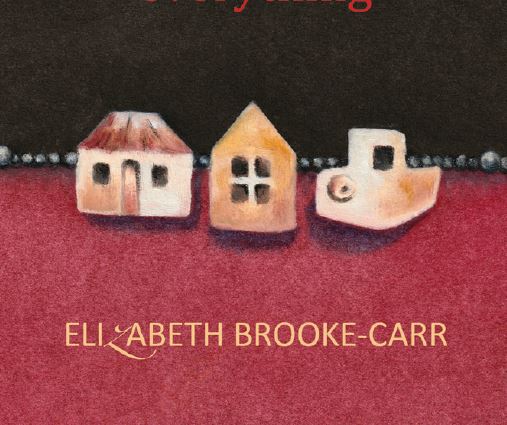


            Occasionally a collection of poetry, published by a small press, falls into your hands and suddenly and unexpectedly you realise that you are reading very good poetry. “Who is this poet I have never heard of before?” you ask. So you read all the notes surrounding the poems and you find out.

This was my experience when Elizabeth Brooke-Carr’s Wanting to tell you everything, a collection of 36 poems, was sent to me by Caselberg Press. As it turns out, this is not only the first published collection by Elizabeth Brooke-Carr, but it will possibly also be the last. Brooke-Carr died in 2019, aged 79. She had been writing poetry since the 1980s and some of her work had appeared in newspapers and magazines. Friends expected a collection to appear, but it was only after her death that a group of five women friends and fellow-poets got together, searched through her poetry folders, and assembled the poems that make up Wanting to tell you everything.

What is the special impact of these poems? At the very least, they all present a mature and experienced view of life, bearing in mind that Brooke-Carr was already in middle-age when she began writing poetry. As far as I can see, the women who edited these poems arranged them in three broad sections.

The first eight poems deal with childhood and family.

 The opening poem “Upright” is one of the poet’s very best. In six blank-verse stanzas it represents vividly a way of life now gone, depicting specifically a child doing homework at the bulky, square family table, but with the child’s mind wandering and seeing images in surrounding furniture. It is the precise observation of the child’s surrounding that makes it the powerful poem it is. There are childhood memories of the poet’s father ( “Many breakfasts since”, “Take as required”) and an attempt to reconstruct her brother as a child (“Memory of snow”). There is a childhood car journey and the dislocation of moving from one house to another (“A spot on the map”) and an affectionate memory of an old Clydesdale pulling a single-furrow plough, but years later replaced by new technology (“Nobby and Joseph”). “Geometry lesson” is a severe memory of high school. But “When bright red was eclipsed by silver shoon” is a more tender memory of the classroom. Brooke-Carr’s younger self is enchanted by hearing a teacher reading Walter de la Mare’s poem about the silver moonlight. Perhaps I am partial to this poem because, although considerably younger than the poet, I am of a generation that still heard regularly de la Mare’s poems recited by English teachers. I warm to the detail in Brooke-Carr’s poem where she admits that her young Kiwi self did not recognise all of de la Mare’s English vocabulary: “Your teacher is swaying a little, peering this way / and that as she reads. You know she’s walking / with the moon, and soon you catch up. / You’ve never heard of shoon, or casements, / but now you see them, glistening, reach out, / touch silver fruit on silver trees, step around / the sleeping dog, look up to doves.”

The next twenty-one poems concern art and the poet’s grown-up experiences.

 There are reactions to a famous painting by Goldie (“Monday afternoon with Ina”) and to a famous sculpture (“Pieta”) and to classical music (“Bethoven’s ghost”, “Demidenko’s fingers”) and to playing croquet (“Croquet”) and to romantic meetings with her husband or maybe with earlier boyfriends (“Out of the glare”, “Bannockburn sluicings” “Sparrrow antics in Arrowtown”). Often she reconstructs journeys through a precisely-presented South Island landscape with a glimpse of the Remarkables (“Thank you, fog”) or southern landscape seen from the air (“Whisky Echo Tango”) or the burial of culled wild geese (“All that remains is pressed flat”) or the straightforward image of “Quoin Point Road”. For some readers, the best sense-of-place poem will be the prize-winning “All this”, depicting a wild sea shore. Even in these poems, however, there is a strong sense of old age catching up. “Poolburn” is about visiting their “crib” (what most New Zealanders would call a bach) in a remote part of Otago. Brooke-Carr declares “All the days of our youth are behind us, / dust spiralling back along old roads / traversed; beneath seat belts clicked / across our chests there are years / we carry close”. Interestingly, this second section of poems includes a touching vignette of woman in decrepitude, suffering borderline senility (“Harsh Light”).

The final seven poems deal with the cancer that was killing Elizabeth Brooke-Carr and the death that she knew was approaching inevitably.

It is amazing how she can almost be witty while facing this situation in “On discovering your oncologist is a travel agent”. This poem, like “Upright”, the opening poem of the collection, in structured in neat, four-line, blank verse stanzas [or paragraphs] giving solidity, even solemnity, to statements even as the poet jests. The poems about her final experience in hospital have a hard realism to them in “Exhibit ABH1615”; or “The vein whisperer”, about an efficient nurse, or “Buzz cut”, where she feels the anguish of having her head shaved. In  “Black beret” she turns herself into a machine where “In High Dependency, dual wheels turn / and turn, labouring. A needle wavers, / traces an arc across the speedometer dial / on my brain’s febrile dashboard; / pumps deliver oxygen through slack fuel lines; / tubes loop to and from this bed / where I binge on bags of saline.” The title poem “Wanting to tell you everything” is the very last poem in the book, symbolically admitting the impossibility of saying everything before one dies.

Not only is this a very impressive collection, but it displays extraordinary nerve in the poet to be able to face debilitating disease and death with such clarity and imagination.


*   *   *   *   *   *   *   *   *   *   *   *   *   *   *   *   *   *   *   *   *   *   *   

Peter Bland, the poet who has spent half his life in New Zealand and half in England, is now in his late 80s.  His trim new collection Nowhere is too far off is the latest of the 21 collections he has produced since the early 1960s, not to mention his Collected Poems 1956-2011 (reviewed on this blog 21 January 2013). Bland here favours lean, short poems (one phrase per line) but also produces four prose poems and a few in more traditional forms.

Peter Bland is an old man. It’s not surprising that so many of his poems are about age and transience. The opening poem “Starting out” (p.10) is almost optimistic as it speaks of bright beginnings that happen again and again; but the very next poem “Holes in the story” (p.11) tells us of “Those journeys / that come back / to haunt us, / those settings-out / without a map. Such / urgencies! But why / the panic? It was / always in the grief / of our pauses / that something more / was going on…” The course of life is uncertain, and as one ages, one perhaps recognises opportunites that were missed.

Of course there are many poems here verging on the elegaic. Three poems are dedicated to Bland’s late wife Beryl. The poem “The visitor” (p.47) is about his deceased 1950s fellow poet Louis Johnson. Old friends are liked for their familiarity even if their jokes are corny (“Help” p.12), but they are a dying breed. The chimes at midnight are heard in poems like “The roadside camp” (pp.18-19) where “There’s / a hint of thunder / not too far off / as if the gods / are quarrelling again / or armies gathering. I suspect / it’s almost time to move on.” But as death nears one is “Beyond regrets” (p.29) where “It’s / like living in / an abandoned movie / full of lost horizons / and old hotels…

I’ve laboured this point a little too much. Peter Bland is not full of lamentations. Age and death are accepted and there’s room for wit and fond reminiscence. A clutch of poems, beginning with “America”, reflect a love-hate relationship with the USA where Bland can see all the huckster crassness, but is still  half-besotted with the myth of the wide-open Wild West and a ghost town in Nevada and the sunset in Orange County where he embraced Beryl. Then he digs deeper back to his English roots and Fulham and Putney and later three poems, vignettes of being a child in England in the Second World War.

Of the prose poems, “Walkabout” is a comprehenive account of being old on Dominion Road and some of its indignities. But the real gem is the quietly happy one “On turning into a tree” which calls unobtrusively on mythology to illuminate that sleepy back-porch moment when you feel as fixed as a tree, as resigned and as blessed.

This collection is as familiar as household words and as comforting as a favourite old coat.

*   *   *   *   *   *   *   *   *   *   *   *   *   *   *   *   *   *   *   *   *   *  


            “My Honest Poem” is the poem that closes Jess Fiebig’s debut collection, listing facts about her 28-year-old life. But choosing My Honest Poem as the title of the whole collection suggests that this book is going to be a candid, truth-telling work – an account of personal experience unvarnished. And indeed a superficial reading might suggest that it is just that. But when read more closely, it is perhaps not as candid as it appears to be.

Jess Fiebig’s poetry is very much in the genre of confessional verse. Nearly all poems are narrated in the first-person, and in loose free-verse, as if being wrenched from a mental diary of personal experience. She divides the collection into three parts.

Part One, titled  “I have no sense of direction”, opens gruellingly enough with “Maternal Distance” where, aged 9, the poet watches her mother drinking to the point of vomiting. Her mother is described (p.3) thus: “Life adorned her body; / stretchmarks creeping silver vines / around her abdomen, / freckles on her back / from too much time stoned…” So we are at once in a dysfunctional home, with threat of abuse from single mum’s partner. This is the childhood section of the collection, and it is not all dismal and negative. The poet remembers some tender things and writes a wistful poem “For Kelly” (p.15) about a girlhood friend who is also the dedicatee of this book.

            Part Two, titled “I get lost in lovers” moves into much upset in adolescent and young adult years. There are some references to a lost father and easy lyricism in poems about beach and caves and rendezvous and camping, and often a sense of relief at being away from home.. But there is also a coke-sniffing party in Riccarton and apparently a miscarriage and in “Saturday Night in the Emergency Department” (pp.63-64) self-harm or possibly attempted suicide . Boyfriends or lovers pass through her life or desert her and she experiences much depression. “Amitriptyline Dreams” conjures up visions brought about by taking a strong anti-depressant. At one point she suffers “Concussion” in the poem of that name. “Duck Hunting” tells explicitly how a lover cheats on her; and then there is  “The Night I Knew I Had to Leave My Man” (which almost sounds like the title of a c.-and-w. song). Through many of these traumas, the milieux Jess Fiebig describes graphically tend to be mould-covered poverty-signalling flats and other grotty digs.

            One theme that seems to run through all this is the lack of connectedness with family, or the reality of not having a supportive family. “What a funny thing it is / to share blood and not much else” she says in “Calling Hours” (p.54) while contemplating a physically-impaired aunt and remembering seeing her grandfather’s corpse in a casket

            Finally Part Three, called “I enjoy listening to sad songs”. Most of these closing poems are a little calmer, more reflective and wistful. They are the domestic aftermath, sometimes (as in “Dead Man’s Point” p.87) morphing into a more traditional landscape lyricism, even if there is still a sense of absence. There are attempts to reconstruct the man who left her in  “What I Would Say to Him, Now” (p.89) with its closing lines  How did I go from everything  / to nothing at all?” So there is no solace, no closure. “Twenty-Seventh Christmas” (p.92) has her on valium and more-or-less thinking of suicide

            After all this, how dare I say this collection is not as candid as it might first appear?  Partly because of the emotive definition of poetry Fiebig gives in “This is Poetry” (p.12) : “This is poetry, to feel emotions like hot iron / pressing on my skin, / burning to decribe the most / complex parts of myself / as simply as I can, / that someone might understand / how scared I am to be alive, / how happy I am to be alive, how confused I am / when words fly out / of my head…” While it may sound visceral and spontaneous, the reality is that the poet (like every other poet) consciously selects and organizes the experiences she is putting on paper. Experience is not so much conveyed as interpreted. And in this case it often tends towards the pathetic fallacy of personal feeling. The poem “Waiuta” (p.48) opens with a convincingly bleak landscape and becomes a lament for the hard times that miners used to suffer long ago. But in a later  poem “Panic” (p. 57) Fiebig uses the same imagery of mining as a metaphor for her own body. The external world becomes solipsism, being no more than an extension of the self.

            After reading My Honest Poem, my most fervent wish was that the poet will be able to move beyond her unhappiness.


               *   *   *   *   *   *   *   *   *   *   *   *   *   *   *   *   *   *   *   *   *   *   *   

            As a white Pakeha male in my 60s, should I even be reviewing Tusiata Avia’s The Savage Coloniser Book? The last statement in the book, “Some notes for critics” (p.91) seems to tell me and others like me to back off – as well as assuming that we will say some ignorant things or talk in lit.crit. clichés. Still, I’ll forge ahead.

            Award-winning Samoan poet Tusiata Avia has the wit to know that her title can be read in two ways. The “savage coloniser” can mean “the coloniser of savages”, which is what the coloniser probably thought he was; or it can mean “the coloniser who is savage”, which is more in the spirit of this collection. Much of The Savage Coloniser Book is diatribe against white colonisers of the Pacific. The poem “250th Anniversary of James Cook’s arrival in New Zealand” has modern Pasifika girls saying to Cook “we’re gonna FUCK YOU UP FOR GOOD BITCH”. In “Burnt Australia Fair” the continent of Australia says “Cook, you bastard / we’ve been hungry and angry and murdered for a long time”. “The Pacific solution” is about white Australians putting refugees on Manus Island. “BLM” sees police brutality against blacks in the USA as the result of an ingrained white sense of racial superiority, so that “Crushing the head of a black man / This is my God-given white”.

            One of the longer poems, “Massacre”, is a kind of chronicle of the Christchurch mosques massacre. All whites and colonisers are indicted and held responsible. Thus, when the moques massacre happens, “we, Queen Victoria – made of stone – who stares into the air / past every kind of massacre, rise / we, far right, we rise / we, skinheads, we rise / we, the white supreme, we rise / we are the white ghosts and we rise up out of the swamp.” Tusiata Avia pointedly rejects Jacinda Ardern’s statement that the terrorist who committed the massacre “isn’t us” and draws attention to Parihaka and Ruatoki and massacres committed by Pakeha soldiers in the nineteenth century.

            It is angry and forthright statement.

            This doesn’t mean that Tusiata Avia can’t also see the funny side of things. “Poly Kidz r coming “ is an assertion of the liveliness and creativity of Polynesian kids, but it’s written like a playground chant or the type of barracking you might get at a sports match. It’s more fun than warning. As for “How to be in a room full of white people”, one of the last poems in the book, is both rawly funny and very, very chastening. And there are the three repetitive and rhythmic “FafSwag” poems, more in the nature of insistent chants and written for a Queer Indigenious dance collective

            Avia has other interests, including a group of poems about sex, beginning with “We talk about sex poems”. How confessional they are, I don’t claim to know. Likewise, are the poems about epileptic seizures autobiographical? One of them has a

strong surrealist content. They too segue into candid reflections on sex and, later, the sombre historical poem “How to get an abortion”. As for “Covid in the time of Priminiscinda”, it gives pretty much the same reflections on the inconveniences of lock-down that anyone of any ethnicity or social group would have.

            The Savage Coloniser Book s a wild rollercoaster ride, with much deft wordplay. But it is the angry accusation that dominates.

Monday, August 18, 2014

Something New


 We feature each week Nicholas Reid's reviews and comments on new and recent books

“HUNTING ELEPHANTS” by Peter Bland (Steele Roberts, $19:99); “THE LONELY NUDE” by Emily Dobson (Victoria University Press, $25)

Early in 2013 I had the pleasure and privilege of reviewing on this blog Peter Bland’s Collected Poems 1956-2011 [look it up on the index at right], and I took the opportunity then to say a number of things about Bland’s place in NZ Lit and culture – the co-founder of Downstage Theatre; the ebullient actor and director; the Pom who came to New Zealand in the 1950s, returned to England and came back to New Zealand a number of times before finally settling here permanently; and above all the man who observed New Zealand closely, but without joining the “nationalist” poetic fashions of his early days in this country.
Bland’s poetry showed that he knew what life was like in New Zealand alright - but he had enough detachment to see it in the greater cosmopolitan frame. Reviewing Bland’s last separate collection Coming Ashore for the
Listener, I noted that Bland’s themes were consistent ones, but he was now more aware of his age.
This is even more true of his latest collection Hunting Elephants, fifty pages of pithy poems. I love a man who, now at the age of 80, can still wield imagery like a scalpel, can be surreal and playful, can be wistful without self-pity even if he has quite clearly heard the chimes at midnight. This is a book filled with references to a possible paradise, with memories, with dreams, and even with the odd tentative speculation that there might actually be something beyond death.
In many of these poems I detect a “gander without a goose” (to adapt James K. Baxter’s phrase) as Peter Bland recalls his late wife Beryl, to whom he dedicates one sequence of poems. There is “a moon worn out with loneliness  (in the poem ‘The outer courts of paradise’). There is a dreamy desire to ride elephants to paradise (‘Hunting elephants’) and the triptych to Beryl where he wishes he could “leave the road ahead / to look after itself / and loll like caliphs / in our noonday bed.” (‘Afterlife’). He still hums tunes that “she” taught him to hum “a lifetime ago” (‘Ripe Pears’). He hankers after “my co-pilot, my loyal companion” in “the house that is a lonely spaceship” (‘Spaceship’). He meets his wife in a dream (in the prose poem ‘There you are’).
So being a widower, and an old widower, looms large in the Bland-osphere. But old age itself, and its consolations as well as its weaknesses, is as much Bland’s territory.
There are poems about being a ‘Homebody’ and the pleasure of doing nothing and a poem about watching ‘Porn’ (poor old beggar) and a dream about Baxter where “I remember how / it was always sex / or the sacred / that brought him / /to his knees.” (‘Discovering Jim Baxter…’) and about getting used to living in a silent house with memories (‘Holding It Together’) and a prose poem called ‘Locality’ about how Dominion Road can itself be constructed as a poem. He also reflects that, at an older age, daydreams are things that can only be imagined, not lived (‘Idylls’). I wonder if the ‘Scarecrow’ (“wearing Mum’s old hat”) is a portrait of the poet as inanimate object, growing older and more battered as he moves from scene to scene.
When he comes to poems about art, Bland is concerned with the artist’s intention and his technique – questioning both, whether it be Cezanne seeing nature as the same in its changeability (‘Cezanne’s Apples’) or a still-life teasing the viewing by its absences (‘An infinite meantime’)
Five poems feature the familiar Mr Maui, but the one called ‘Mr Maui among the archetypes’ turns him to Bland’s new purpose of celebrating or lamenting or regarding quizzically the phenomenon of being old; for among the archetypes “My / favourite’s an old man / trying to be holy / while surrounded by devils / and naked nymphs. You have / to laugh, he’s so far / past it…
It occurs to me that in this sad excuse for a review, I have banged away at the poet’s age. I wouldn’t deny that this is an old man’s book, but I do not mean that in a negative and demeaning sense. I am not saying that Bland is producing the same old same old – only that the poet knows his own most fruitful subject matter. And I also note that Bland is still capable of springing surprises that seem quite out of character. Consider in this volume his version of Villon’s ‘L’Epitaphe’. The original is a ballade in three stately stanzas with an Envoi at the end. Bland (who works mainly in free verse or prose poems) transforms it into 12 couplets, colloquial and spare and yet still giving that medieval starkness in its account of the hanged awaiting God’s judgment. He calls it ‘Ballad of the hanged men’ and it is one of the best things in the book.

*   *   *   *   *   *   *   *   *   *   *   *   *   *   *   *   *   *   *   *   *   *   *
 
If Peter Bland is a poet in very late career, Emily Dobson is still almost a starter. The Lonely Nude is her second collection.
Is it because I am male that I found the poem which appeals most to me in this volume to be ‘Construction man’? It reads, in its entirety:

I’d like to be
on a roof today too,
like you –
construction man –

with a white hard hat,
a hammer
and a measuring tape.”

What do I like about this simple and effective poem?
Its desire for certainty and its sense of a solidity, which I find to contrast with much of the content of The Lonely Nude. Also its sense of weighing and measuring the visible world.
In different sections, Emily Dobson touches on her experience as a nude model for art students, her travels in Mexico and the United States, the seasons and her eventual return home where (to quote another poem – ‘The fig at home’ – in its entirety):
The fig at home
always dropped its fruit
too soon
With all the wealth of sensual experience her travels would presumably entail, however, Dobson writes in such a spare style that her brief poems become almost cryptic. What is being said? I am not sure. There is a kind of detachment from physical reality. In this, I am not wilfully misrepresenting this collection. Breaking a long habit, I quote the VUP blurb, which tells me that “even as she travels into the world, [she] feels increasingly disconnected from it”. Quite so. The only literary comparison that comes readily to hand for me are those passages of Mrs Dalloway where Virginia Woolf has her main character look at London and suddenly find it insubstantial, incorporeal, as if it is floating and not solid reality. The style is so cerebrotonic that it washes physicality out.
I am sure this is a genuine worldview for many people, but (except in the odd moment of detachment) it is not one that I can share easily.
It is, however, quite wrong to judge literature solely in terms of one’s sympathy for its worldview. There is an audience for Dobson’s pithiness and floating, incorporeal consciousness.

Monday, January 21, 2013

Something New


We feature each week Nicholas Reid's reviews and comments on new and recent books

“COLLECTED POEMS 1956-2011” by Peter Bland (Steele Roberts, $NZ45)
“LANDFALL 224” edited by David Eggleton (Otago University Press, $NZ30)

Peter Bland was born in 1934, so he is now nearly eighty. Apart from his endeavours as a man of the theatre (one of the co-founders of Wellington’s Downstage) and an actor (indelibly fixed in my mind as the genial conman Wes Pennington in Ian Mune’s film version of Came a Hot Friday), Bland is also a prolific poet and has been part of New Zealand’s literary scene for over half a century.

When his poetry first began to be published in the 1950s, he added something unique. So clearly a Pom just off the boat, Bland reacted to New Zealand with the frank curiosity of an outsider. Wellington-based himself, he did not take sides in the sometime slanging between Auckland- and Wellington-based poets, because he clearly had friends at both ends of the Main Trunk Line. He was not part of New Zealand’s “nationalist” poetic assertion, which was orthodoxy in those days when Curnow’s anthology still functioned as the Bible. His tone was sometimes ironic and sometimes affectionate. He was as bemused and appalled by New Zealand as he was clearly in love with the place.

Belatedly Bland gets recognition as a sort of writer who is rarely celebrated in our lit crit, but who is a constant in our literary history – the liminal writer, with one foot in New Zealand and one foot Somewhere Else: in Bland’s case, in England. He migrated to New Zealand, returned to England some years later, came back to New Zealand, went back to England, and so forth, throughout the period he was writing poetry. He addresses the issue directly a number of times in these Collected Poems 1956-2011 (all page numbers given according to this collection). For example, in “The Refugee Habit” (Pg.127) he notes “When they ask me where/ I come from I’m usually struck dumb. It’s a / symptom of my condition, like the constant/ sound of the sea in my ageing inner ear.” In the sequence “Just Passing Through…” (Pg.141 - addressed to his late friend Louis Johnson), he asserts “Two countries / split me down the middle. One / where I ‘came from’, and this / where I first learned to live.”

Echoing this basic biographical fact, the Collected Poems are divided up into six sections viz New Zealand 1956-1967; England 1972-84; New Zealand 1984-90; On the Move 1990-2004; England 2004-2009; and New Zealand 2009-2011.

I am of two minds about this arrangement. With admirable clarity it traces Bland’s migrations and re-migrations and emphasises the fact that he is a poet with at least a dual perspective. But, in what will probably be the completest collection of Bland’s poetry we will get, I would have liked some indication of the original volumes in which the poems appeared, and their original publication dates. It is clear, for example, that some of the poems in each section were not written at the time designated by a given heading, but are after-reflections thereupon, presumably written years later. At least I take this to be the case with the poem “Wellington 1955” (Pg.44) which begins “Fucking – in print – hasn’t been invented” and which intimates a cultural earthquake following the 1950s. As a final whinge, I should also note that while these may well be “collected” poems they are not necessarily Bland’s “complete” poems. Sometimes there are parts of sequences introduced with the heading “From…”

            Having got all this off my chest, I can now think of nothing more imaginative to do than to take the book at its word and follow it through section by section, as I did in the three pleasant summer days when I enjoyed reading it all.

In the first section (New Zealand 1956-1967) the very opening poem “Wellington” is so unlike Jim Baxter’s youthful poem of the same title because Bland’s poem really says “I am an outsider”. It is a view of the capital as seen by someone newly arrived. This sets the tone for much that follows. As an Aucklander, I can’t help seeing that tone as what I would call the “domestic bohemian” of 1950s Wellington – young Bland is at once suburban (poems about home and marriage and children’s drawings) and kicking against the pricks with boozy poetic mates. In these early poems, there are moments when Bland seems to say (like the young John Osborne) “Damn you England!” For example in  “Remembering England” (pg.40) he says “I taste the damp recurring thought / of being bred to expect so little”. Did the young poet at this stage still see New Zealand as the land of promise? Often, there is the anthropomorphic impulse where things become persons or are sexualized. Pumpkins “hang/their boozy severed heads/like moons or breasts” (“Pumpkin Love” Pg.25). There is also a great mastery of form. I can see why “Death of a Dog” (Pg.30) has so often been anthologised (e.g. in Vincent O’Sullivan’s Oxford Anthology of Twentieth Century New Zealand Poetry) It is the perfect balance of narrative and reflection as it conveys the finality of death in a child’s reaction.

Despite the title and dates of the second section (England 1972-84), we are not in Swinging London or its 1970s aftermath. The returned Englishman’s England is filled with dampness and deserted parks and tatty echoes of empire. In “Thames Talk” (Pg.76) “only the old in the park line up / their deckchairs with that gap in the clouds / where the sun disappeared last year - / (they hug libations of weak tea / and patiently wait for a mildewed band / to blow away this fog.)” The returned Englishman has also picked up some of the attitudes of an outsider to England. In “Paranoia in Piccadilly Circus” (pg. 69) “I’m lost. The escalators/ run on and on.” The sky does not have the clarity of a New Zealand sky. In “River Talk – Putney” (pp.70-71) the sun is “like an overworked chorus girl in scarlet tights”, a perfect image of the red ember that sets in a foggy or polluted London sky. Some high culture as found in art galleries and reactions to paintings, but Bland is a little sceptical and really prefers a cup of tea. In the art gallery sequence “Just Looking”, the section “Homage to Daumier” praises settled domesticity as “man’s quiet evolutionary peaks, / his absolute moments of earthly glory.” Above all, though, the return to England sets off memories of Bland’s own (apparently straightened) childhood and family circumstances in the age of post-war austerity where, according to “Boats” (Pg.82), there was  “always, / with grown-ups, that sense of panic, / of rationed pleasures, of a love held back.” It is not surprising that the last few poems in this section concern docks and ships and hooting fog-horns and seem to reflect a desire to scarper once more from English civility. Robinson Crusoe rounds it off.

When we come to the third section (New Zealand 1984-90) we meet a Bland who lives in Auckland, with poems referencing Ponsonby, Freeman’s Bay, St.Kevin’s Arcade, Albert Park etc.; and a poem about the Alhambra in Ponsonby (pg.145) which makes my heart leap, as I recall an incident there even more bizarre than the one in Bland’s poem. Here now is the voice of Bland growing ruefully older and distancing himself from from the earlier quasi-bohemian Wellington years. In the sequence “Just Passing Through…” he tells Louis Johnson that “These hills that lift our eyes to heaven / are the same as those that hemmed us in / back in prim Hutt Valley days / when ‘letting go’ was simply getting pissed.” (Pg.139). In an odd way, this is an adept image of the New Zealand intellectual condition, as well as an admission that the blokey boozy bohemia of old was no solution. In “Talking to the Moon” (pg.173, addressed to Kevin Ireland) he refers to “All that ‘50s crap / still hanging around like a bullying dad. Thank / God for kind housewives who took us in hand / and the mateship of a shared meat pie.” The “50s crap” could refer equally to the primness of the ‘50s and to the delusions of young writers at the time. The arteries are hardening. “Increasingly I’m talking to the dead”, says Bland (pg.187) in a memoriam poem for Louis Johnson. But there is a great imaginative leap in Bland’s work in these years – the full emergence of Mr Maui, a poetic persona he had toyed with in earlier work. Mr Maui is almost a New Zealand imaginative revenge on England. Maui fished up a land, but Maui has acquired the English “Mr.” and now comes back as the poet who has fished up a land in words to show the Poms. He is at once domesticated and atavistic, a tension implicit in much of Bland’s poetry but most fruitfully evident here. He is also Pom taming colonial Kiwis; and Kiwi piss-taking pompous Poms.

I have to admit that the fourth section (On the Move 1990-2004) did not engage me as fully as the others. Bland tours through Greece, Barcelona, Assisi, Nice, California and Arizona. In “The Somewhere Else Club” (pg.205) he formulates the rule that “Knowing one place well is not necessarily as interesting as knowing many places badly.” I grant the irony of this, and especially the ambiguity of the words “interesting” and “badly”, but I still think it is a little defensive. In these years of creation, I have the uneasy feeling that Bland is marking time and sending postcards rather than facing fruitfully his demons. There is, however, one real masterwork to end this section, “The Golden Parrots of Orange County” (Pg.233) again a disguised hymn to domestication.

I will deal briefly with the last two sections, some of whose poems I reviewed in the NZ Listener in September 2011, when I reviewed Bland’s volume Coming Ashore (you can find the review on the Listener website). The fifth section (England 2004-2009) again gives some memories of childhood; but here they are more of bucolic scenes, beaches, the countryside etc. and there are more intimations of mortality with age. Finally the sixth Section (New Zealand 2009-2011) is remarkable for a sequence of 23 poems [some very intimate] remembering Peter Bland’s wife Beryl (who died in 2009). I would say the 4th of them, “Pining for the Risen Flesh” is as good a religious poem as an agnostic could write. Like the Mr Maui poems, this elegiac sequence is among the best things that Bland has written.

Between 1956 and 2011, Bland has aged, matured and reinterpreted things. There are, however, consistencies in his work. Bland prefers the first-person voice, often confessional. Bland is modernist – not postmodernist – in his influences. Look at “Mr Maui Among the Post-Modernists” (Pg.195) and be told “go deconstruct yourselves, that’s fine: / beautiful evasions, language games, / a sense of occasion, all pass the time / though lacking a certain urgency. / At least I’m in your face, an old / Aunt Sally or ventriloquist’s doll / tied to a borrowed body, alive / to the voice that rattles in my head.” I am pleased that Bland is “in your face” and often heart on sleeve – there is a sense of a human being alive rather than calculating his way through word patterns.
These collected poems confirm for me why I like Bland as a poet. He’s reliable. But that word “reliable” unfortunately has negative connotations. It can suggest that somebody is dead from the neck up (or the waist down). Bland is neither of these things. He’s an observant, ironic, forgiving, modernist, with a wonderful surrealist streak that flows out in his poems about kids’ pictures or about what becomes of rich people living in high rises. And through so much of it there sounds that regretful tone for a childhood with narrow horizons.

One final word on the surrealist streak. Some of Bland’s poems are so surreal that they must be straight reportage. I refer especially to “The 1929 Essex Six” (pg.156) about a broken-down car which is fixed just long enough to go on one journey only before dying again. Check it out. It is one of Bland’s best.

*   *   *   *   *   *   *   *   *   *   *   *   *   *   *   *   *   *   *   *   *

It is not my habit to review magazines or periodicals, but I have special reasons for bringing to your attention Landfall 224, edited by David Eggleton and subtitled “Home + Building”

            To begin with, this issue includes the Landfall Essay Competition winner “Reading a bad book is like getting food poisoning” by Elizabeth Smither. Smither does a smooth Polonius and by indirections finds directions out, for in the gentlest, most allusive and most diplomatic of language, her essay is basically pointing out how trash novels (in this case the “Mommy-porn” Fifty Shades of Grey) can be seductive, can have a vogue, can really get into people’s heads; and yet are in the end still ephemeral trash. Smither is not the person to be as ham-fistedly judgemental as I am being here, but this is nevertheless what her essay [from borrowed title on] is saying. She also laments the fact that such books, awarded big publishers’ advances, distort the publishing market and with-hold rewards from more modest, if more enduring, writers.

            As well as its mix of stories, poetry, essays and reviews, Landfall 224 has two sections of art reproduction. Anita Desoto’s canvases are indigenous surrealism; Darryn George is as much Mondrian as Maori motifs (in his essay on George, David Eggleton elaborates, calling George’s work a “conjunction of the iconography of traditional Maori art with the language of traditional Modernist abstract art.”). I am delighted to see Jacob Edmond contributing “The Eclipse of New Zealand Literature”, essentially an extract from his book A Common Strangeness [my review of which you can check out on the index at right].

Among the poetry represented, I have a slightly malicious reason for being pleased to see work by Alistair Paterson (“Transit of Venus”), Robert McLean (“Nostalgics pro Forma”), Maris O’Rourke, Tony Beyer and Peter Olds. Slightly malicious reason? Because none of these very good poets is represented in the Stafford/Williams Auckland University Press Anthology of New Zealand Literature.

Finally a real treasure in Landfall 224. It includes the 20-part sequence of poems “Silvertip” by Courtney Sina Meredith, based in part on her Berlin experience. The young Auckland-born poet, of Samoan heritage, is a fresh new voice in New Zealand literature. She is the “featured poet” in Poetry New Zealand #46, which I have just finished guest-editing, and which will be available in a month or two.