-->
Showing posts with label Andre Malraux. Show all posts

Monday, June 30, 2025

Something Old

Not everything worth reading is hot off the press. In this section, we recommend "something old" that is still well worth reading. "Something Old" can mean anything from a venerable and antique classic to a good book first published year or two ago.    

“MEMOIRS” by CLARA MALRAUX  (published in the original French in 1963 and 1966; published in English in 1967)

            In the last few postings I have been working my way through some of the literary works of Andre Malraux. Now I turn to what other people have said or written about him, beginning with his first wife’s views.

            In 1967, the reminiscences of Clara Malraux (nee Goldschmidt), formerly the wife of Andre Malraux, were published by the Bodley Head under the name Memoirs, translated from the original French by Patrick O’Brien.  Although presented as a single work, Memoirs was in fact two books which had been published separately in France. The first was called “Apprendre a vivre”, translated into English as “Learning to Live”, concerning Clara’s childhood, adolescence and finally first meeting with Andre Malraux; and the second was called “Nos vingt ans” translated into English as “When We Were Twenty”, concerning Andre and Clara’s life together in the years just after the First World War and in the early 1920s. By chance, when I was in Paris some years back, I bought in a flea market a battered copy of “Nos vingt ans”, and attempted to read it. But I quickly found that Clara’s work was often very confusing, presented in contorted prose very much like the work of her husband. So I abandoned the book and only re-connected with Clara’s memoirs when I got to Patrick O’Brien’s translations. By the way, Clara’s two books turned out to be only the beginning of her autobiographies. She wrote, in all, six books about her life (as well as writing a number of novels) – but I was not curious enough to batter my way through all of them.
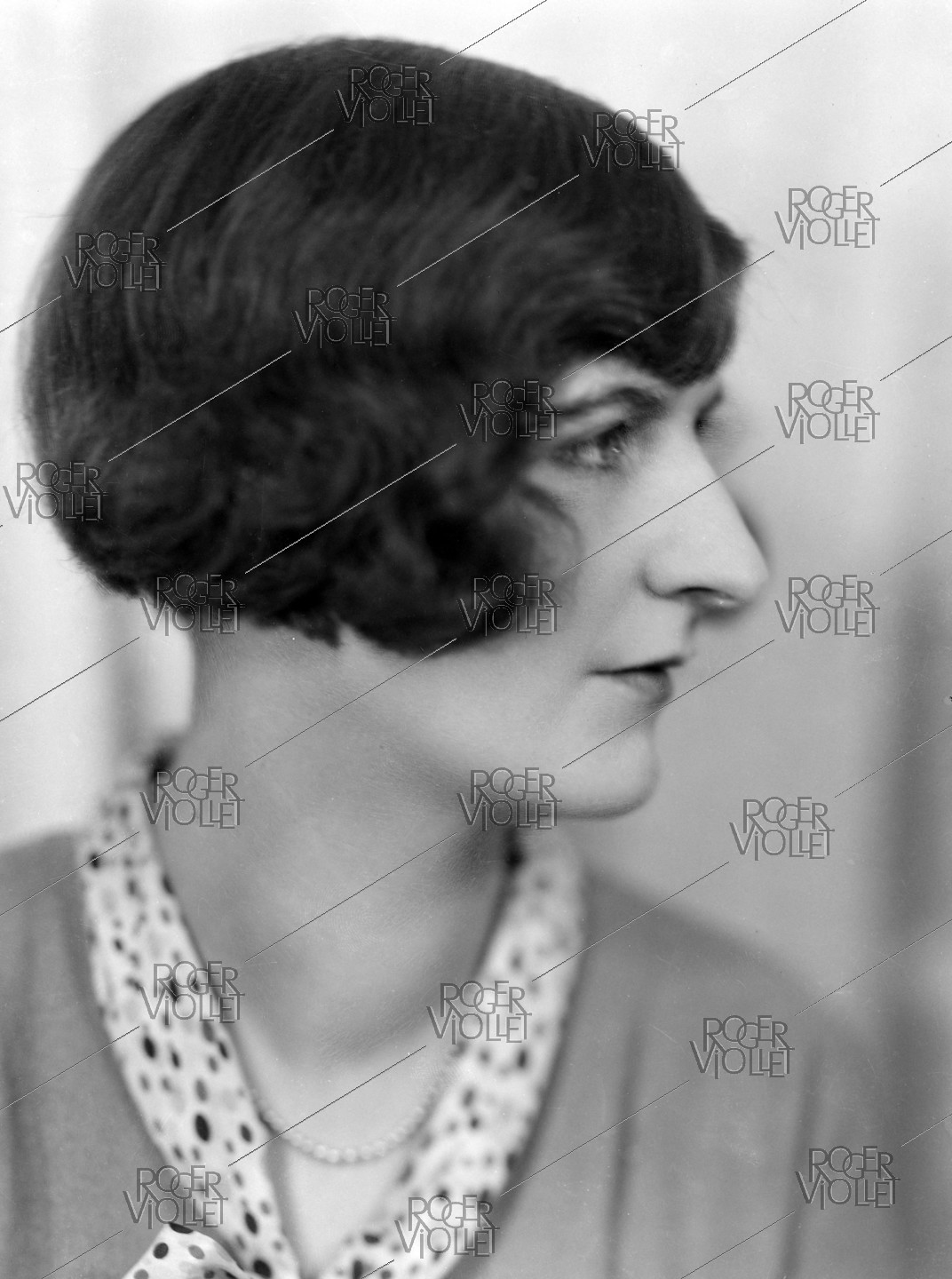
 

                                            The young Clara Goldschmidt

            The first book Apprendre a vivre”/ “Learning to Live”, is in many way a charming chronicle but also a sad and confused one. Clara Goldschmidt was born in 1897 into a German-Jewish family who had settled in Magdeburg-an-Elbe. The family were agnostic about religion and accepted equally Catholic, Protestant and Jewish outlooks. Clara’s first formal education was at a Catholic school run by nuns with whom she got on very well. She knew the catechism thoroughly, while at home the family honoured the traditional Jewish festivals though they never went to a synagogue.  But the family, who grew up polylingual, tended to prefer French culture rather than German culture, so they decamped to Paris and settled there, though they still kept in touch with their Jewish cousins and friends in Germany. In Paris, they happened to live next door to the eminent French socialist political figure Jean Jaures. As a teenager, Clara believed that Jaures could have stopped the First World War by negotiation if he had not been assassinated.  Occasionally Clara’s brothers were harassed by boys in Paris who didn’t like Jews (and remember this was not long after the Dreyfus affair). But Clara’s brothers were very good at fighting back. During the First World War, the family came under suspicion of sympathising with Germany and they were almost deported – but they were able to find an excellent lawyer who proved their real loyalty to France. One of her brothers, Maurice, the one she loved most, joined the army.  Trench warfare battered him and he was able to transfer to France’s air-force with honour. But by war’s end he was thoroughly disillusioned with the war itself… as was the mood with many young people by 1918. As the years had passed, Clara’s family, basically respectable bourgeois, tended to favour socialism.

            These are the external, political things that were going on in Clara’s young life, but much more of  Apprendre a vivre”/ “Learning to Live” is concerned with her mental and psychological development as a child, adolescent and young adult. As a very little girl she had seen men publicly misbehaving (one episode, which caused a little scandal when the book was published, was a childhood memory of playing in the Bois de Boulogne and seeing exhibitionists exposing their penises). Something that shaped her attitude towards her fellow women, however, was the fact that her beloved father died when she was only 13. He was apparently a gentle and thoughtful man, but after he died Clara’s mother became cold and uncaring about her children. Partly because of this, as a teenager Clara became aware that women could be as aggressive and destructive as men in their own way. She was firmly a feminist, when she was young she understood that she was a woman and proud to be so, but she had no delusions about her own sex. Aged 14, she had to do dancing lessons, but surprisingly she became fond of the awkward boys who were also learning the steps.  Gradually she became part of a “gang” – nothing criminal, but hanging out with other adolescents in bistros and on the streets. She began kissing boys and sometimes flirting with girls. She was trying things out. She fondled a girlfriend intimately, but decided she was heterosexual. The fact was, she was always excited by sex and she admits that as a teenager she frequently masturbated. [Yes, another thing that seemed scandalous to this book’s first readers.] She began reading adult books. Like many teenagers she wrote grandiose plays and essays. But her spelling was atrocious – and this is what held her back when, aged 18, she made her attempt at the necessary baccalaureate. It was the dizzy years after the armistice, when young people began to adopt a more casual attitude towards sex. Nearing twenty, she got engaged to a doctor… but then she quickly broke it off. She went through the same scenario with a young man who had just come home from the war. Why? Because, she says, they would not take the initiative to make love with her.  For all her talk of women’s strength, she still believed that men should always be the ones to decide when they would have sex. Women were not to take the initiative.

            By this stage, she was becoming more and more alienated from her life with her family. Helped by her family she set off on her own to Italy, and for the first time saw the glories of the Italian Renaissance, especially the works of the great painters… and it was at this point that she also became interested in the avant-garde and started to frequent literary and artistic intellectual circles. She travelled to Germany (where there were cousins) and to Alsace (which had just been grabbed back from Germany) where she met for the first time this very interesting young man.

            Enter Andre Malraux. One obvious point has to be noted. Clara Goldschmidt was born in 1897.  Andre Malraux was born in 1901. She was nearly four years older than him. So she was 23 when they met and he was just touching 19, still very callow and yet enthusiastic, filled with ideas and already writing. He excited her. He took her to rough, rowdy nightclubs after he had read poetry to an audience. Once, when they were coming out of a sleazy club, he protected her from being harassed by some hooligans. The thugs shot at him, damaging one of his hands. He calmly took out of his pocket a revolver and shot back. Then they ran like hell. At least, that is what Clara tells us. It is clear that Clara was besotted with Malraux and he with her. Two crazy kids. Clara looks to what happened years later and writes:  As our years turned out, he became… a wonderful soldier of fortune and a great writer, at the same time remaining an amateur of genius. Obsessed by Nietzsche of course and that even before we knew each other. And dividing people into the “amusing” and un-amusing as early as that too, and accusing the surrealists of taking themselves  seriously. What innumerable other things we said to each other, sitting side by side, looking in shop windows, strolling along the quays, drinking in bars.” (p.159) Note the Nietzsche bit, mes amis – you know, the German philosopher who believed in power and the superman and who glorified manly adventure. Plenty of cocky teenaged kids think that way, and here was adventuring Malraux.


So much for the first half of this hybrid narrative and we come to the second half “Nos vingt ans” / “When We Were Twenty”, which I find by far the more readable part of the tome. She again visits Italy but this time, without telling her mother, she goes with Andre. There is almost a scandal when the two of them are found to be travelling together in a sleeping-car without chaperone (remember Andre is still regarded generally as a kid). They go to Florence. Clara remarks: “His multifarious knowledge and its complexity never ceased to astonish me, and that also applies to the wild imagination and the biting wit that alternated in what he said, the originality of his comparisons, and the speed with which he reduced his thoughts to their essence. His romanticism had two faces, that of feeling, of the pathetic, and that of dandyism; it was mostly the second that I saw in this Florence marked by Savonarola and Michelangelo.” (p. 181) They consider getting married, but Clara says  We cannot limit ourselves to each other, whether we are married or not. Of course in six months’ time we shall divorce. To stay together? It seems likely to me; but mustn’t  we first agrees upon out mutual freedom?” Malraux replies “You really think it necessary to settle all that?  (p. 186) As many over-heated youngsters do, he asked her whether she would do the same if he committed suicide. She remarks “Yet what did I know? That he handles ideas remarkably well, that he was well read in many fields, that he had an unusual ease in discussion, and that he was not exempt from a certain degree of snobbery and social awkwardness. I knew what a refuge art was to him, and what writing and painting meant to him as a means of grasping the world; I respected that he was possessed by the desire to stake everything to feel the thrill of the moment more intensely; and I knew the shape of his fear of death.” (p. 192) For a while they dabbled in the occult. And they did get married. They were, in short, kids at heart, though very intelligent ones.

They went on travelling to Prague – where she wanted to see the Jewish cemetery – and Greece and especially Austria where they noted how impoverished it had become since the war as the Austrians had lost their empire. While they were there she began to notice his disdain for the Germans and his very patriotic sentiments about France.  They saw themselves as being an important part of the avant-garde, the cutting edge of what was modern in literature, music and sometimes these new things called cinema. They claimed to be washing away all the beliefs they had grown up with. Says Clara: “We were a generation without dogmatism, one that sought more than it found and that refrained from any kind of systemisation, in spite of the real liking of it – a liking that made it the temptation of Thomism and, later on, Marxism.” (p.208) Their moods were such that they often fell apart from each other. They went to Tunisia to cool things down… and they had their first moments of attraction to Marxism.

Young Clara and Andre Malraux when they were still youngsters looking for fame.
 

Now, dear reader, you may be wondering how this young couple was able to easily travel hither and yon when neither of them was working (apart from Andre’s writing, which brought in little money). The answer was that he, clever fellow, had set up a betting system on the stock-exchange which, for a couple of years, brought in to them quite a pile of cash. But suddenly the system he used crashed and they were ruined. How could they get out of this hole? Andre had for some years taken an interest in Asian sculpture as seen in European museums; and he dreamed up a hair-brained scheme which eventually brought him to unwanted notoriety. With the backing of dodgy entrepreneurs, he planned to go to Cambodia (part of what was then called French Indo-China) and to literally saw off statues hidden in the deep jungle and then sell them to American millionaires. So, fitted out with the right jungle clothes and with the implements which they thought would be able to cut through stone, they set off by sea, had a brief stop at Saigon (the centre of French colonial administration) and then they tramped thought the jungle. It was mad and they had to put up with the heat, the wild animals, the uncertain directions given by porters and the diseases. At one point, Clara came down with dengue fever. It was almost heroic (oh my goodness how Clara writes in an heroic tone!) and we have to remember that Andre was all of 21. But it was a complete failure. Not only did the implements fail to cut stone, but the French colonial authorities got wind of what Malraux was doing, dragged him in and prosecuted him for attempting to mutilate ancient works of art. He was found guilty in Saigon and condemned to three years in jail. Clara faked suicide to get out of jail, but was sent to a hospital. She wrote to France with letters for help and was finally allowed to return to France.

It has to be said that she gives very questionable apologia for their attempting to steal the statues. She writes: “Now more than ever I was convinced of our right to put works of art that were being threatened by the jungle back into circulation; there was a risk of their remaining abandoned for many a long year still, so great were the numbers of the monuments that the Ecole Francaise ought to have protected. We already loved the temples and the heads that floated in our imagination. We should have to part with some of them, that was true enough; but more and more clearly we thought of other expeditions, here or elsewhere, that should be for our own delight alone.” (p.264) And later, when having to reveal to the authorities what they had taken, she writes: “I was not going to let my mind be perturbed just because they had looked into our chest and found fragments from an almost ruined temple which had been so little cared for for years that it might well have collapsed entirely, its stones forced apart by the roots of the banyan trees or destroyed by the peasants tools.” (p.307) In all this, of course, she is neatly ignoring the fact that their real purpose was to make big money by selling art-works to millionaires.

At this point, it is clear that her relationship with Andre was often very shaky. On the ship that took her back to France, she had an affair with another man. But she also consulted a lawyer on the ship who gave her some ideas on how Andre could be brought back to France. The press had said very negative things about Malraux, but Clara set to work getting up a petition among writers and other intellectuals calling for this promising young writer to be pardoned and returned home. And it worked. A long list of eminent French writers signed the petition, ranging from the Catholic novelist Francois Mauriac to the fiercely dogmatic boss of the surrealists Andre Breton. There was a big campaign in the press, and finally Malraux came home, pardoned. It is interesting that most of Clara’s family were ashamed of her for having been partner to an opportunist who had served time, and they urged her to divorce Andre. But Andre’s family stood by him, and Clara’s step-father gave her much helpful advice.


And here nearly ends this volume of her narrative. But she does make some comments about how she and Andre’s views had changed over these few years. They were now more aware of the negative side of colonialism. She writes: “How much more we knew about the colonial world than when we left Europe! Almost in spite of ourselves we had discovered Asia in her humiliation.” (p.293) Yet she almost clings to the Nietzschean idea that you can achieve anything only by power and force. She writes: “If you do not want to submit, you must either be very strong or very shrewd, and we had been neither the one nor the other. Raskolnikov, Nietzsche, Julien Sorel, the other Sorel, and Rastignac danced through my head.” (p. 300) And there is something interesting about this essentially youthful statement: “We were the ones to whom teachers had lied and to whom parents had lied, we were the ones who knew that the philosophers contradict one another, that Spinoza did not carry on Descartes’ work – nor Kant, Spinoza’s. We were living in a world of uncertainty, a world in which everything was challenged and in which everything was changing. This being so, how could we have faith in anything other than ourselves…” (p.307) Let me note that later, for a while, they almost fell for the faith of Communism, though they grew past that. As for their marriage, it did eventually fall apart, but I have not read the books in which she told readers about it.

Now this is where my review could stop, but I have to say something about the difficult prose which I mentioned briefly at the beginning of what you have been reading. Frequently, as I read this book, I couldn’t help thinking that much of her prose is cluttered with suggestions and ideas that do not add up to clarity. Her prose is often very tangled and hazy. For no real reason, she spends much time writing about herself in the second person (“elle” – “she”). In one section, she gives us a number of pages she wrote as an adolescent which she called “Le livre de comptes  (i.e. “The Account Book”), wherein she tries to understand what men are like. It is the kind of teenage rambling that would be better left in the bottom drawer. So much of her work is taken up with her analysing her relationship with Andre; and in doing so she over-thinks things. The general impression we are left with is of two big egos clashing with each other, not helped by their rivalry when it comes to writing. Yes, they were at first besotted with each other, but the marriage was flawed from the start. It is interesting, by the way, that Clara hardly ever refers  to her husband as Andre, but as “my companion”. If you have frequently read this blog, you will be aware that I greatly admire French literature (Good heavens! Didn’t I spend ages shoving down your throat the works of Honore de Balzac?). But I am also aware that French writers often dance around ideas in a vague way without getting clearly to whatever point they really mean to make. On a final note, I’m aware that much of Clara’s autobiography is self-praise and a sort of mythology based on half-recalled memories… but that is true of most autobiographies, isn’t it? It’s certainly true of her ex-husband’s Anti-Memoirs.

Monday, June 16, 2025

Something Old

 Not everything worth reading is hot off the press. In this section, we recommend "something old" that is still well worth reading. "Something Old" can mean anything from a venerable and antique classic to a good book first published year or two ago.

ANTI-MEMOIRS” by Andre Malraux (First published in 1967: English translation by Terence Kilmartin 1968)

In reviewing the literary works of Andre Malraux, I have written on this blog accounts of his first four (and best known) novels,  Les Conquerants (1928), La Voie Royale (1930), La Condition Humaine (1933) and L’Espoir (1938) – all produced within ten years. He also wrote a novella called Le Temps du Mepris (1935), basically a piece of propaganda which he later disowned. But the fact was, he began to lose interest in writing novels at all. In 1940 he published a novel called Les Noyers de l’Altenburg [The Walnut-trees of Altenburg] which was intended to be the first volume of a family saga to be called  La Lutte avec l’ange [The Struggle with the Angel], but the sequence never appeared. And that was the end of his life as a novelist, even though he had much life ahead of him. From that point on, he wrote only non-fiction books about art, culture and politics; and [in the 1950s] he regularly gave lectures on French television.

In 1967, when he was 66, he produced his Anti-Memoirs, nine years before he died. It was the longest book he ever wrote. What exactly are “Anti-memoirs”? We expect memoirs to be somebody’s account of both personal and public life, preferably presented in some sort of chronological order. Malraux breaks our expectations. In a rather pompous Preface, he explains what anti-memoirs are. He says he will not be giving us a full autobiography, but will deal only with outstanding and interesting things. Among other things, this means [though he does not say so] that he never mentions his two wives, his children and his mistresses. It also means that he does not write in chronological order. He jumps from one era to another, noting each era he is dealing with [presented thus---]. He is very interested in telling us of important people – known world-wide and leaders of countries – whom he met and talked with. Certainly he was, under de Gaulle’s instruction, a sort of ambassador for French culture. But much of what Malraux writes comes across as him telling us how important he is. There is a sort of snobbery here. It is not surprising that Anti-Memoirs is dedicated to [the widowed] “Mrs John Fitzgerald Kennedy”, that is, the glamorous Jackie, wife of the American president. Malraux had escorted her in her visit to Paris and he was making sure we knew it. Malraux introduces each of the five parts of Anti-Memoirs by labelling each with the title of one of his novels. I shall ignore these but note the eras that he notes. 

     Cover image of Malraux years before he wrote Anti-Memoirs
 

Dear reader, I found it a chore to be ploughing through nearly 500 pages of Malraux’s self-praising work [me using the English language version]. The things I do for you! But – dammit - Malraux does sometimes produce passages of literary brilliance.

Here goes.

Part One begins his memories in [1913], concerning the family he grew up in. His father told him eccentric stories as relayed from his grandfather. Although Malraux and his family lived in Dunkirk, their grandparents came from Alsace whence they had left when the Germans took over Alsace [after the end of the Franco-German War of 1870-71]. One of grandfather’s friends was influenced by the philosopher Friedrich Nietzsche, and part of his ideas of strength, courage and dominance seeped into, or at least was a part of, young Malraux’s beliefs … but Malraux admits that what he remembered of his grandfather was little and much of what he heard were really family fables. Leaping to a group labeled [1934 – 1950 – 1965] he suddenly moves into talking in detail about the meaning of monuments in many different cultures – the Sphinx; the hidden parts of the Versailles palace; the remnants of Nazi monuments that had been destroyed that the Second World War; the pyramids of Mexico; a sacred tree in Senegal that is worshipped. From all this he deduces that all sacred things in all societies are simply a human yearning for something to bind a community together. Malraux was never a professional archaeologist, but he liked to present himself as one. So [1934 – 1965] he writes of his attempts to find the site of the Queen of Sheba as if he were an archaeologist. [He does not note that real archaeologists debunked his ideas.]. So far, we have heard family fables and his desire to examine ancient things, almost in terms of mythology.

De Gaullle with Malraux when he was Minister for Culture
 

Part Two turns to his relationship with General de Gaulle and how later he became an ambassador once de Gaulle was president. First [1923- 1945] he recalls his brief visits to India in the 1920s. He notes that France was not really involved with India and it was only in 1958 that de Gaulle attempted to make an accord with India…. But Malraux, in his non-sequential way, segues into telling us about how, immediately after the Second World War, the Gaullists were able to trump the French Communist Party which was trying to take over all the organisations that had been part of the Resistance. Through many pages, Malraux tells us in detail, word for word, what de Gaulle said to him and what he said to de Gaulle. But is this really verbatim? Immediately there is the suspicion that Malraux is in fact embroidering what he may be vaguely remembering what was said… and this runs through many other conversations that he claims to have had throughout Anti-Memoirs. He goes on to tell us that he and de Gaulle and the veteran politician Leon Blum discussed the nature of what the French parliament should be and in effected shaped the future nature of French democracy. Then [1958 – 1965] he tells us what de Gaulle said about the situation in Algeria and how he was going to outwit the pieds noirs [“black feet” – meaning those French Europeans who had settled in Algeria and were opposed to giving Algeria independence]. It is in this era that de Gaulle stabilises French politics by introducing the Fifth Republic. De Gaulle, says Malraux, sent him to some French possessions such as the Antilles, French Guiana and Martinique as an ambassador to persuade those territories to join the new French Union. Malraux reports that some crowds agreed with this plan while others heckled him. Later, de Gaulle sends him on a “good will” journey to present him to Asian leaders as an expert in French culture… at which point he once again falls into a long conversation with the Indian prime-minister Nehru… as if it were verbatim, which it obviously isn’t. To himself, he speculates on what Indian courage is and he spends many pages considering the courage of Indians suffering poverty, the courage of Indians forbearing British colonialism, the courage of both Hindu and Muslim during the violent partition which separated India from the new state of Pakistan. But [1944-1965] the idea of courage leads him into a long fugue about the courage he saw in the French Resistance, especially the maquis, and how in 1944 he was captured and faced the possibility of being tortured by the Gestapo. He managed to persuade his captors that he was not in the Resistance and ultimately he was let go…. This is a very vivid account of events and, along with his descriptions of life in the prison, it is one of his best pieces of writing. But he also presents some events that are questionable – his derring-do in taking charge of all the prisoners and rallying them to continue the fight after the German warders had fled; or his tale of telling a German General that his cause was lost. It’s moments like these that we fear his chronicle is unreliable.

Part Three returns us [1958 – 1965] to the matter of India. In over 26 pages, Malraux tells us how he reacted to the Hindu religion and how he was impressed by its mysticism. Again, as so often in his prose, there is a vagueness about what he is discussing. Sceptical as a reader, I find much of what he says sounds superficial, as if he has not really absorbed what Hinduism really is. Indeed to me, what he writes here is very like the later hippies who went on pilgrimages to India ‘cos Eastern religions were way cool man. [How dare I say this? Because I have a devout Hindu son-in-law who has taught me much of his religion.] Whereupon, goodness knows why, Malraux turns to [1940] giving us a very vivid account of how he had been part of a tank battalion, and his crew were caught with him when they stumbled into a German trap. As in his writing of action in L’Espoir, this is an excellent example of Malraux’s reportage at his best. There follows [1948-1956] 34 tight pages purporting to be a long conversation Malraux had with the Indian prime-minister Nehru, dealing with religion, art, philosophy and the future of both India and the West. Once again [aren’t I repetitive?] I refuse to believe that this conversation was verbatim. It is highly unlikely that Nehru was mainly interested in Malraux’s theorising. More likely, Nehru was more interested in pragmatic diplomatic things.

Part Four is the strangest and most unhinged section of Anti-Memoirs, being a potpourri of memories Malraux recalls from his experiences in South-East Asia in the 1920s and after the Second World War. This section is 101 pages long. It is an extraordinary fugue i.e. it runs in all directions. It is made up of random conversations as various characters he knew speak of Annam and other parts of once was part of France’s empire. Malraux rakes over the type of things he had written about in his novel La Voie Royale. In these conversations, many of his characters are given fictious names – one being called Baron Clappique (the name of a major character in his novel La Condition Humane). Presumably this was for discretion. Much of these conversations take place in Singapore. In some respects Malraux, to his credit, is criticising what French colonialism was like in South-East Asia as old French buffers twaddle along about how good the old days were in Vietnam. But remember Anti-Memoirs was written at a time when the U.S.A. was involved in Vietnam in a quagmire which the French had started… and lost… and as the U.S.A. ultimately also lost.

Part Five. Looking in detail at the city of Hong Kong, Malraux spends some pages giving us a glamourised version of Mao Tse Tung’s “Long March” etc. Going to Canton he sits his way through the popular Communist propaganda “opera” The East is Red. He talks with a Chinese ambassador who, like other Chinese Communist intellectuals, is aware that Malraux had written two more-or-less pro-Communist novels set in China  Les Conquerants and La Condition Humaine.  Then he gets to speak with Chou En Lai… and finally he has an audience with Mao Tse Tung himself… And alas, this is yet another case of Malraux writing something that is probably not fully truthful. It is highly unlikely that Mao talked with him at great length, but Malraux presents it as a long philosophical discussion between two wise statesmen. So we have Mao congratulating Malraux for two of his novels about China, and answering at length all Malraux’s questions about how China was prospering and how feudalism was long gone and how he had good will towards France… though [again to his credit] Malraux notes for us that, though a few years earlier Mao had allowed free speech under the name “Let All the Flowers Bloom”, when Chinese citizens did actually spoke freely, Mao Tse Tung had them all persecuted, jailed or shot. 


French postage stamp honouring Malraux the year he died [1976]

And so, rounding off this long potpourri, we return to France. As Minister of Culture under President de Gaulle, Malraux had the honour of giving, at the Pantheon, the oration for the Resistance hero Jean Moulin [see more about  Moulin elsewhere on this blog]. Thinking of this, he then goes into accounts of Nazi atrocities in camps. But in this case he produces a very moving piece of work, once again showing how he could be an excellent reporter when he tried. With his stories of how the maquis were tortured if they were captured, with his understanding how war had turned to barbarism, and with how ordinary people had to cope with it, he tries how to make sense of it all. Here he is at his best.

Having read and reviewed Malraux’s five most significant books, I could make all manner of comments about Malraux as novelist and journalist. But before I do that, you will be given later on this blog a review of what his first wife thought of him and a review of what is regarded as the definitive biography of him

Monday, June 2, 2025

Something Old

Not everything worth reading is hot off the press. In this section, we recommend "something old" that is still well worth reading. "Something Old" can mean anything from a venerable and antique classic to a good book first published year or two ago.    

“L'ESPOIR” by Andre Malraux [first published in French in 1938; published in various English language translations as either Days of Hope or Man’s Hope ]


            In two of his first three novels, Les Conquerants and La Condition Humaine, Malraux wrote about upheavals in China in the 1920s. They very much aspired to be partisan reportage. [His other early novel La Voie Royale was more in the nature of an existential adventure story.] While Les Conquerants was written in straight-forward language, La Condition Humaine was marred by Malraux’s tendency to insert pseudo-philosophical passages where characters vented their vague ideas. L’Espoir was also in the nature of reportage, but this time the prose was very much matter-of-fact. Certainly characters discussed their ideas, but not with the vagueness of Malraux at his worst. Why should this be so different from the blurred prose of La Condition Humaine? My hunch is that this time Malraux was deeply involved in what he was writing about – not trying to deal with a country which he did not fully know. L’Espoir is set in the Spanish Civil War. Still more-or-less a very left-wing thinker, Andre Malraux went to Spain to fight against Franco’s military uprising. He put together a flying squadron to assist the official Republican air-force and he acted as a gunner [not as a pilot] in many sorties. One of the main characters  - Magnin – is obviously based on Malraux himself and L’Espoir is the longest novel Malraux ever wrote, maybe because he wanted to chronicle all the things he had seen or heard in Spain. It is worth noting than Malraux’s whole experience was in the early part of the Spanish Civil War – about 9 months – but the war itself dragged on for three years (1936-39). By the time L’Espoir was published in 1938, it was clear that Franco’s forces were well on the way to winning the war, so there is a certain irony in the novel’s title.  There was espoir [hope] in the early part of the civil war when the Republic believed it could defeat Franco… but by 1938, espoir was becoming a faltering hope.

            Synopsis: this long novel is divided into three Parts, with the first Part itself divided in two. I use here the headings as given in the English translation I read.

            Part One – First part: “Careless Rapture” – the time when those opposing Franco think they will easily defeat him. Across Spain, many railways and railway stations have been taken over by Franco’s forces. Magnin is putting together his squadron. Franco’s forces appear to be marching towards Madrid. Magnin’s squadron attempts to forestall the enemy by bombing a Francoist column at Medalline… but they are aware that the [Nazi] German planes, lent to Franco by Hitler, are better than the planes that the Republican air-force has. The squadron has some victories… but this is only because Nazi Germany is not yet fully armed. At this stage, some of Magnin’s colleagues are sceptical about the quality of the Republican Army. Two characters [Manuel and Ramos] rudely refer to the Republican Army as “a comic opera army”… but then, world-wide, army, air-force and navy tend to boast about how much better they are than other parts of their own forces. Nevertheless, it is true that the official Republican Army is aware that to some extent they will have collaborate with various left-wing groups – Socialists, Communists, Anarchists etc. But, for Magnin and his men, the problem is discipline. So many of these groups are disorderly.  


Part One – Second part: “Prelude to Apocalypse”. The scene moves to Tolado, where the Alcazar, the fortress held by Francoist forces, is being besieged by Republican forces. The matter of discipline is once again raised – and this is where Malraux pens many conversations. The Socialists tend to stand with the official army. The Anarchists and Anarcho-Syndicalists believe that separate groups would work best. The Anarchist Negus says that the Communists only pretend to be interested in the welfare of Spaniards as a ruse to take over the country. The Communist Manuel insists that there has to be severe discipline if anything is to be achieved and there should be one unified army. [Towards the  end of the Spanish Civil War, the Communists turned on the Anarchists and the P.O.U.M. and “purged” them… which was one of the reasons that Malraux began to shift away from the Far Left… but that was in the future at the time this novel is set.] Despite his authoritarian attitudes, Manuel has a long conversation with Ximenes,  a Republican Army Officer who is fighting against Franco, but who is also  a committed Catholic. In a peasant town, Ximenes asserts the need for the church, but also understands why the peasants have turned against the priests who have bullied them. There is a brief truce, when the garrison holding the Alcazar is able to get some provisions. Sometimes the Republicans and Francoists shout curses at one another. The Republican air-force bombs the Alcazar, artillery is fired at the Alcazar, and sappers tunnel in, attempting to blow up the Alcazar – but the Alcazar is never captured. By this time Franco’s army is approaching… and there is an awareness that some Republican soldiers are preparing to desert to Franco’s side. So Toledo is lost and the Republican army and its allies retreat back to Madrid. There is much brutality. A character called Hernandez has treated well the Francoist garrison when there was a truce. He chooses to stay in Toledo, even though he knows that Francoist soldiers will recognise him as a “Red” when they take over Toledo – and they will put him in front of a firing squad.

Part TwoThe Nanzanares” So the anti-Franco forces head desperately back to Madrid, with many troops deserting on the way and understanding that Franco’s army is reinforced with Moors. What is hope now? The hope that Madrid will hold as a bastion, especially as the International Brigades (volunteers from many nations) have arrived to protect Madrid. Some volunteers are regarded as unable to really fight, but the Communist volunteers are the most disciplined. [The reality was that the International Brigades were largely run by Communists.] The Republican government leaves Madrid and sets itself up in Valencia. Malraux now cuts back to Magnin’s squadron. Magnin is still in charge but one pilot, Leclerc, is lowering morale by telling other pilots that their planes are very inferior and no match for the German and Italian planes. Magnin has to fire Leclerc. Meanwhile, it dawns on some that many people in Madrid are really on Franco’s side. [Malraux never uses the term, but this refers to what some would later call the “Fifth Column”.] Meanwhile Nazi planes bomb the Basque town Guernica…. At this stage Malraux inserts a long conversation with a Catholic man who is opposed to Franco and the more intransigent members of the Catholic hierarchy, but who points out that in Madrid there are many compassionate priests who are helping the wounded and sick and they are very much needed in the city…. There is also a long passage wherein people discuss the merit of Italian painting…. But the Moors are coming and the Francoists are coming and hell breaks loose. Much of Madrid is overwhelmed and the Moors almost take over the university city, but they are repelled. Francoists take over the central hospital as it is an excellent place for them to snipe from… so the sappers dynamite it. There are fires everywhere, fire-fighters climbing up or falling off ladders and much panic. But on the other side of Madrid, Franco’s tanks advance but they are destroyed… and more enemy troops are pushed back to the Sierra. At which point a squadron of Soviet planes fly in, their appearance more-or-less saving the day. Madrid is saved.

By this stage you might have noticed that this novel is more a panorama than anything else. There is no one central character, but there are many characters – perhaps inspired by the popular 1930s  idea that history is built on groups of people - “the people” and solidarity – rather than individuals. Characters come and go… and in the parts dealing with Madrid, we sometimes hear the dispatches of an American journalist called Slade.


And so to Part ThreeThe Peasants” In the south of Spain, peasants are attempting to escape further north as Franco’s forces move in.  But there is a great boost of morale when the Republic wins the Battle of Guadalajara. Mussolini wanted to reach glory by sending his forces to Spain , but his army was easily routed by the Republic…. And, as Malraux admits in this novel, even some generals on Franco’s side were glad that Mussolini’s forces had been humiliated. They did not want another army butting into their war. The civil war goes on. Magnin’s squadron finds out where there is a hidden Francoist aerodrome. They try to bomb it but some of their own fragile planes are shot down… and some pilots who had survived joined the crowds of peasants who are trudging north. And here the novel really ends. Walking along with the peasants, even the Communist Manuel comes to understand that the desperate, humble peasants, who assisted the downed planes, do not like seeing anarchists destroying their churches. Manuel dominates the last section of the novel, resigning himself to not knowing what eventually Spain will be like but hoping for he best.

So much for my overlong synopsis which, believe it or not, misses out many characters whom Malraux had created. If enjoyed at all, it is mainly good reportage based on things that the author had either experienced or heard about. It is built mainly on action. And, greatly to his credit, Malraux admits that events in the civil war were not a matter of black and white. As he shows, not all Spanish Catholics supported Franco [though probably most did]. Not all opponents of Franco were united [there were many factions that were at odds with one another]. This was quite unlike most novels about the Spanish war that were written in that era. They were usually very partisan one way or the other – Left or Right. Of course Malraux was fighting against Franco… but he began to be very wary of Communists in particular.

At which point I step away a little from Malraux’s novel and give you some of my own reflections on the Spanish Civil War.  Throughout L’Espoir, Franco’s forces are referred to as “fascists”. But this is not exactly accurate. Just as the Republicans had factions [Constitutional-ists, moderate Socialists, Anarchists, Communists, Catalonia nationalists] so on the Franco side were there factions [conservative Royalists, most of the Catholic Hierarchy, Carlists and of course the relatively small Falange who were the only real Fascists]. To hold his forces together, Franco forced the Carlists to be integrated with the Falange and all to be under his command. Fascists there were. But as George Orwell noted in his Homage to Catalonia, Franco’s aim was to restore a very conservative Spain, more like Feudalism than Fascism. Throughout the civil war, the Left dubbed their enemy as “Fascists” while the Right dubbed their enemy as “Reds”. Nowadays, most historians refer to the opposing forces as Republicans [the Left] and Nationalists [the Right].The Spanish Civil War is one of the most mythologised wars ever written about. Both Left and Right authors have presented their side as heroic, often distorting the truth. Reading the English-language version of L’Espoir, I was amused to find on the back-cover blurb the statement that “the Alcazar was bombed to surrender”. Actually the Alcazar never surrendered, which is why the Franco-ists chalked it up as a great victory…. And so I could burble on.

For the record, you can find on this blog reviews of books related to the Spanish Civil War – The Spanish Civil War by Hugh Thomas ; The Spanish Holocaust by Paul Preston; Homage to Catalonia by George Orwell; and if you are interested in philosophy The Tragic Sense of Life by Miguel de Unamuno. As for Andre Malraux, the Spanish war changed his perspective. While he loathed the far right, he became more sceptical of the far left. He also began to lose his interest in writing novels.


Monday, May 19, 2025

Something Old

  Not everything worth reading is hot off the press. In this section, we recommend "something old" that is still well worth reading. "Something Old" can mean anything from a venerable and antique classic to a good book first published year or two ago.  

“LA CONDITION HUMAINE” by ANDRE MALRAUX  (published in the original French in 1933; published in English in various translations as “Man’s Fate” or “Man’s Estate’”)


            Sitting on my shelf is an old French paperback edition of Andre Malraux’s La Condition Humaine. On its back cover is a list of all the French critics telling me that the novel is one of the greatest works of all time. I really must be a peasant because I disagree. I first read the novel years ago when I was a student and I found it hard going, but I assumed it must be an important book because so many people said so. Recently I re-read it and again found it hard-going in places, but this time I saw many flaws in it, not the least being the contorted prose style that Malraux uses so often. I admit that sometimes I resorted to an English translation of the novel, but even in English, Malraux’s ideas were muddled, obscure and sometimes downright foolish. And yet there are passages of greatness. How annoying.

A quick synopsis. La Condition Humaine is set in China in 1927. The downtrodden mass of Chinese workers in Shanghai are ready for revolt. They are exploited, forced to work around the clock in unsanitary conditions, underpaid and living on starvation wages. Chinese Communist groups become their leaders. They manage to organise the proletariat, gather many caches of firearms, and are ready for a major uprising. Victory seems possible. But the Kuomintang (the Nationalist ruling party), with the approval of the European companies that dominate the city’s economy, proceed to crush the uprising. The Kuomintang is lead by Chiang Kai-shek, a seasoned soldier who is in effect a dictator. Chiang Kai-shek has a whole army behind him. Through March and April, the uprising is quelled with brutality. Many thousands of the insurgents are killed in the fighting, many are jailed, tortured by Chiang Kai-shek’s police, and executed. It amounts to a huge massacre.

The novel is told hour-by-our of the unfolding of events. Pages are headed with the times and days. The workers are depicted as heroic but doomed. The most vivid moments in the novel are of such things as the storming and burning down of the Communist headquarters, with much machine-gun firing; the attempts of trapped people to find shelter; the very few moments when small victories seem at hand.

Of course it is a tragedy. But it is also a story of betrayal. Home-grown Chinese were one thing. But the Soviet Comintern, under Stalin’s orders, was another. Some Communists had been accepted into the Kuomintang. Stalin, who had sold munitions to Chiang Kai-shek, wanted Communists to gradually infiltrate the Kuomintang and take it over. That was his long-term strategy and he did not want an uprising – so he sent the word that the insurgents should be disarmed. Many handed over their rifles before the shooting began, so their chances were even bleaker than they could have been. And when the fighting was over, Chiang Kai-shek proceeded to weed out and execute those few Communists who were in the Kuomintang.

But while the novel is about the proletariat’s defeat, nearly all the novel’s main characters are either middle-class Chinese or foreigners. The Chinese workers are anonymous masses. Perhaps Malraux was admitting that he was seeing this true history though occidental eyes.

To prove the point, here are the major characters. There is Kyo who is half-Japanese and has absorbed the Japanese culture of dying heroically. He wants the uprising to be orderly and well-planned. In contrast there is the Chen, who is Chinese. He is a hothead, regarded by other Communists as a “terrorist”. The novel’s famous opening has him murdering a trader who deals in arms [It is done in darkness, like an old film noir.] Once Chen was brought up as a Christian. Now his main aim is to assassinate Chiang Kai-shek. As it happens, both Kyo and Chen finally end up dead in horrible ways. Gisors, who is of mixed race, is Kyo’s father. He has been an academic and a writer, but now he spends much of his time smoking opium and offering, through his opium fumes, philosophic advice. He consorts with both Left and Right, revolutionaries and capitalists. So we have a strategist, a fanatic and a non-committed. Of the Europeans there is Katow , the Russian Communist who follows Stalin’s orders and urges the proletariat to hand over their  rifles. Hemmalrich is a Belgian, on the side of the insurgents and offering a safe place for Communists to gather, but he is as much concerned with protecting the poor woman and her sick son who live upstairs. Konig is Chiang Kai-shek’s sadistic German chief of police. In the later section of the novel, he interrogates and has tortured Communists who have been rounded-up, including long sequences of the horrors of prison. Yet Malraux gives some reason for the way perverse Konig behaves. Konig has fought on the side of the Whites against the Reds in Russia’s long civil war. He had been captured by the Bolsheviks and severely tortured by them. For Konig, Communists are the very devil.

From very early in the novel, Malraux has shown us how decadent were many wealthy Europeans in Shanghai. There were brothels galore (shoddy ones or exclusive ones), perversity of all tastes, whores on every corner, wild parties, massive cash thown away in gambling and casinos … all of which is a true account of rich foreigners in Shanghai in the 1920s. Malraux chooses two Frenchmen to prove the case. Ferral is an entrepreneur, investor  banker and in Shanghai President of the French Chamber of Commerce, always looking to see how the stock-market is going. He is very good at his job and he often consults Gisors. He has style. But when his mistress Valerie jilts him, he takes an elaborate revenge on her - the sort of thing that only a man with more money than sense could do. Much worse is the Baron Clappique who, after having lost badly at gambling, goes on a rampage picking up as many cheap whores as he can.

Speaking of women, Malraux was notorious for having difficulty in depicting women in his novels. His first two novels Les Conquerants and La Voie Royale are bereft of women, the latter of which has a character who rants viciously against women. The author has sometimes been seen as a misogynist. There are women in La Condition Humaine but their roles are minor – the woman with the sick child; Ferral’s mistress Valerie; and Kyo’s wife May who, late in the story, decides to leave him, even if she is seeking to do something heroic.

Though the novel focuses on people other than the toiling workers, it does represent a panorama of believable “types”, even if  there is a tinge of cynicism [or scepticism] in the final chapters. Most of the swine are able to get away from the city’s chaos and go back to their original country, like the Baron Clappique who by devious means stows away on a ship. In a gathering of capitalists in Paris, Ferral is able to expound his ideas on how capital should be spread so that all banks may prosper in China. Mind you, Malraux comes near to admiring Ferral who, after all, is a very competent banker who has built his own company. Malraux admired that sort of  hero…

But if near-misogyny and some cynicism are a real minus in this novel, there is something much worse. Even more than in his second novel La Voie Royale, Malraux unleashes long, redundant, pseudo-philosophic passages, usually presented as the ideas passing through the minds of some of his characters. They are about the inevitability of death [is this the Condition of Man - La Condition Humaine?]; the necessity to be ready for pain and suffering; the need for strength; the importance of “force” and heroes etc. all of which may be important ideas but which are bathed in a vocabulary that is almost impenetrable .  The English-language crib I resorted to contained at the end an “Appreciation” by the critic David Price-Jones. He criticised Malraux’s vocabulary here noting that  one of the more lasting French literary traditions is a metaphysics  of grandeur based primarily on the writer’s style” He was right. In these pseudo-philosophic passages, Malraux says thing that could be said more concisely, more honestly, more readable than his messing with redundant overblown style.

Is La Condition Humaine really a classic? Apart from the moments of intellectual verbal soup and shallow ideas of Nietzschian power, it does have much going for it - the vivid episodes of the uprising and its being strangled; the intense discussions about strategies among the Communists; the decadence of the wealthy and their opportunism. But there falls the reality that this is a story from a century ago, and much of it reads as a period book. Though mainly reporting accurately about China, that was then and this is now. The Second World War, the invasion by Japan that had to be fought, the take-over by Mao Tsi-Tung and the massive famines he brought, the purely destructive “Red Guards” in the 1960s and finally [so far] under the name of still being Communist, China became basically a capitalist marketing state – even if it is still ruled by one totalitarian system. And amazingly, when Communist China for years had reviled Chiang Kai-shek as a monster and slayer of the workers, in Communist China he has recently been rehabilitated as a great soldier and brave fighter against the Japanese invasion. [Or is this a ruse to satisfy those in Taiwan – which Communist China wants to take-over?]


Monday, May 5, 2025

Something Old

  Not everything worth reading is hot off the press. In this section, we recommend "something old" that is still well worth reading. "Something Old" can mean anything from a venerable and antique classic to a good book first published year or two ago.

“LA VOIE ROYALE” by ANDRE MALRAUX  (published in the original French in 1930; published in English as “The Way of Kings”)


            Why, within the first few chapters of reading La Voie Royale, did I think “This is Joseph Conrad territory!”?  You will see what I mean a few paragraphs on.

            A synopsis: La Voie Royale was Andre Malraux’s second novel, published in 1930. It gained in France a larger audience than his first novel Les Conquerants, perhaps because it was a sort of adventure story albeit a rather perverse one.

            Claude Vannec, a young Frenchman 25-years old, is an architect. He has decided to make money by going into the depths of the South-East Asian forests and sawing off neglected statues from temples. He could then make much money by selling this ancient art-work to wealthy connoisseurs. On the long voyage to what was then known as French Indo-China, Claude meets a fellow passenger, Perken, an older, rough, brutal, experienced Danish explorer, who knows very well the Asian jungles. Indeed he knows how to get through the tangled, half-hidden jungle “la voie royale“ [“the royal way” or “the way of kings”] which is the best route to the hidden temples. He also knows the Khmer Road. Perken agrees to join Claude as guide and comrade on this quest and they discuss money; and techniques for bringing statues down; and how they could get these treasures back to Europe. But Perken has an agenda of his own. He is hunting for a murderous criminal called Grabot who has disappeared into the rain forest. Grabot is somewhere between Laos, Cambodia and Thailand [French colonies at that time]. Perken is apparently trying to buy machine-guns and may intend to set himself up as ruler of a local tribe…

At which point I smell the influence of Joseph Conrad. A European’s quest to find a missing man in the jungle? Think of Marlow going up the river to find the missing Kurtz in Conrad’s Heart of Darkness. A man setting himself up as ruler of a tribe? Think Conrad’s Lord Jim. I’m not saying that Malraux’s work is plagiarism, because La Voie Royale is very different from Conrad’s work. But I’d be surprised if Malraux hadn’t read Conrad as one of his inspirations.

Anyway, reaching Saigon [then France’s capital in Indo-China], Claude Vannec is told by an official, the director of the French Institute, that he is permitted to examine the temples hidden by foliage in the jungle, but the statues have to stay in situ. Claude sees this order as unnecessary bureaucratic nonsense and ignores it. So he and Perken set off with saws and tools and other implements and provisions. They buy carts to carry back their loot. And of course they hire porters with bullocks to haul the carts through the dense, sweltering-hot, stifling rain-forests. One of their guides is unreliable. They are infected my nasty spiders, hordes of aggressive ants, viscous large leaves that stick to their clothes and other major discomforts. On the border between Cambodia and Siam [as it then was called], they find what they were looking for. They saw their way through solid-rock statues of gods and dancing girls, load them on their carts, and then want to turn for home…

… But, what with the very heavy load they have stolen, going back is harder than it was when going into the forests. When Claude and Perken are sleeping in a primitive Moi village, their carts are stolen and hidden from them. Most of their porters have deserted them.  This means they have to go to another village to get help and brawn to retrieve their loaded carts… and in doing so, they have to go through areas where the criminal Grabot may be hiding. So they are in what Malraux calls “cette dissidence a demi sauvage” [“this mix half savage rebels”] at which point I can’t help thinking that using the  term “savages” often means simply people who won’t buckle down to colonial power. When they reach another village, they meet a far more savage tribe then the Moi – the Stieng. And there they find the notorious criminal Grabot. The Stieng have captured him, blinded him, tortured him, and tied him up, prolonging his agony before they kill him. Claude and Perken are besieged in a hut, waiting to be killed along with Grabot. Perken tries to bargain with the chief. He and Claude fear that in being tortured they might be castrated. Perken uses a diplomatic stratagem. He tells the tribal chief that if his strong men can help them continue their journey, he will be able to give the chief many “jars” [in other words an endless supply of alcohol]. The chief agrees and Claude and Perken continue on their journey – taking the blind and mutilated Grabot with them.

But Grabot dies, proudly. And Perken, an old man, knows that his knee has become contaminated ( by suppurated arthritis poisoning his body). He is sure he does not have long to live. As they pass through new territory, they can hear machine-guns shooting and a French militia moving into the forest. And then they can hear workers building a new railway line. Is this a sign of “civilisation” moving in? Or does it mean the crushing of a different society? It can be read either way. And in the midst of this, old Perken dies. So the last pages focus on the death of Perken and his defiance of the world and humankind. And Claude goes back to “civilisation” without having made a fortune.


This is a simplified account of the novel, leaving much ambiguity. Is it about the failure of a grandiose idea – a foolish scheme which achieved nothing and hence an example of “the vanity of human wishes”? Or is it a critique of colonialism? After all, there are a few stabs at the French empire. Early in the novel Claude, annoyed at one moment by an old French bureaucrat, says very presciently “Dans trente ans, son Institut ser-t-il encore la, et les Francais en Indochine?[“Will he still be here in thirty years, and will the French still be in Indochina?”] Yet there is really little focus on colonialism and Malraux spends more time showing us the barbarous behaviour of the rain-forest tribes. So this novel is not really an anti-colonial, protest novel. Or – as many of Malraux’s French seemed to have first read La Voie Royale – is it simply an adventure story with its jungle and wild people and violence?

I don’t think any of these descriptions really fit the bill when you consider the novel as a whole. As I see it, more than anything La Voie Royale it is a tale built on ideas out of Nietzsche – the superior man who is able to act in a way that inferior people cannot [the superman]; the contempt for the weak; the assumption that laws are for cowards; the admiration of the strong; the idea that women are a nuisance; the cult of death, along with a belief that life is meaningless anyway; and all that matters is the assertion of the self. Such ideas are scattered through La Voie Royale. For the record, in her memoirs [which I will examine later on this blog] Malraux’s first wife Clara says that when they were young they mostly admired law-breaking loners and advocates of violence in fact and fiction, such as  “Raskolnikov, Nietzsche, Julien Sorel, the other Sorel, and Rastignac”. Immature rebellious teenagers often think that way.

When Claude and Perken first meet on the ship going to Asia, Perken lectures Claude on his large experience in all the brothels he has visited and suggests that women are things to be discarded once used. Perken wants to carry out his [maniacal?] plan to gather together colonials and natives under a dominion ruled by himself. He sees himself as an autocratic king. When later Claude says that dying is dreadful,  Perken says  Viellir, c’est tellement plus grave… Accepter son destin, sa fonction, la niche a chien elevee sur sa vie unique… On ne sait pas ce qu’est la mort quand on est jeune…  [“Decay is the real death… Ageing is much worse than death! Accepting your fate, your function, the dog-house you’re forced to live in… you don’t know what death is when you’re young.”] Claude picks up this idea later and concludes  L’absence de finalite donne a la vie devenue une condition de I’action.” [“The absence of finality [possibly meaning there is no afterlife], that in itself has become a condition of action.”] And much later, considering the criminal Grabot they are chasing, Perken pontificates “Vous savez aussi bien que moi que la vie n’a aucun sens; a vivre seul on n’echappe guere a la preoccupation de son destin… La mort est la, comprenez-vous, comme… comme l’irrefutable preuve de l’absurdiee de la vie…  [“You know as well as I do that life has no meaning; even if you live, you can’t really escape from worrying about your fate… Death is always there, you understand, as…as irrefutable evidence of the absurdity of life…”] Ultimately nihilism, mes amis.

This novel has much bravo and machismo, though I don’t think (as some have suggested) that Claude and Perken are homosexual, even if Perken does tutor Claude in misogyny. Their mutual attraction is Platonic. While Claude is the main character in the first part of the novel, the second part is dominated by Perken. Perken’s whole philosophy, such as it is, is built on the idea of defiance in the face of death by showing how you can put up with excruciating pain. Only then are you truly a man. This is why Perken admires the mutilated Grabot who dies without whining about it.

… Or could it be that I am missing the point? After all, both Perken and Grabot fail in what they try to achieve. But then life is absurd…

It is not only the ideas that alienate me from this novel. Far more irritating is Malraux’s prose style. His first novel Les Conquerants was very much a political story and impersonal; but its prose was clear, precise and very readable.  Unfortunately the first half of La Voie Royale is overwhelmed by descriptions of the foliage of the rain forests. Of course there has to be some description of the rain-forests – they are essential to the narrative. But Malraux too often turns his descriptions into tortured, baroque metaphors which are totally irrelevant to the real situation. Worse, there are fugues of vaguely philosphical conversation amounting to sophomoric chatter about the pointless of life, how only the strong are to be admired, and we're all going to die anyway.


Essential footnote: La Voie Royale was partly based on a real event. In the early 1920s, Malraux decided to make some money by looting Asian temples and selling statues to the rich. With a team (including his wife Clara) he trudged through the jungles in Cambodia and other French territories. But even so, he wasn’t able to cut down the statues made of solid rock. For all the negative things the French colonial government did, they at least sometimes tried to protect ancient Asian art, although there was much hypocrisy, as the Frrench colonial govermant also often turned a blind eye to such looting.… but as soon as Malraux got back to Saigon, the police charged him for trying to mutilate these treasures, not helped by the fact that Malraux had been aggressifly rude to some colonial officials. He was sent to jail on a sentence for three years.  But he was in the clink only for a few months [and he spent his time in a nice hotel]… because back in France, Clara was able to set up a petition for French intellectuals and authors to plead the importance of this up-coming young writer. It worked and Malraux got back to France.  For the record, Clara was angry that Malraux had written a novel that didn’t mention her part in her husband’s illegal venture. And of course Claude, Perken and Grabot were all completely fictious characters.