-->

Monday, July 19, 2021

Something Old

Not everything worth reading is hot off the press. In this section, we recommend "something old" that is still well worth reading. "Something Old" can mean anything from a venerable and antique classic to a good book first published four or more years ago.   

ALL YOU NEED KNOW ABOUT THE NOVELS OF DAVID LODGE – PART TWO


This is the second in a three-part series covering all the novels of David Lodge, following on from All You Need to Know About the Novels of David Lodge – Part One, which appeared in the last posting.


*   *   *   *   *   *   *   *   *   *   *   *   *   *   *   *   *   *   *   *   *   *   *
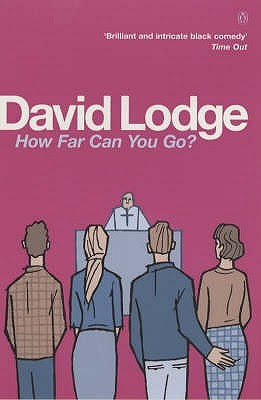
 

How Far Can You Go? (first published 1980) was marketed in America under the title Souls and Bodies. It was for many years David Lodge’s best-selling novel. In some respects it is a protest novel – but only in some respects. How Far CanYou Go? is what I would call a “panoramic” work, cutting between a large cast of characters and told in the omniscient third-person. It concerns a group of English Catholics, following them for about 25 years years from the early 1950s to the mid-1970s. In the process it gives an account of how the Catholic church changed radically in those years. In 1951, the nine major named characters are university students who attend (Latin-language) mass regularly, believe in the concepts of Hell and possible damnation, receive communion, go to confession and especially take seriously the church’s teaching on chastity, sexual morality and the sanctity of marriage. Most (but not all) of them look forward to marrying and raising families. To give you their names once and once only, they are glamorous and pious Angela, after whom many boys pant; hearty and lusty Polly; plain and sour Ruth; Miles who has converted from Protestantism and takes liturgy very seriously; Michael who is sexually-obsessed and aches for consummation; Dennis who has an awful crush on Angela; Adrian who can’t quite bring himself to admit he is homosexual; plain, commonsense Edward; and the highly-neurotic Irish girl Violet. All are staunch practising Catholics. Their student group is shepherded by Fr. Austin Brierly.

But the 1960s come along, and everything changes. First there is the Vatican Council, which modernises the liturgy, calls into doubt many long-observed practices and allows more radical theologians to redefine central beliefs. And at the same time in society at large there is the so-called “sexual revolution”, fuelled by easily-available contraception. In 1968, in his encyclical Humanae Vitae, the pope reaffirms the church’s ban on artificial birth-control. So this is the “protest” element of the novel. Through the stories of his main characters, Lodge chronicles the anxieties of Catholics who attempt to play by the church’s official rules, using the “natural” rhythm method of birth control but having children anyway. Lodge is calling out the  church’s ruling and suggesting what psychological and physical harm it did to many people. This, I surmise, may be what made this novel a bestseller, especially among Catholics. In the character of Fr. Austin Brierly we also see the turn to heterodox forms of worship and a certain degree of gimmickry in new liturgies.

Lodge’s style might possibly be called postmodern. The omniscient narrator sometimes butts in to explain how he is constructing this novel. In Chapter 3, Lodge explicitly refers to his own earlier novel The British Museum is Falling Down. In Chapter 4 he cheerfully breaks off his narrative to give a general journalistic overview of Catholic reaction to Humanae Vitae, and then apologises to readers for having held up the story. I have to assume that he has based some of his characters on people he knew, and on his own experience. One main character, for example, has a Down’s Sydrome child, as do Lodge and his wife.

Yet there is an odd undercurrent to this novel. The title How Far Can You Go? is the question Catholic schoolboys once used to tease priests, when they were discussing the appropriate courting of the opposite sex. But, as some of his characters have affairs, turn adulterous and embrace fashionable theologies, or – in the case of a nun – can’t find certainty when they embrace modish causes, Lodge implies that it is possible to go too far in the post-Vatican II church. It is quite obvious, for example, that Lodge finds some new forms of liturgy fatuous, and the assumptions of some “progressive” Catholics either naïve or self-serving. Some of the styles they embraced now seem more ludicrous – and more irrelevant – than the old pre-Vatican II church, such as the short-lived “Charismatic Renewal”. In fact, under all their adjustment to new ways, the novel’s main characters have an underlying sense of loss and a desire for certainties that have been discarded. Lodge’s protest is real, but I do sense a certain nostalgia for the church as it was, for all its imperfections.


Small World (first published in 1984), sometimes subtitled “An Academic Romance”, was the second of Lodge’s “campus novels” following on from Changing Places. It was shortlisted for (but did not win) the Booker Prize. While Changing Places focuses on the difference between American and British universities, Small World deals with the phenomenon of international academic conferences. The title clearly has a double meaning. It’s a small world when academics can hop on international flights and be in exotic venues in a matter of hours. But the conferences themselves are usually a “small world” of the same academics competing for awards or tenure or publication or prestige; sharing gossip; trying to undermine one another; arguing over their pet theories and, of course, holidaying at their universities’ expense and having extrcurricular sexual encounters. Longer than most of Lodge’s novels, Small World has a large cast of characters, some of whom (such as Philip Swallow and Morris Zapp) reappear from Changing Places. Much of it plays as broad farce.

As the subject is conferences on language and literature, Lodge once again enjoys satirising various schools of literary criticism. The (hypocritically rich and sex-addicted) Italian Marxist, Fulvia Morgana, interprets all literature as evidence of the class-war. The haughty, aged Oxbridge critic Rudyard Parkinson wants to stick with traditional modes of criticism and resents all this new-fangled French “literary theory” nonsense. Meanwhile the younger hotshots who want to get ahead up are to their necks in structuralism, post-structuralism and deconstructionism. They take their lead from older, cannier practitioners in these intellectual games such as the dogmatic German Siegfried von Turpitz and the porn-watching American post-structuralist Arthur Kingfisher. Meanwhile the under-prepared Aussie lecturer Rodney Wainwright strains and agonises over writing a paper for a conference which he has been lucky enough to be invited to. And then there is the disconsolate technocrat (who is never invited to conferences) Robin Dempsey, who believes that he will solve all questions about literature by using computers to analyse the frequency of key words in any writer’s work. Much of this is straightforward piss-taking interlarded with the fortunes of Morris Zapp and Philip Swallow in both publishing and sexual activity. Of course arch literary jokes come thick and fast.

But Lodge wants Small World to be more than a romp. His central thread of plot has the naïve young Irish academic Persse McGarrigle chasing from conference to conference his ideal woman Angelica, and never quite finding her. Note that subtitle, “An Academic Romance”, the word “romance” being used to designate Medieval and Renaissance romances which were episodic tales of quests to find some ideal (the Holy Grail or the perfect lover). So on come references to Arthurian romance and Edmund Spenser. Note the names of characters. The seductive sex-addict Fulvia Morgana is really the Arthurian temptress Morgan le Fay. Arthur Kingfisher, doyen of post-structuralists, is the Fisher King. The chaste and virginal Persse  McGarrigle is Percival (or Parsifal), the pure knight in quest of the Grail. Etcetera, etcetera, et-bloody-cetera.  Like the other literary jokes this can be very arch, especially in the denouement where all ends are tied up neatly in a fantastical, mythical way that jars with the novel’s modern milieu and frequent realism… but then the mythical stuff, via an ancient spinster scholar called (archly) Sybil Maiden, does allow Lodge to link his “romance” with T.S.Eliot’s The Waste Land.

You can see from the above that I found Small World both amusing and irritating. In his autobiography, Lodge says that many were annoyed by this novel’s publication at a time when subsidies for British universities were being cut back. Some reviewers said Small World presented the false image of academic conferences as no more than time-wasting junkets. More objectionable to me, though, were the predictable slapstick parts, usually related to rough sex (Morris Zapp being caught at a most inappropriate moment in s-and-m handcuffs by the rapacious Fulvia Morgana; a publisher shagging his secretary is a basement where boxes collapse on him etc. etc.). They come across as outtakes from a bad Carry On movie. And of course when Persse  McGarrigle does eventually catch up with Angelica, his Holy Grail proves to be one night of rutting, after which the two of them go their separate ways. Not much of an outcome for a Quest, really, is it? But then perhaps Lodge was signalling that the search for real enlightenment at academic literary conferences is also a quest bound for bathetic failure.


Nice Work (published in 1988) was another of David Lodge’s “campus novels”. Like Small World is was shortlisted for (but did not win) the Booker Prize, but for what little it’s worth, it did win the Sunday Express Book of the Year Award. How ‘bout that? Philip Swallow (now head of Rummidge – i.e. Birmingham – University English Department) is a minor character in the background of the story. Interesting to note that Swallow is now afflicted with encroaching deafness, as Lodge himself later went deaf and he might have been drawing on personal experience. Morris Zapp also re-appears very late in the novel as a sort of deus ex machina.

The plot of Nice Work bears some resemblance to Changing Places, essentially concerning two characters who get to know each other’s environment. In her early 30s, Robyn Penrose is a junior lecturer in Rummidge Univerity’s Eng. Lit. Dept. She is an advocate of deconstructionism, literary theory, a little Marxism and a lot of feminism. The book she is working on concerns all those “State of England” Industrial novels that were written in the nineteenth century – Shirley, North and South, Mary Barton, Sibyl, Hard Times, Alton Locke etc. – which decried the growing gap between the middle classes and industrial workers. Ironically though, for all her theory, Robyn know very little about how industry works in the present day.

But she is assigned to a scheme intended to bring academe and industry closer together. She will “shadow” (i.e. follow that daily activities of) an industrialist who will later “shadow” her in her academic round. She is paired with no-nonsense Vic Wilcox, managing director of an engineering firm, in his forties, married and with a family of three fractious teenagers and young adults. Self-righteously Robyn sets out to “improve” the working conditions of the engineering firm while clearly not knowing how it operates or what sort of men it employs. At first Vic Wilcox resents and despises her but gradually, through their bickering, the industrialist and the academic are drawn together in a sort of sparring Beatrice-and-Benedick relationship. Yes, it does involve some sex (David Lodge can’t resist it), but does not involve love, as Robyn sticks to her feminist dogma that she is an autonomous being. She rebuffs Vic’s romantic advances. Of course Vic, later placed in the academic environment, learns at least some things about the study of literature and there is much jolly by-play with the complexities of literary theory. The novel’s “happy ending” is ridiculous  - but then this is supposed to be a comedy and Lodge would probably argue that he is consciously parodying the “happy endings” that tied up so many otherwise-serious Victorian novels, when fate stepped in to solve what were really insoluble problems.

Nice Work is very obviously set in the reign of Margaret Thatcher, with Robyn’s brother Basil and then Robyn’s erstwhile lover Charles latching on to the joys of making lotsa money on the currency market. Crass materialism reigns.  There is also the fact that universities are being defunded, there are cutbacks and many members of Rummidge University’s English Department are fearing for their jobs. This, too, was a feature of Thatcherism. Perhaps Lodge was consciously righting the false image he had presented in Small World of academe as one endless conference-attending junket. There is also, throughout the novel, the huge irony that the Marxist-feminist-deconstructionist Robyn comes from a very comfortable middle-class background and has never known any other sort of life. She never understands that her zeal to “improve” the industrial workers is really a exercise in embourgeoisement. She wants them to be like her. Vic, of working-class background, is not presented as a positive opposite to her – he has his faults – but his experience of industry has taught him more than Robyn’s theory has,

Despite its lame ending, Nice Work has a clearer focus than either Changing Places or Small World. I think it is the best of Lodge’s “campus novels”.


In many ways, Paradise News (published 1991) is a reversion to Lodge’s very first novel The Picturegoers. In The Picturegoers, Lodge suggested that movie-going was a substitute for religion, offering new images to worship. Over thirty years later, in Paradise News, he suggests that tourism (and sex) are the new religions. In Paradise News, a pop anthopologist called Sheldrake articulates this thesis specifically (even if Lodge gently pokes fun at him for his modishness). Tourists taken in jumbo jets to exotic places are the new pilgrims. Tourist traps to which the tour guides take them are the new shrines. Holiday snaps and home-movies are the relics taken home to authenticate that one has been to the exotic place. And, of course, tourist advertising tells tourists that their destination will be very “paradise”.

The setting is Hawaii, where everything is hyperbolically described as Paradise.

The protagonist is 44-year-old Bernard Walsh, an Englishman of Irish descent from Lodge’s Rummidge (i.e. Birmingham). He comes to Hawaii on a farewell visit to his aged Aunt Ursula, who is cancer-ridden and has a short time to live. Bernard is an ex-priest who lectures in theology but is now deeply agnostic and has cast aside any  religious belief. Ironically, Aunt Ursula was long ago expelled from her Irish Catholic family for marrying a divorced American who has now deserted her; but in her old age, she has returned fervently to the Catholic faith. In terms of religion, Bernard and Ursula have changed places. There is much rich comedy in this story, especially related to Bernard’s outspoken and cantankerous old Irish father (Ursula’s brother) whom he’s brought along with him.

On the matter of tourism, Lodge chroncles the real tackiness and commercialised bad taste behind the over-hyped attractions of Hawaii, and he has a supporting cast of (English) tourists who represent different “types” – the man who always complains; the kids who are bored; the young married couple who can’t enjoy the holiday because they’ve fallen out; the man obsessed with recording everything in home movies; the two young women who are looking for Mr Right. They reveal themselves in the type of postcards and letters they send home.

But the real theme is healing. As soon as Yolande, an (available, almost divorced) American woman, walks into the story and strikes up a friendship with Bernard, you know exactly where Paradise News is going. Ex-priest Bernard longs for a woman and his one chance to have one had gone nowhere. Now there is Yolande, sympathetic, sexually experienced and ready to tutor him. So for Bernard part of the happy ending is ecstatic sex and companionship as (yawn) it is in a number of Lodge’s novels. The other healing comes from the reconciliation of Ursula and Bernard’s Dad, and from Bernard’s renewed understanding of the value of religious ritual as consolation, even if he remains firmly a non-believer. There’s also the too-neat sudden appearance of a whacking great legacy to cure everybody’s woes. Lodge really does strain to make plausible happy endings (see review of his Therapy below).

A number of things weight this novel down. It is rather awkward when, exactly half-way through, Bernard gives a long first-person account of his formation as a priest and then his disillusionment with his role. And in the very last chapter there’s a long sequence where Bernard explains his beliefs to his students; and then Yolande sends a long letter chronicling the beauty of Aunt Ursula’s religious funeral. The exposition here is too explicit and obvious, though it does reveal Lodge’s own ambiguity – he is an agnostic who nevertheless has some nostalgic affection for the church he put behind him. And, be it movies, tourism or sex, Lodge does suggest that some sort of religious yearning beyond oneself is an essential and enduring part of the human character. “The God-like hole in our consciousness” etc.


Lodge’s Therapy (first published in 1995) was hailed by some reviewers as a comic masterpiece and does have some very funny set-pieces – but somehow (for this reader at least) it goes badly off the boil before it ends, perhaps because it trundles on longer than most Lodge novels do. This is the novel in which Lodge tackles late middle-age and the awful looming fact of physical decline. Lodge was 60 when the novel was published and his protagonist is about the same age.

58-year-old Laurence Passmore – generally known as Tubby – is a successful and affluent scriptwriter for a TV sitcom; but all the savour is going out of his life. He can still get an erection but he finds it impossible to have an orgasm when he makes love to his wife Sally. Even more worrying, he has a persistent pain in his knee which conventional medicine cannot cure. So Tubby worries and wonders and becomes a ripe neurotic as he looks for cures – psychotherapy of course, but also acupuncture, aromatherapy and a quest for satisfying sex. This takes him on a priapically-driven journey, usually leading to comic disaster. He suspects his wife of having a lover (comic disaster in London). He tries to turn a platonic friend into his mistress (comic disaster in awful holiday in Tenerife). He fails to get it on with a Hollywood bimbo whose passes he turned down years before (comic disaster in LA). Then he discovers the works of Kierkegaard, with whom he becomes obsessed. He believes studying Kierkegaard’s existentialism is giving him an accurate account of his own neuroses and will help him mend his marriage. Whereupon his wife Sally walks out on him.

Up to this point the novel is picaresque fun-and-tumbles and frequently a sharp satire on modish remedies for psychological problems. But as so often, Lodge plays some neat post-modern games. The story is told in the first-person by Tubby Passmore in the form of his diary entries over a number of months, and the narrator’s pr
ofession as scriptwriter makes him (like Lodge) conscious of how he is using language. Every so often, he will stop his narrative to look up the meaning and origin of a word he has just used, questioning the validity of what he has just written. The novel gives us a section of other characters’ observations on Tubby, ostensibly displaying an “objective” view of his life and obsessions. These voices often sound forced and artificial… which proves to be the case as they all turn out to be Tubby’s inventions of what other people are thinking about him. We can never really trust the narrator of a novel, can we?

Weakest, I think, is the way the novel resolves itself. I won’t go into the details, but it involves Tubby becoming deeply nostalgic about his first, innocent teenage crush on a girl forty years previously (and incidentally allowing Lodge once again to work in some details of his own childhood near London). In effect he tries to “go home again” and reconstruct that first love. How this thread of plot works out is upbeat – which is only fair in a novel that sets out to be comic – but also improbable and, as a denouement, rather glib. I really can’t imagine a person as self-obssessed  as Tubby ever being “cured” in the way Lodge allows him to be. Bits of travelogue also overwhelm the last sections of the novel.

Let’s say its an almost successful comic novel.

Something Thoughtful

 Nicholas Reid reflects in essay form on general matters and ideas related to literature, history, popular culture and the arts, or just life in general. You are free to agree or disagree with him.

                                A RANDOM MISCELLANY OF TRIVIAL GRUMBLES


On Wednesday 30 June I was watching the 6 o’clock news on TV ONE as is my wont. There was an item about how many people in New Zealand had yet been vaccinated against the Corona Virus or Covid 19 or whatever you currently call it. Of course I always feel a little smug watching such items, as my wife and I have already had the two jabs. But as I watched this brief item I was shown not one, not two, not three, not four , but fully FIVE juicy close-ups of hypodermics being plunged into arms.

 Now I’m not scared of being injected in a good cause (not that I ever enjoy the needle going into my gums at the dentist’s), and I wasn’t at all bothered by the two jabs I took against the virus. Among other things, my wife and I are two of the lucky ones who suffered no side effects.

But I am worried by those five close-ups.

Not so long ago, arms receiving the needle were never shown in movies, let alone on TV. Then within, I think, the last decade, suddenly it became obilgatory to have those juicy close–ups of flesh being thus pierced. And it’s never a pleasant sight, even for a non-needle-phobic such as I. It always looks brutal and upsetting. Part of me says it’s akin to the “if it bleeds it leads” sensationalist tendency of TV news. Ya godda show ‘em something violent to keep ‘em watching.

But another part of me says, if this news item were made in the interest of making more people take the vaccine, then it probably had a negative effect. Five close-ups of arms being pierced by needles, and quite a few needle-averse viewers will have decided that vaccination was clearly not for them.


*   *   *   *   *   *   *   *   *   *   *   *   *   *   *   *   *   *   *   *   *

Knowing my form, at this point in one of my “Something Thoughtfuls” you expect me to segue into a long discourse on various other matters related to the topic dealt with above. But I’m not going to give you such. This fortnight’s “Something Thoughtful” is strictly and deliberately a random miscellany of trivial grumbles.

First let me deal with the nouns and verbs. I am still not reconciled to the use of the noun “impact” as a verb. Thus, instead of saying, correctly, “What impact [noun] did it have on them?” it now seems routine to say “How did it impact [pseudo verb] them?” Granted that “impact” has long been a very limited intransitive verb (as in “impacted wisdom teeth”), this is to use it  illiterately as a transitive verb. There are even more extreme examples of this ungrammatical noun-to-verb metamorphosis. “Summit” is a noun and nothing but a noun. But where once it might have been asked of a mountaineer “Did she reach the summit?” [noun] we now get the barbaric “Did she summit?” [pseudo verb] This is on the same level of idiocy as schoolchildren saying “Our team will verse them”, because they have so often seen notice boards scheduling this team versus that team. Worse, it’s on the same level as those who say “abolishment” or “evolvement” or "denouncement" when they mean “abolition” or “evolution” or "denunciation". Or to sink to the lowest depths of Hell, it is like people who say “the 1800s” when they mean “the nineteenth century” or who do not know the difference between “uninterested” and “disinterested”, or  the difference between “on his behalf” and “on his part”.

I will not waste time on orthography. Some people are simply bad spellers. But when I am dictator for life with unlimited powers, I will send to labour camps those Millennials and Generation XY and Z-ers, who do not know how to spell “eh” as in “Bad spelling is pretty awful, eh?” Instead, these benighted semi-literates render the particle as “ay” or “aye” apparently unaware that “aye” is properly pronounced as in “Aye, aye captain!

And should I say something about pronunciation? The battles here are really lost already. “Data” now tends to be pronounced only American-style (“DAY-ta” rather than “DAH-ta”) and I’ve even come across New Zealand students who are puzzled by the pronunciation of “lieutenant” as “LEFF-tenant” because they’ve only ever heard the American “LOO-tenant”. (My solution would be - go back to pronouncing this French word the way the French do, but somehow I think my suggestion won’t catch on.)

If I’m being picky here, there is one mispronunciation that still worries me. This is the loss of “women”. It appears that women no longer exist. I know this because radio and TV commentators now routinely say such things as “Forty woman have protested against this bill” or “Eighteen woman competed in the marathon”. Time was, this mispronunciation was one of those things that was corrected in primary schools. Now it has become the norm among semi-educated newscasters. Not too long ago feminists insisted on spelling the plural of “woman” as “wimmin” as in “Wimmin’s Spaces” etc. I used to think this was a silly affectation, but now I find much merit in it.

Monday, July 5, 2021

Something New

We feature each fortnight Nicholas Reid's reviews and comments on new and recent books. 

“PRAGUE IN MY BONES – A Memoir” by Jindra Tichy (Quentin Wilson Publishing, $NZ45); “SHOULD WE STAY OR SHOULD WE GO” by Lionel Shriver (The Borough Press – distrbuted by Harper-Collins Press, $NZ32:99)


            I wish I could like Jindra Tichy’s Prague in My Bones much more than I do. As this memoir makes clear to us, Jindra Tichy is a formidably intelligent woman  who has had to endure much in her life, but who has managed to keep a sane and temperate view of things. Prague in My Bones condemns much, but nowhere does it succumb to self-pity. The net effect is of serenity won after storm.

            A Czech born in 1937, Jindra as a young child lived through the five brutal years of Nazi occupation of Czechoslovakia. Liberation from this was brief. The coup of 1948 condemned the country to forty years of Communist rule which, in its early years with purges and show trials, was as brutal as the Nazi years. The “Prague Spring” of 1968 promised an improvement in life, but this was shut down by the Soviet invasion and permanent settlement of 200,000 Soviet troops in the country. It was before the borders were completely closed that Jindra, her husband Pavel and their young son Peter managed, separately, to flee to England. Both Jindra and Pavel were academics who had lectured in philosophy at Prague’s prestigious Charles University. After a few years in England, they migrated to New Zealand where first Pavel, and then Jindra, took teaching positions at the University if Otago.

            When Jindra Tichy speaks of the Nazi occupation, she speaks not only of daily terror, rationing and hunger, but she also expresses great pride that her mother risked her life taking part in armed resistance. She knows the unexpected nuances of history. There’s the fact that Czech partisans had fought, and cleared Prague of Nazis, a day before the Red Army arrived; but throughout the years of Communist rule this fact was suppressed. (When I spent a week in Prague in 2018, I noticed in Wenceslas Square placards, in Czech and English, celebrating the city’s self-liberation – see one of the photos I took below). Even lesser known is the fact that the Vlasov Army, an army made up of Russians who collaborated with Hitler for their own reasons, played an honourable part in dissuading the Nazis from razing Prague to the ground when they were planning to retreat. Most surprising of all, she is frank about the brutal ethnic cleansing that took place just after the war, when the three-and-a-half million Sudeten ethnic Germans were driven out of the country. Much as she loves her homeland and its people, she is not blind to the wrongs they have done.

            Of the Communist years there can be little positive to say. In Tichy’s account, Communist dogma meant the complete destruction of what had been – before Nazi occupation – a functioning liberal democracy with a healthy market economy and a thriving industrial base. The country was systematically impoverished. People were promoted to responsible positions in industry not for their competence but for their loyalty to the Party. Similarly students were given preference in scholarships and places in universities not for their academic abilities, but according to their social class – proletarians first. Trade unions were Party-controlled and the right to strike was abolished. Freedom of expression ceased to exist and the threat of Soviet invasion was constant. In intellectual life, propaganda took over from reasoned discourse. At Charles University, courses on Marxist-Leninism had to be taught in all departments. In the philosophy department, where Pavel taught, formal logic was supplanted by dialectical materialism. As a philosopher, Jindra gives her opinion thus:  There is no philosophy of science in the works of Marx and Engels. Dialectical materialism is just gibberish, using a kind of pseudo-scientific vocabulary.” (p.113)

            The effect of this upon the Czech people was sheer ambiguity. Those who live in open societies often wonder why those in closed societies don’t more openly challenge oppressive regimes. But this train of thought shows only how little outsiders know about the working of totalitarian regimes, rather like some silly left-wing academics Jindra met in England who justified the invasion of Czechoslovakia as the USSR helping a “fraternal socialist country”. The great majority of Czechs despised the Communist regime, but to keep their jobs (or not be sent off to the local gulag) they had to play by the rules. This meant academics knowing full well that what they were compelled to teach was rubbish, and even joking about it when in safe spaces, but still teaching it as ordered. In the post-Communist years, this led to much retrospective guilt.

            Jindra Tichy’s reaction to the Prague Spring is surprising. She does not hail it as the beginning of a possible renaissance for the Czechs, but condemns it as a delusion. Speaking of Alexander Dubcek, the man who attempted to introduce “Communism with a human face” she says “I am sorry for Dubcek and what happened to him, but I bear a grudge against him because he allowed us to fantasise about this wonderful new society when he must have known that the little charade about a democratic and just society that would suddenly spring into being was just a monumental lie, and that the Soviets would never allow it – he grew up and was educated in the Soviet Union.” (p.88) Further she remarks “The invasion of 21 August 1968 taught me several valuable lessons. It showed me that socialism could not have any human face: that was just a dangerous delusion of Dubcek’s.” (p.85) Communism was in effect irredeemable, and any attempts to “reform” it led to its collapse, as happened when Gorbachev attempted to “reform” the USSR in 1989.

But her travails, and her people’s travails in Czechosolovakia are only part of this memoir. On the matter of exile  she says: “I  want to add… that the first years of exile were the toughest years in my life. To lose the country of your birth, the people you love, your mother tongue, your culture, is hard. As we know from Plato’s dialogue Crito, when Socrates is given the choice between emigration and execution, he chooses death. After years spent in exile I understand why his was probably the right choice.” (p.133)

Even so, of her and Pavel’s time in England she says: “I had fallen in love with the centuries-old traditions, with a literature that produced such a genius as Jane Austen, with the little towns and villages in Devon… but mainly, I had fallen in love with the freedom of the people, the principled government, with the rule of law, free market economics and a sensible right-wing ideology.” (p.171) She says similarly flattering things about New Zealand, where she has now lived for many years, which she found to be “a democratic and just society” and enjoyed “the goodwill of the people.” (p.237) She tells the charming story of learning English, in England, by reading and studying the novels of Jane Austen, especially Emma. She does, however, take some time adjusting to the rainy English climate and is distressed that, while Pavel gained work and completed his PhD in formal logic at an English university, she was not able to find work. In New Zealand, she once again has to get used to alien food and the fact that chilly houses are not properly insulated. Pavel becomes an associate-professor in philosophy at Otago, but she herself never makes it in the philosophy department. Instead, thanks to her fluency in Russian, she gets to teach in the Russian department, revealing her lifelong admiration of classic Russian literature despite her loathing of the old USSR. Later, her knowledge of European politics and parties allows her to specialise in teaching political science. But gradually her interests change, and she becomes a novelist in the Czech language.

It is here that, admirable life as her’s may have been, I’m bound to point out what goes wrong with this interesting memoir. There are many important areas of her life about which she is too discreet – I would even say evasive. At one point she casually mentions that it was common in Czechoslovakia for spouses to take lovers as a matter of course – or at least it was common in the circles in which she moved. She says she too had a lover… but we hear nothing more about him. She deals very cursorily with the break-up of her marriage. Only very late in the text does she admit that she and Pavel had been drawing apart for years, at which point she gives some anecdotes about how grumpy he could be to students and how he alienated many of his colleauges. Of his sad ending (possibly a suicide, but the coroner left an “open verdict”) she says very little indeed. It is understandable that such a traumatic event may have been too painful for her to dwell upon at length. Even so, it is jarring to see how abruptly she deals with it.

Even more alienating, however, is the structure of this memoir and the way she presents her material. There is much repetition and many such phrases as “As I said earlier…” and “As I said before…” suggesting that she did not think her way through this material from the outset. Her opening chapters give a rather laborious account of her ancestors, something that could have been presented more concisely. She is comfortably settled in New Zealand when suddenly, in Part Five (titled “Socialist Disaster”) she goes back to telling us more about the manifest evils of Communism in Czechoslovakia, about which she has already dealt at length. Granted this more-or-less leads into an account of her visit to the post-Communist Czech Republic, I still get the general impression that Prague in My Bones could have done with more professional and rigorous editing. In saying this, I am in no way criticising Jindra Tichy’s robust opinions and world view.


Footnote: In 2015, I reviewed on this blog Jindra Ticha’s first novel to be written in the English language Death and Forgiveness. While I went out of my way to show how much I was in sympathy with the author’s ideas, I also noted the flatness of its prose and the clumsiness of its structure. One thing I wrote was I know nothing of the author’s personal circumstances, and do not know how much she is dealing with issues from her own life.” But I certainly did detect a strong autobiographical note in the novel. I also wrote I too often had the sense that I was reading a memoir, giving one party’s view of a failed marriage.” This would appear to be confirmed by the little she writes about the breakup of her marriage in Prague in My Bones. Another point of interest. In Death and Forgiveness her name is given as Jindra Ticha. In Prague in My Bones it is given as Jindra Tichy. I assume this was a concession to the English language which does not have both male and female forms of surnames, as Slavic languages have. 

*   *   *   *   *   *   *   *   *   *   *   *   *   *   *   *   *   *   *   *   *   *   *   *   *


            Everybody has strong opinions about Lionel Shriver, the American novelist who gave herself the name “Lionel” when she was a tomboy teenager wanting a more masculine name than the “Margaret Ann” her parents had given her. Now in her mid-60s, Shriver spends half her time in New York and half in Britain, and she has absorbed much of British culture as her latest novel Should We Stay or Should We Go reveals.

Shriver seems to court controversy and is condemned as much as she is admired. Her best-known, or most notorious, novel We Need to Talk about Kevin concerned a mother trying to cope with an evil son who commits a mass shooting of students at an American high-school, an event which has happened more than once in reality. The novel focused on the mother’s angst and the toll that raising a child had had on her when she wanted to pursue a career. But many read it as general revulsion against motherhood and having children at all. Shriver is heterosexual, married and childless by choice, and she supports the “Population Concern” group which lobbies for severe restriction of population growth. At a writers’ festival in Australia, Shriver gave a speech condemning the modish concept of “cultural appropriation” and received much flak. She was kicked off one literary judging panel for loudly opining that books should be published on literary merit, not because of the ethnicity or sexuality of the author. And, in Britain, she supported Brexit and repeatedly expressed concern over the many immigrants entering the country and radically changing its culture. Any one of these issues could – and does – start heated arguments, especially as Shriver is a regular columnist in many publications as well as a novelist.

Should We Stay or Should We Go has her wading into another controversial topic.

In the early 1990s, when they are still healthy and in their fifties, the English couple Kay and Cyril Wilkinson agree to a suicide pact. To escape the fate of Cyril’s father, who died senile and incontinent, and Kay’s mother, who is clearly sinking into Alzheimer’s, they will kill themselves when they are 80. That way, they reason, they will avoid going through the most humiliating processes of ageing and being helpless. Cyril, an ardent socialist, also says that if they and other old people were to do this, they would be freeing up beds that the NHS could give to more deserving younger patients. Aren’t senile old people just clutter anyway? Cyril is a doctor who has access to the lethal drugs they will need to carry out their plan… but when it comes to 2020, and they are now 80, Kay suddenly has misgivings about the suicide pact. She still wants to live a bit.

Dare I say that Lionel Shriver sets up this situation in her opening chapters with laboriously self-expository dialogue? But there’s lots more exposition to come, for the novel that follows is a series of alternative possible outcomes. In one scenario, their attempt to commit suicide turns into pure farce. In another, Cyril commits suicide but Kay doesn’t. In yet another, Kay commits suicide but Cyril doesn’t, and his three adult children then accuse him of murder. Or Cyril is sent to a hospital where he becomes immobile and capable of communicating only by winking.  Or Kay and Cyril live out their lives in a boring geriatric home. Or their children gang up on them and they are sent to a “home” which is more like a penitentiary where they are mistreated and from which they try to escape. Or (with Shriver jumping into science fiction) a miraculous drug is invented which reverses the ageing process and Kay and Cyril, like all other old people, become young and healthy again… but the problem is that, with nobody now dying, the world becomes grossly-overpopulated (one of Shriver’s bugbears) and besides, immortality proves to be boring. And with more science fiction, in another scenario, they take to cryogenics and are revived eons later into a world so alien that they wish they were dead. Of course there is one scenario where they live happy and fulfilled into very old age and die naturally. But that is not where Shriver is ultimately going.

By now, you should have realised that Shriver’s big topic here is (voluntary) euthanasia. As, in this novel, most of the alternatives to planned suicide are presented as horrific, you can see which side of the argument she really approves. She also has a number of incidents in which either Kay or Cyril die by accident, the intended moral being that we all die anyway, so why should euthanasia shock us? Need I say that this elides many reasoned arguments against euthanasia? Should We Stay or Should We Go is set in the era of Covid 19 and Brexit (hence the double meaning of the title). In at least one chapter, where Kay and Cyril are overcome and killed by invading non-European immigrant hordes, we basically get the type of alarmist rant that I have noticed on this blog only in Jean Raspail’s very racist The Camp of the Saints.

I wouldn’t underrate Shriver’s powers of observation in all the specific settings where her scenarios are staged. Nor would I underrate her dry wit, savage though it sometimes is. But in the end I found Should We Stay or Should We Go polemic rather than novel, giving one side only of a complex problem.

Something Old

 Not everything worth reading is hot off the press. In this section, we recommend "something old" that is still well worth reading. "Something Old" can mean anything from a venerable and antique classic to a good book first published four or more years ago.  

ALL YOU NEED KNOW ABOUT THE NOVELS OF DAVID LODGE – PART ONE

Dear Reader, I’m sorry, but I did warn you that this was coming when, in my last posting, I reviewed David Lodge’s autobiographies Quite a Good Time To Be Born and Writer’s Luck. I noted that, having consumed his autobiographies, over the summer season I read my way methodically through all fifteen of Lodge’s novels, only a few of which I had read before. I also said that I would present a three-part series commenting on them all. And here for your edification the series begins.

*   *   *   *   *   *   *   *   *   *   *   *   *   *   *   *   *   *   *   *   *   *   *

David Lodge’s first novel was The Picturegoers, published in 1960 when he was 25. But in a detailed introduction to a 1993 reprint of the novel, Lodge notes that he’d begun writing it when he was 21 and finished it long before a publisher picked it up. He also says it is very much a young man’s novel, rather too eager to explain things at length and get lost in side-issues. This is true, but even so, The Picturegoers is a very competent novel and nothing for the older novelist to be ashamed of. I also have to note that it is a novel more seriously immersed in Catholicism than his later, and often more satirical, views of religion are.

It is structured as a series of vignettes of various people who go regularly to the cinema. The seedy old picture palace, the Palladium, is depicted vividly in all its tattiness and the novel makes it clear that even in 1960, picture-going was declining under the impact of television. Even so, Lodge implicitly equates the picture-going habit with religion and church-going – another form of escaping from everyday reality, perhaps.

The first half of the novel has people reacting to the screening of a Hollywood sex-farce (though given a different name, it sounds like the Marilyn Monroe vehicle Seven Year Itch). This evokes different reactions from different members of the audience. It stirs up the thuggish teddy-boy Harry to violent sex fantasies, which he later tries to act out. It makes the older married man nostalgic for the livelier sex he had with his wife when they were younger. And the local Catholic priest Father Kipling – who sees the lascivious film by accident – is so outraged that he tries to set up a “crusade” to stop people going to the movies. (The “crusade” is a flop and even Father Kipling’s bishop advises him to give it up.)

In the second half, the desperate theatre manager tries to woo back his diminishing audience by screening something different – the classic neo-realist Italian film Bicycle Thieves. But this is too much like reality, and the audiences aren’t impressed. Unwillingly, he ends up attracting a teenage audience by screening Rock Around the Clock, which has the kids jiving in the aisles, much to his disgust. Movie-going is still declining, just like church-going.

Inasmuch as it has a main character, it is the young intellectual Mark Underwood who, as Lodge’s introduction suggests, draws very much on aspects of Lodge’s own life. He’s a Catholic who has lapsed a bit, but who is bucked up by lodging with a lively and welcoming lower-middle-class Irish Catholic family, the Mallory family, and he falls in love with the eldest Mallory girl, Clare. She clearly expects this to lead to marriage. She had tried a vocation as a nun, but had given it up and left the convent before she took her final vows. Why did she leave? This dangles as a question until late in the novel when she explains to Mark that another postulant, Hilda, had what amounted to a lesbian crush on Clare, which might have caused a scandal. (Given that the novel was published 60-plus years ago, this is explained very discreetly.) Later, to extend the movies-religion equation, Lodge had poor neurotic Hilda having transferred her adoration from religion to the cult of James Dean.

As always, Lodge presents very accurately the customs and observances of pre-Vatican II Catholics. But (and here I am giving a big spoiler, as I am allowed to do what dealing with older novels) I find very implausible the eventual “conversion” of Mark Underwood, which has him leaving Clare and going off to try a vocation as a priest. This simply does not square with the character who is presented to us for most of the novel. Again in his 1993 Introduction, Lodge says he now thinks this was an artificial conclusion, too influenced by all the Catholic novelists he’d been reading (Bernanos, Mauriac, Greene etc.). And yes, Mark does spend many pages solilioquising and agonising over the bleeding obvious.

Lodge’s second novel Ginger, You’re Barmy (first published in 1962) was his reaction to the two years of compulsory National Service he had to do in the army in the mid-1950s. Jonathan Browne and Mike Brady are fresh out of university. Middle-class and English, Jonathan has done well academically and is looking to get his national service over with, so that he can move into the world of academe. He plans to play along with the military system, much as he hates it. Mike Brady didn’t do well at university but also wants to get his national service over with. Irish and working-class, Mike has a rebellious streak and chooses to take the system on, rather than conforming to it. This leads to big trouble. Despite its jocular title, Ginger, You’re Barmy is not the sort of comic novel that Lodge later made his forte. Indeed much of it reads like dour documentary, doubtless worked up from notes Lodge made during his two years of military servitude. Those in authority – especially the corporals and other NCOs – are bullying to national service recruits. Squaddies are forced to do pointless duties. Parading and drill lead nowhere. There is a clear class structure, with the higher-ups and Regulars mainly coming from private schools or Oxbridge, and following a family military tradition. The food is generally disgusting. Punishments are severe. Most of the working-class recruits are spectacularly foul-mouthed. In his autobiography, Lodge notes that he euphemised most of the swearing in the first edition of this novel, using “fugg” instead of “fuck”. For a second edition years later, he reinstated “fuck” and “c—t” in all their glory – but then he had doubts about this and in the most recent edition he returned to the euphemised language, saying it was more appropriate to novels of the era when it was first published.

It is very easy to bracket Ginger, You’re Barmy with the “angry young men” British novels of the 1950s and early 1960s, written by Alan Sillitoe, John Braine, John Wain and their ilk. Like the “angries”, it is written in the style of realistic reportage and it attacks social castes and their elaborate rituals. It is a protest against young men having to give up two years of their life at a time when they should be getting on with their careers.  But the whole system of compulsory National Service was about to disappear even as Lodge was writing, which inevitably leaves Ginger, You’re Barmy as a period piece protesting against something that is now mainly of historical interest.

However, the “angry young man” aspect of this novel is only part of the story. Ginger, You’re Barmy is written in the first-person with Jonathan Browne as narrator, and we are soon aware that he is a rather devious and unlikeable character, finding excuses for his own behaviour while castigating others. Morally flawed, he may be reporting barrack-room conditions accurately, but he is clearly an opportunist. One strand of the plot (signalled to us at the novel’s very opening) is that he has moved in on his pal Mike’s girlfriend and supplanted him. Lodge also has to create a plot to keep the documentary readable. An NCO bullies and abuses an inept recruit to the point of causing his death (whether by accident or suicide is a matter for debate). The impulsive Mike takes an elaborate revenge. How plausible this part of the novel is will be something readers have to decide. For this reader, after all the documentary, it seemed a leap into the implausible.


The British Museum is Falling Down (first published in 1965) is witty and relatively short – though, alas, much of its humour now seems dated and laboured. Adam Appleby, in his mid-twenties, has very little income and is researching his doctoral thesis on a linguistic-literary topic, “Long Sentences in Modern Fiction”. This requires him to visit the British Museum Reading Room every day. But on the one day when the novel’s action takes place, Adam is preoccupied with something else. He and his wife Barbara are practising Catholics and the church opposes artificial birth control. Adam and Barbara, housed in cheap and uncomfortable lodgings, already have three young children and, given that the “rhythm” method of birth control is so unreliable (“Vatican roulette” according to its critics), Adam lives in mortal fear of Barbara being pregnant again. This is what distracts him throughout a totally unproductive day in the Reading Room. Adam daydreams. For a number of pages, he imagines himself as the pope, repealing the church’s ban on contraception.

Much of the novel’s comedy depends on broad slapstick. Adam inadvertently sets off a fire alarm in the Reading Room. Adam has to fend off a sex-hungry teenage girl when he’s trying to get hold of what he thinks is a valuable manuscript. His unreliable motor-scooter explodes. There’s also the comedy of awkwardness and social discomfort. Adam just happens to bump into his parish priest when he’s about to buy some contraceptives. In a gathering of literary academics, one character talks about “Kingsley Anus”, “C.P.Slow” and “Mormon Nailer”.

But most of the comedy relies on pastiches of canonical writers and extended literary jokes, befitting a student of literature. A novel confined to a single day consciously echoes the structure of James Joyce’s Ulysses and Virginia Woolf’s Mrs Dalloway. There’s a descriptive passage mimicking the sex-obsessed D.H. Lawrence (“He passed through the narrow vaginal passage, and entered the huge womb of the Reading Room” etc.). When Adam attempts to renew his reader’s card, he faces a meaningless bureaucracy out of Kafka. A group of Asians in the Reading Room brings forth what sounds like an overwrought description by Conrad. Adam’s meeting with supervisors of his thesis is recorded in a plodding, cloth-eared style that can only be a parody of C.P.Snow’s dull prose. The terse dialogue with a group of “butchers” is Hemingwayesque. All this is fun up to a point, but also arch. We know that some jokes will be laboured as soon as we hear the protagonist’s name – Adam – for Adam was the father of mankind, which is exactly what Adam Appleby doesn’t want to be. As for Adam’s study of “Long Sentences in Modern Fiction”, probably the longest such sentence is Molly Bloom’s soliloquy at the end of Ulysses, so inevitably The British Museum is Falling Down ends with Barbara voicing her fears of pregnancy and child-raising in a pastiche of Molly Bloom. And having noted all this, I’m sure there are some literary jokes that passed me by.

While laughing often enough at this novel, I found much of its self-conscious style overwhelmed, and finally smothered, what I think must have been intended as a satire on official Catholic teaching and consequent hardships for young parents.

Two matters of interest. At some points in the story, Adam Appleby suffers from an inexplicable pain in his knee. David Lodge made this same affliction a major plot-point in his later novel Therapy. In his autobiography, Lodge explains that The British Museum is Falling Down was originally going to be called The British Museum Has Lost Its Charm, a line from the Gershwin song “A Foggy Day in London Town” – but his publisher couldn’t clear the copyrighted line with the Gershwin estate.


Out of the Shelter (first published 1970 – slightly revised for 1985 reprint) was Lodge’s fourth novel. As he says in the Afterword to the revised edition, and as he explains in detail in the first volume of his autobiography  Quite a Good Time to Be Born, it is the most autobiographical of all this novels. Timothy Young grows up in a modest lower-middle-class Catholic household in London, during the war years and their immediate aftermath. He has vivid memories of the Blitz and of the family crammed in the backyard shelter during air-raids. There is tragedy when a neighbour’s house suffers a direct hit, killing a little girl with whom the boy used to play. Then come the drab years of rationing and austerity. But there is an unexpected lifeline from this. Timothy’s elder sister Kath – quite a few years older than he – has found work as a secretary with the American army. In 1951, when Timothy is 16, she invites him to holiday where she is stationed in Heidelberg, one of the few German cities untouched by wartime bombing. So Timothy leaves behind grey depressing post-war England and finds himself in a foreign town where occupying Americans are in charge. Instead of modest rationed meals he dines on thick juicy steak and Baked Alaska  and finds himself in the company of precocious American boys of his own age, who drink milkshake after milkshake until they make themselves sick. Americans dominate the roads of Heidelberg in their latest-model Fords and Buicks. They have requisitioned all the best hotels and swimming pools. In full swing is a consumerism unknown to the English boy – Coca Cola apparently on tap all day long; large and fully-stocked refrigerators; long-playing records spinning in stacked order at parties; elaborate birthday parties thrown by wealthy American parents, including a party held on a riverboat cruising the Neckar, where the American teenagers indulge in the alien American custom of “necking”; gambling and – cautiously explored by Timothy – sex.

            The protagonist’s name is has obvious significance – “Young” – as this is a young man’s coming-of-age novel. In the opening chapter, Lodge writes his third-person narrative in a simple and naïve style, indicating the naivete of the little boy. The boy’s perception develops in adolescence, but not too much. Indeed, a little clumsily, Lodge has to add a postscript clarifying relationships between adult characters which the adolescent boy didn’t understand. The title Out of the Shelter also has obvious significance. Timothy has come literallly out of the bomb-shelter that protected him as a child, but also out of the shelter of English insularity, for the first time confronting another culture and American consumerism. One minor German character, Rudolf, makes it clear to Timothy that Germans suffered in the war, too, modifying his hitherto simplistic, boyish view of what the war entailed. Separated from his Catholic family, and with his hedonistic big sister Kath having lost her faith, Timothy also begins to think about religion differently. And then there is the matter of sex.

            Nearly all the details given so far in this notice are pure autobiography. 16-year-old Lodge did take a long holiday in American-occupied Heidelberg in 1951. Also, though it seems improbable, like Timothy he really did live there in a hostel for young women, having to remain hidden in his room when the other tenants were around. But two things are pure fiction. It was his mature aunt Eileen who invited him to Heidelberg, not an older sister. (Lodge was an only child and has no siblings.) This does affect the novel as Kath comes across more like a solicitous aunt than a sister to the teenager. Then there is the matter of sex. I’m sure 16-year-old David Lodge’s mind and body boiled and bubbled with erotic imagery as any teenage boy’s mind and body do. But at least some of the (relatively mild) sexual experiences Timothy has play more like erotic wish-fulfilment fantasies than lived experience.


            Changing Places (published 1975) was the first of Lodge’s “campus novels”. It is built on a  comic conceit as old as the fable of the town mouse and the country mouse. Two academics swap places and each not only discovers how the other lives, but each actually comes to embrace the other’s way of life. Specifically American academic Morris Zapp, specialising in Eng. Lit., takes up a visiting professorship at Rummidge University (in other words, David Lodge’s University of Birmingham). Meanwhile Philip Swallow, lecturer at Rummidge University also in Eng. Lit., takes up a visiting professorship at  Zapp’s Euphoria College in the state of Euphoria near the city of Esseph with its Silver Span bridge (i.e. in California near San Francisco with its Golden Gate bridge). To state the bleeding obvious, Changing Places is in part David Lodge’s response to his own time as a visiting professor at Berkeley, California.

Neatly for Lodge’s plot, Philip Swallow, after some other sexual adventures, moves in with, and partners, Zapp’s wife Desiree who was in the process of divorcing Zapp. And Morris Zapp eventually moves in with Swallow’s wife, and mother of their three children, Hilary. This is the stuff of standard bedroom farce and the tale involves such obvious japes as a cupboard full of empty tobacco tins falling on Zapp’s head when he explores Swallow’s study, and Swallow’s private conversation with his faraway wife being accidentally broadcast on a talkback show. In its resolution, Morris and Desiree and Philip and Hilary seem to be settling on a menage-a-quatre. Had Lodge been watching Bob and Carol and Ted and Alice?

As is so often the case, Lodge can’t resist showing off his savvy about literary genres – a trait that, frankly, becomes more than a little tiresome if you read all his novels. A section of the novel is written in the form of letters between the four main protagonists, but then Lodge spoils the joke by explaining it when he has one correspondent write, of a book she is sending, “There’s a whole chapter on how to write an epistolary novel, but surely nobody’s done that since the eighteenth century?” Ho, ho, ho and how self-referential. Following this there’s a section in the form of newspaper clippings (John Dos Passos, anyone?). The finale is the four-way conversation of Morris and Desiree and Philip and Hilary, presented as a screenplay. Such fun.

What is the comparison Lodge makes between an American campus and an English one? Dare I say it’s rather predictable. Students in England tend to be more conformist and are only beginning to become rebellious under American influence. English professors are more stuffy and authoritarian. Students in the USA are openly rebellious all the time, go in for noisy demos at the drop of a hat, rumble with the police and loudly insist that they have a part in running the college. Their professors court students’ favour by acting like their peers and pals. In England, it is really the American Zapp who shakes up the University of Rummige’s administration and in effect stages a coup in the Eng.Lit. department. Poor Philip Swallow makes little impact on the University of Euphoria, but does adopt its ways. There’s a lot more open, unbuttoned and promiscuous sex in the USA than there is in England and Swallow goes happily down that rabbit-hole.

Given that the novel is now nearly half-a-century old, and seems set even a little earlier than that (1968 maybe?), much of it is very dated with its anti-Vietnam War protests, jokes about state governor Ronald Duck (obviously Ronald Reagan) etc. There is an odd, and I suspect unintentional undertone to it. Lodge wallows so much in the luxurious meals, available sex, mod cons and easy-going teaching style that Swallow finds in Euphoria, that is comes across as real yearning for these things. Lodge doesn’t satirise so much as he envies. Its very much like teenager Tim Young in Out of the Shelter being bedazzled by the American Way of Life.


Something Thoughtful

Nicholas Reid reflects in essay form on general matters and ideas related to literature, history, popular culture and the arts, or just life in general. You are free to agree or disagree with him.  

                                                       IS THE CINEMA DYING?


In 2017, in a much-reprinted interview, the American film director and producer Martin Scorsese said that real movies are dying. It was, he said, harder and harder for truly adult films to be financed and to be seen on the big cinema screens. He cited the dominance of films relying on computer-generated images, meaning that big money-spinners now were what he called “theme-park movies” – blockbuster superhero junk aimed at adolescent and juvenile audiences. Franchises dominated, allowing for the repetition of the same formula in film after film. On top of this, he said, the proliferation of easily-accessible images on computers and mobile phones was robbing films of their uniqueness as spectacle. 


His views might have been broad generalisations, but I can’t help endorsing the general drift of what he said. On the whole, if you want to see something truly grown-up, you no longer go to the big movie houses. You might go to the boutique or art-house cinemas, but even there now, there are far too may films pandering to an old audience who want comfort rather than real cinematic quality. So there’s your choice: superhero rubbish or comfy, often period-set, movies for oldsters. You’d be better off staying at home and whistling up something from Youtube or Netflix.

Recently, I encountered an inadvertent endorsement of Scorsese’s thesis from an unlikely source, but it’s a tangled story so please stay with me.

Way back in 1995, Martin Scorsese scripted and narrated A Century of Cinema – A Personal Journey Through American Movies. In America, it was shown as a TV series; but in New Zealand and elsewhere it was shown as one very long film in the international film festival, which was where I caught it. Scorsese certainly expressed his personal views of movies but, as I recall it, he shaped his survey of American cinema around genres, analysing gangster films, romcoms, musicals, westerns etc. and being very open-minded even about movies that were clearly not to his taste.

Just a few weeks back, I saw a similar film, only this time the work of a French film director examining French cinema. Made in 2016 and only now shown in New Zealand in the French Film Festival, this was  Bertrand Tavernier’sVoyage a travers le cinema francais or in English My Journey Through French Cinema. I sat through all three hours and ten minutes of it with an audience of about 50 people in a niche cinema. As an usher warned us at the beginning, there was no intermission. Seven or eight people obviously couldn’t take the pace, and walked out well before halfway through. Tavernier’s approach was far more idiosyncratic than Scorsese’s. Tavernier did not structure his reflections around genres and did not examine French films in the chronological order in which those films were made; but by the order in which he encountered films. Early on, he said that he was a child of the Popular Front (i.e. France’s left-wing political coalition before the Second World War) and of the Liberation, so many of his favourable judgments had to do with films depicting people working idealistically together for the common good, and there was the odd comment about who did or did not resist during the Occupation. He was also clearly a child of the nouvelle vague, endorsing the “new wave” of French film-makers and self-styled auteurs of the late 1950s and 1960s.


            So – with generous clips from all the films he discussed - he began with the director Jacques Becker, because the first film that impressed him as a child in the late 1940s was a gangster film made by Becker. This in turn led him to talk about two directors who flourished earlier in the 1930s, Jean Delannoy then (in more detail) Jean Renoir.

When Tavernier entered the film industry himself, he was mentored by the producer-director Jean-Pierre Melville. Apparently Melville was a bit of a tyrant and erratic in his working methods, often alienating cast and crew. (Tavernier plays a bootleg recording of the actor Jean-Paul Belmondo shouting angrily at Melville for wasting his time by missing schedules and otherwise mistreating him.) But at this point Tavernier moves in another direction and devotes a long section of his film to the huge effect the actor Jean Gabin had on French films and how he’d been handled by different directors. This in turn leads him to discuss the unique role of music in French films, briefly referencing music in films by Marcel Carne and Jean Vigo. French directors worked in collaboration with composers; in America, musical scores were usually imposed upon completed films, with the director having little say in the matter. So we hear much about French composers for film such a Maurice Jaubert, Georges Auric and Kosma.

I forget what the segue was, but for some reason this leads him to deal with the cheap, raw 1950s and 1960s gangster films starring Eddie Constantine as Lemmy Caution, basically formulaic B movies. This, of course, was another trait of the nouvelle vague–ists of Tavernier’s vintage – a tendency to claim great aesthetic merit in schlock films as a way of thumbing their noses at the more formal “classic” films that preceded them. And so, inevitably, to Jean-Luc Godard who also loved the schlock. Tavernier told us, with illustrative clips of course, how much he admired “beauty”of Godard’s films. Heretic that I am, I still regard Godard’s films as pretentious and often clumsily made tosh. However, saving the day a bit, Tavernier then gives generous space to Francois Truffaut’s Les Quatre Cents Coups (The 400 Blows) and then he rushes back to look at the (very minor) 1930s director Edmond Greville before fading out.

As I said, this was a very idiosyncratic survey of French films, in no way as all-encompassing as Martin Scorsese’s survey of American films, and based very much on what had influenced Tavernier himself or on people he had worked with. At the end, I couldn’t help reflecting on all the great or at least influential French film directors who were not mentioned or were skipped over in a one-liner – Louis Feuillade, Abel Gance, Rene Clair, Marcel Pagnol,  Jean Gremillon, Julien Duvivier, Henri-Georges Clouzot, Claude Autant-Lara, Yves Allegret,  Jacques Tati, Robert Bresson, Louis Malle, Claude Chabrol. As a rather lame apology for not mentioning all these worthies, there was a little joke at the end saying “Coming Attractions” and listing those who had been ignored.

I’d like to make it clear that I regard Tavernier himself as an important and interesting director. I was already a young film-reviewer when, in 1974 I saw his L’Horloger de Saint-Paul (The Clockmaker) and was impressed by it. Later I thought his Round Midnight (1986) was one of the best fictional films concerning jazz that I’ve ever seen, and his La vie et rien d’autre (Life and Nothing But, 1989) a moving meditation on war and death. Maybe the most recent Tavernier film I’ve seen, Quay d’Orsay (The French Minister, 2013) was a bit more predictable – a satire on questionable decisions made by France’s Foreign Affairs department – but even so the director’s hand was sure.

But at last we come to my enigmatic comment about Tavernier’s survey inadvertently endorsing what Martin Scorsese said about the death of the movies.

Bertrand Tavernier (who died aged 80 in March of this year) stays only with movies made between the 1930s and late 1960s. One film only from the 1970s is referenced. It is as if he wished to completely ignore all the films made after the 1960s. It can’t have been because he had not seen or was unaware of French cinema between the 1970s and 2016 when Voyage a travers le cinema francais was made. He himself was still a part of the French film-making community up to this year. The only conclusion I can reach is that he either did not wish to discuss either his contemporaries or his own films; OR he was aware of the great decline in quality of French films over recent years – the imitation of, or pandering to, American and “international” tastes; the false images of what France is in films aimed at tourists; the lack of any outstanding or emerging directors.

            In his own way, he was saying the movies were dying.