-->

Monday, April 25, 2022

Something Old

Not everything worth reading is hot off the press. In this section, we recommend "something old" that is still well worth reading. "Something Old" can mean anything from a venerable and antique classic to a good book first published four or more years ago.     

“LAWRENCE OF ARABIA – A Biographical Enquiry” by Richard Aldington (First published 1955)


[NB All page numbers in this review come from the original 1955 edition of this book.]

            In my last “Something Old” posting, I examined T. E. Lawrence (self-styled “Lawrence of Arabia”) in his own words by reading carefully his flatulent and pompous book Seven Pillars of Wisdom. It is the essential text if one wishes to understand this much-mythologised man. But the next-most-important book about Lawrence was published twenty years after Lawrence’s death. This was Richard Aldington’s Lawrence of Arabia – A Biographical Enquiry, which appeared in 1955. After two or three decades of books that praised Lawrence uncritically, Aldington’s was the first to debunk Lawrence methodically. Some years ago I wrote on this blog about Aldington’s 1920s novel Death of a Hero, and I pointed out that Aldington was a man of extremes, or as I put it, that he tended to write as if he were shouting at us. Richard Aldington (1892-1962 – born Edward Godfree Aldington) either loved and totally endorsed things, or he condemned and completely rejected things. There was no middle ground and no attempt to weigh up the pros and cons about people. His book on T. E. Lawrence does not concede any good whatsoever to the man. With similar absolutism, his biography of the other Lawrence, D. H. Lawrence, Portrait of a Genius But… idolises D. H. Lawrence, ridicules all his critics, and is in effect hagiography.


When Lawrence of Arabia – A Biographical Enquiry first appeared in 1955, it caused a rowdy controversy and was widely condemned by those who thought that Aldington was maligning a national hero. Certainly Aldington overstates his case, and on one particular, he expresses ideas that now seem very questionable. Even so, many of the things he says, then regarded as almost posthumous libel, have been confirmed by later researchers. The broad outlines of his critique are now widely accepted by all but patriotic mythologisers. In effect, his dyspeptic book was a necessary debunking which laid the foundations for more balanced views of Lawrence.

The major accusation Aldington aims at Lawrence is that Lawrence was a chronic liar. Aldington was the first to publicly note (what was still scandalous to many people in the 1950s) that Lawrence was an “illegitimate” child as were his siblings. His father was a minor aristocrat who deserted his wife and cohabited with a governess, Lawrence’s mother. This, as Aldington interprets it, gave Lawrence a life-long sense of shame so that he always had difficulty in making friends and was always looking for a father figure. While he was genuinely a talented child, he invented exaggerated stories and made up many which were accepted as the truth by more gullible biographers such as Robert Graves, who wrote one of the earlier hagiographies of Lawrence. Graves believed Lawrence’s nonsensical claim to have read all 50,000 books in the Oxford Union Library when he was a student. Lawrence was always vague when it came to dates and had the habit of saying he did something “before I was ten” which was easily turned into a marker of precocity. For example he claimed he had learnt Latin fluently before he was 4, claimed to have invented the type of bicycle he rode and exaggerated the mileage he covered in a cycle tour of France, all of which claims were untrue. Aldington goes on to prove that when Lawrence was a trainee archaeologist under the eminent Leonard Woolley, he exaggerated the extent to which he had travelled in Egypt and the Middle East. He had little real knowledge of the Arabian hinterland until he was engaged by the military.

In Aldington’s eyes these were, however, less important than the lies he told about his war service. First, says Aldington, Lawrence did not invent the “Arab strategy” of fomenting an Arab revolt to harass the Ottoman forces. He was given a job at the British bureau in Cairo and was privy to a number of strategic plans which he later claimed were his own. It was his superior Sir Ronald Storrs who concocted the idea of stirring up Hashemites. In May 1916, the Sykes-Picot agreement – the secret plan for Britain and France to carve up the Middle East at war’s end -  was already concluded before Lawrence was in any way connected with an Arab revolt. [Remember, all Lawrence’s activities in the desert were confined to 1917-18.] Says Aldington “preliminaries, which led to the rebellion, occurred before Lawrence even reached Cairo, as did Hussein’s refusal to endorse the Holy War. In other words, the rebellion of Sharif Hussein against the Turkish government would certainly have occurred if Lawrence had never existed.”  (Part 2, Chapter 2 p.146). Here, however, Aldington is overstating his case, as in Seven Pillars of Wisdom, Lawrence himself does note that others had already thought of the “Arab strategy” before he was involved.

Lawrence, says Aldington, was a self-mythologiser, and notes “Whatever Lawrence’s part in the 1914 war it can probably never be estimated exactly because so much of the evidence rests on his own testimony. Lawrence has recorded that Lord Allenby could not determine how much of him was ‘genuine performer’ and how much ‘charlatan’ and Lord Wavell comments that Allenby never solved the problem; but he ‘always suspected a strong streak of the charlatan in Lawrence’. Lloyd George more vaguely hints a similar opinion.” (Part 1, Chapter 7 p.110) Lawrence’s first major engagement was leading a small Arab column up to capture the coastal town of Wejh. It was supposed to be a combined operation with the British Navy; but Lawrence dawdled and the town had been captured by the navy alone before he arrived. [I did note in my review of Seven Pillars of Wisdom that Lawrence himself records this event, but he makes up elaborate excuses for his non-engagement.] Lawrence did blow up Turkish railway lines but exaggerated how many; and besides, says Aldington, French and British engineers had already been doing this for two years before Lawrence appeared on the scene. Aldington notes that the D.S.O. (Distinguished Service Order) which Lawrence was awarded in 1918 was awarded on the basis of his own uncorroborated report concerning a very small engagement. Lawrence made his name for capturing Aqaba [Akaba] which had a very small garrison and Lawrence did not lead this attack but followed Feisal. [Again I think Aldington overstates – in Seven Pillars of Wisdom Lawrence admits that Aqaba was barely defended.] To dismiss the romantic notion that Lawrence’s war exploits were somehow the key to the Allies’ victory in the Middle East, Aldington frequently (and correctly) reminds us in detail that for most of the First World War, the bulk of the Turkish Army was occupied by its campaigns in the Dardanelles and the Caucasus; and most of the Allies’ success in Palestine and Syria was thanks to General Allenby’s regular British Army. Lawrence’s exploits had little or no impact on overall strategy.

Aldington was the first to spell out explicitly that Lawrence was homosexual by orientation – a truth that would upset few people now but that was blasphemy in the 1950s. Says Aldington, the adolescent water-boy Dahoum, known as Sheik Ahmed was “probably the great love of Lawrence’s life” (Part 1, Chapter 5, p.80) and most likely the mysterious “S.A.” to whom Seven Pillars of Wisdom is dedicated. The boy was about 15 years old, which raises the unpleasant possibility of paedophilia on Lawrence’s part. Aldington charts Lawrence’s homosexuality by many indicators, such as his inability to relate to women and his silly boyish pranks like putting up ridiculous “decorations” in order to mock a fellow archaeologist who had just got married (Part 1, Chapter 6 p.90). The only woman he seems to have liked in adulthood was George Bernard Shaw’s wife, who was more of a mother-figure. In Seven Pillars of Wisdom Lawrence sometimes openly declares his preference for male company and shunning women. It amazes me that anyone should have found Aldington’s revelations shocking in the 1950s, inasmuch as all the evidence is there for the reading in Seven Pillars of Wisdom itself. I can only assume that many of those who were shocked had never read what Lawrence himself had published.

Aldington says (correctly) that it was Lawrence himself who promoted and curated his own legend. While claiming to shun publicity and to be embarrassed by the fame he won after the war, Lawrence was in fact the chief deviser of his fame. Aldington dwells on this at length. The first person to promote the “legend” of Lawrence was the American journalist Lowell Thomas who photographed and filmed Lawrence in 1918 and who, after the war, gave popular lectures about Lawrence’s exploits. Aldington notes:Mr Thomas showed a remarkable complaisance in playing up to Lawrence’s peculiar quirk of craving for notoriety while wishing the world to believe he hated it. How was it possible to reconcile with this contempt for vulgar publicity the undeniable fact that Lawrence was willingly one of the most photographed men of his time, and was always offering himself as a model to painters and sculptors?” Lowell Thomas later admitted that he had made up a “cock-and-bull story” that he had “tricked” Lawrence into being photographed. Lawrence was always ready to pose for his lens. (Part 3, Chapter 3 p.292)


 [Portrait of Lowell Thomas in 1918]

Further, says Aldington: “Having put into circulation… embellished stories through the credulity of one or more friends and profited by the renown as an extraordinary person they brought him, he would repudiate them sometimes… or complain that he was persecuted by publicity. His curious duplicity in this respect went so far that he persuaded Lowell Thomas and [Robert] Graves to publish statements freeing him from responsibility for the statements and stories he had given them.” Later he repudiated Lowell Thomas and pretended to have hardly known him. (Part 1, Chapter 7 p.107). And “While trying to preserve a reputation for shrinking modesty, [Lawrence] circulated through his friends exaggerated or wholly invented stories always to his advantage, stories which eventually got into print and now form the principle basis of his reputation, and in almost every case they were stories which could only have originated with himself.” (Part 2, Chapter 3 p.160)

Aldington remarks ironically: “There is one achievement which nobody can deny Lawrence, and that was his capacity to convince others that he was a remarkable man. Of course he was, but what was chiefly ‘remarkable’ was his capacity for self-advertisement. He was a soldier among writers and a writer among soldiers. He succeeded in impressing such eminent and different persons as Sir Winston Churchill, Mr E. M. Forster and Sir Lewis Namier. Unquestionably Lawrence was a determined and ambitious man, guerrilla fighter, and possibly administrator; but an immense legend was fabricated, largely by himself, from materials of uncertain substance.” (Part 3, Chapter 7 p.349) Aldington frequently refers to “The Lawrence Bureau”, meaning those who boosted Lawrence’s self-made legend.

Part of this calculated legend-building was the way Lawrence presented  Seven Pillars of Wisdom to the world in its first publication in 1926. He deliberately created a mystique around the book by withholding it and then first issuing it only in limited editions.

Then there is the demonstrable streak of sadism and masochism in Lawrence. He ordered what amounted to a war crime when he approved the killing of prisoners as his partisans took the village of Tafas. Post-war, Lawrence attempted to hide in the ranks, first in the Tank Corps then in the RAF, using different aliases – Ross and Shaw. As a ranker, Lawrence took to flagellation, routinely instructing a lower ranker to whip him. Aldington sees all this as both masochism and a continuing attempt to atone for his bastardy. Lawrence’s post-war verbal interventions in the Middle East were disastrous, and to the very end of his life (his motorcycle crash in 1935) he often made grandiose claims about having been offered, but turning down, high positions in state – all of which claims were pure fantasy.

So far, strident and sometimes dogmatic as Aldington may be, nearly everything he has asserted has been corroborated by subsequent researchers. But now we come to the major flaw in Aldington’s book. Lawrence, says Aldington, was first and foremost a British agent serving British interests. This is demonstrably true. However Aldington, very much a Francophile, regards the notorious Sykes-Picot Agreement as a right and proper post-war plan for the Middle East. Britain would take over Palestine and the Arab lands (and oil fields) to the east; France would take over Lebanon and Syria. This secret deal is seen by us now as an abhorrent piece of imperialist colonialism. Aldington argues that the British constantly tried to undermine the agreement and take Syria for themselves. As Aldington interprets it, Lawrence’s idea was to promote Feisal as the leader of his “revolt” so that he could be set up as a British stooge to “rule” Syria rather than the French. (He gives much persuasive evidence that the speeches Lawrence claimed to have given at the Paris Peace Conference, supporting the Arab cause, were never given.) He makes it clear that when Lawrence rode with his Arab skirmishers into Damascus, the British army had already cleared the way and Lawrence’s main aim was to forestall the French. (Part 2, Chapter 6 p.239) Indeed the Arab “victories” in 1918 consisted mainly of taking over towns that the Turks and their German allies had already abandoned under pressure of the British advances. The ostensible aim of Lawrence and the “Arabs” was to claim as many towns as possible so that they could make them part of a future Arab state. Yet at the same time (made quite clear in Seven Pillars of Wisdom), as a person who knew the working of the Foreign Office and the British Cairo Bureau, Lawrence was fully aware that the Arabs could never achieve this as he knew all about the Sykes-Picot agreement. Says Aldington “while some of the sympathy expressed [by Lawrence] for ‘Arab freedom’ was doubtless sincere, these ‘causes’ were in the main camouflage for the more realistic purpose of excluding the French as far as possible from the Middle East and establishing British influence throughout the area.” (Part 2, Chapter 6 p.244)

On the whole, this appears to be true. The only flaw in Aldington’s argument is that he assumes the Sykes-Picot deal was itself an honourable agreement.

And in the end, like Aldington, we do have to ask what good Lawrence ultimately achieved. Personally, I see his exploits as the First World War’s equivalent of the Second World War’s “Dam Buster” raid. As reported it was a stirring story, the Dam Busters captured the (British) public’s imagination and were a boost to morale. But in hard reality their raid achieved very little. Smashed German dams were repaired in double-quick time and the raid had virtually no impact on German war production. Lawrence’s Arab “revolt” achieved little, did not produce a united Arab state, and left behind a legacy of tension and repeated conflict in the Middle East. Aldington doesn’t make the comparison I have just made, but he does remark “Perhaps one reason why the public has preferred to listen to romantic tales of ‘Arabian knights’ instead of looking for the facts, is that the romance may be enjoyed without effort while the facts are so complex and minute, not to say tedious, that all but enthusiasts are apt to grow discouraged.” (Part 2, Chapter 2 p.141). As one who had served on the Western Front, Aldington was contemptuous of what he saw as “side-shows”. He remarks: “One cannot help asking if the Arab war (“a side-show of a sideshow”) was militarily worth either its cost or its damaging political consequences? Obviously those in control thought so at the same time or they would not have authorised it. Yet Allenby seems to have had his doubts, since in October, 1917, he sent for Lawrence and demanded to know what was the purpose of blowing up trains? Were they not simply a melodramatic advertisement for Feisal’s political ambitions? Indeed the whole objection to the ‘Arab war’ as expounded by Lawrence… is simply that it was a political demonstration, that militarily its aid was negligible, while time and again it failed to achieve what Lawrence promised.” (Part 2, Chapter 5 pp.197-198)

As I have already noted, despite Aldington’s dogmatism and refusal to recognise any good qualities in Lawrence, most that he reported turned out to be perfectly true and has never been credibly refuted. Hence I regard Aldington’s Lawrence of Arabia – A Biographical Enquiry as the second-most-important book about Lawrence after Seven Pillars of Wisdom. It was the book that set the way for more balanced biographies that acknowledged the many faults, failings and lies of Lawrence which had been overlooked by earlier  hagiographers.

One final point: one feels more sympathy for the fractious Aldington when one learns of the circumstances in which Lawrence of Arabia – A Biographical Enquiry was first presented to the public. Aldington suffered from a concerted campaign of abuse. I quote here from Wikipedia’s entry on Aldington:

Prior to the publication of Aldington's book, its contents became known in London's literary community. A group Aldington and some subsequent authors referred to as "The Lawrence Bureau", led by Basil Liddell-Hart, tried energetically, starting in 1954, to have the book suppressed. That effort having failed, Liddell-Hart prepared and distributed hundreds of copies of Aldington's 'Lawrence': His Charges--and Treatment of the Evidence, a 7-page single-spaced document, This worked: Aldington's book received many extremely negative and even abusive reviews, with strong evidence that some reviewers had read Liddell's rebuttal but not Aldington's book.”


  *.  *.  *.  *.  *.  *.  *.  *.  *.  *.  *.  *.  *.  *.  *.  *.  *.  *.  *.  *.  *

Some footnotes:

(1.)It is a dismal fact that many – perhaps most – people now form their views on what they believe is History from fictionalised films and television series rather than from reliable history books. I’m sure that more people think they know about Lawrence from having seen David Lean’s 1962 film Lawrence of Arabia rather than from doing some serious reading. The problem is that, spectacular and entertaining though the film is, it is also in great part fiction. It is filled with characters who didn’t exist in reality (mainly amalgams of three or four distinct real people). The character clearly based on Lowell Thomas is given the fictitious name “Jackson Bentley” perhaps because the real Lowell Thomas was still alive when the film was made (Thomas died at a ripe old age in 1981). Most offensive to modern eyes, nearly all the Arab and Turkish characters are played by European actors in dark make-up (Alec Guinness, Jose Ferrer etc.). And of course beautiful, blonde, blue-eyed, tall .young Peter O’Toole (6 feet, 2 inches) looks nothing like short, horsey-faced T. E. Lawrence (5 feet, 5 inches). As romanticisation it was very successful.


(2.)Books about Lawrence are still being churned out every few years. Checking a bibliography, I would say that there is now a level-pegging of romanticised, hagiographic books about Lawrence and harder-headed books debunking him. If you are so inclined, you can read uncritical rubbish like Alistair MacLean’s Lawrence of Arabia (which, admittedly, was aimed at juveniles) or Jeremy Wilson’s respectful Lawrence of Arabia – The Authorised Biography (published 1990), which is very much what its full title says. Following in the footsteps of Aldington, however, you can also read Philip Knightley and Colin Simpson’s The Secret Lives of Lawrence of Arabia (published 1969) which judges that Lawrence was “a friend to the Arabs only insofar as they served Britain’s purpose”. Desmond Stewart makes a similar case in his T. E. Lawrence (published 1977). In reviewing Stewart’s book, the historian Hugh Trevor-Roper concluded that Lawrence was a fraud, a charlatan and “a giant humbug”. [Okay, this was the same Hugh Trevor-Roper who five years later endorsed  - and then regretted endorsing - the fake “Hitler Diaries”, but on Lawrence he was correct.]

(3.)Just a few years back, the generally-reliable commentator Rory Stewart produced a two-part BBC documentary called Lawrence of Arabia and his Legacy. His basic argument was that Lawrence genuinely believed he could create a united Arab state, but he was out-manoeuvred by the Sykes-Picot Agreement and the Treaty of Versailles. Frankly, this ignores all the evidence that Lawrence was fully aware of the Sykes-Picot Agreement and its consequences before he engaged with the Arabs. However, Rory Stewart returns to sanity when he describes Seven Pillars of Wisdom thus: “In a sense [Lawrence’s] prose is the weakest part.  He is obsessed with a kind of slushy, late 19th century decadent poetry.” Rory Stewart also notes Lawrence’s predilection for using unnecessarily recherche words. Quite so.

(4.)Against Aldington’s wishes, his book was first publicised gleefully in France as Lawrence le Menteur (Lawrence the Liar). A rather crude title, for sure, but basically truthful.


Something Thoughtful

 Nicholas Reid reflects in essay form on general matters and ideas related to literature, history, popular culture and the arts, or just life in general. You are free to agree or disagree with him.  

SUBURBAN DODGEMS


            I’ll play for you a scene in which I’ve often been an actor.

I am driving to the supermarket for essential shopping.  Most often, I’m the one who provisions the house. The route takes me up a long rise. As I drive up the rise, I see a car coming down the rise, heading straight for me. If we both keep on the courses we are following, we will collide. Thankfully, while still driving uphill,  I am able to manoeuvre nearer to the kerb and the other driver is able to manoeuvre nearer the opposite kerb. We pass each other without incident.

But why had we been on a collision course in the first place?

Because, on a relatively narrow suburban street, there are cars parked on both sides. The useable road is diminished to about one-and-a-half lanes. Drivers approaching each other from opposite directions can pass in safety only if they are fortunate enough to find a few metres where cars are not parked. If there were no such spaces then, logically, one driver would either have to stop in a vacant space to let the other pass; or in an extreme case have to back up. I always have to dodge approaching cars as I drive up the rise, so I’ve come to call this game suburban dodgems.

How did it come about that we have to play this game?

I live in a suburb which was laid out when it was assumed that all cars would be parked in private driveways or home garages (“car ports” if you want to be pretentious). There might be the occasional visitor to a house who parked on the road, but not so many as to block it. Only on major arterial routes was it considered necessary to make streets wider. But, where once there were only one-family houses, there now is much “in-fill” property, and many two- or three- storey apartment buildings – not urban high-rise, but nevertheless making for denser population and more vehicles needing to park somewhere. Solution – they park on the road.

I’m not going to launch into a Green utopian dream of banning cars and insisting everybody ride bicycles. As cities are now set out, and as many thousands of people have to drive a long way to their places of employment, such a dream is simply not practicable. Cities would have to be completely re-designed (and flatter!) to make pedal-power a universal choice, so please do not tell me about the joys of Amsterdam or Christchurch. But I am saying that there should be more and much better public transport which takes passengers to more locations than our current public transport does. This would eliminate the need for so many private cars. And I am saying that when they are built, all future suburban apartment blocks and in-fills should include, by law, off-road parking space.

Otherwise we’ll keep playing suburban dodgems until we collide.

Monday, April 11, 2022

Something New

We feature each fortnight Nicholas Reid's reviews and comments on new and recent books.  

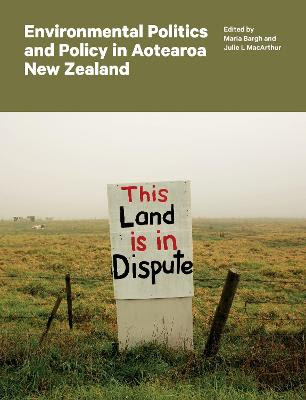
“HOME THEATRE” by Anthony Lapwood (Te Herenga Waka University Press, $NZ30) ; “ENVIRONMENTAL POLITICS AND POLICY IN AOTEAROA NEW ZEALAND” Edited by Maria Bargh and Julie MacArthur (Auckland University Press, $NZ89:99)


There’s a major problem when it comes to reviewing collections of short stories – the reviewer is often tempted to give a string of synopses covering every story, but without making it clear what the overall tone and worth of the collection is. As you may know from some earlier postings on this blog, I’ve often been guilty of doing this.

I can easily avoid the problem by telling you straight away that Anthony Lapwood’s debut collection is at once outstandingly good and often tinged with a sense of melancholy. Rather than dragging you title by title through the whole collection, I’ll begin by looking in detail at what I think is Lapwood’s very finest and most accomplished tale.

The longest story in Home Theatre, “Provided with Eyes, Thou Departest” comes in at just under 50 pages, approaching the length of a novella. It has at once the broad perspective of a novel and the tightness of a short story. Bryce, an unhappy and disillusioned high-school teacher of Biology, is in a state of prolonged grief after the death of his wife. Lapwood does not simply state this fact, but dramatizes Bryce’s grief in terms of the disturbing dreams he has. Not quite nightmarish but deeply upsetting, they convey sheer desolation and the sense of loss; and Lapwood has the skill to weave them seamlessly in and out of the narrative. “Provided with Eyes, Thou Departest” gives a very vivid sense of the high-school, its staffroom gossip and pecking order, and all the irritations of both staff and schoolboys that exacerbate Bryce’s condition. The tale does not leave Bryce in isolation – the physical education teacher, the woman who seems to take a concerned interest in Bryce, the music teacher and the peremptory principal are all clearly characterised. The physical tattiness of both the school environment and Bryce’s urban apartment weigh us down like a bad conscience. Above all this, there is the psychological trauma – almost a nervous breakdown – brought on by Bryce’s awareness that he is gradually forgetting who and what his wife was; and with such thoughts come a crushing sense of loneliness, guilt and alienation from the world. With its fine attention to detail (clearly the fruit of close observation) this story really is a story, a narrative that moves on to unexpected events which are there for the reader to find. I do not think this is merely a good story. With its empathy, precision, tight structure and rich characterisation, it is a great story.

On the strength of “Provided with Eyes, Thou Departest” alone, Lapwood establishes himself as one of our best storytellers. But in saying this, I am not dismissing the other twelve stories that make up Home Theatre. There is much to savour and ponder in them too.

The whole collection has specifically Wellington settings. Most stories are linked in one way or another to a run-down Wellington apartment block  - the “home theatre” of the title - where at least some characters live. Most of them are people in straitened circumstances, people who have come down in the world, people who are desperate and can support themselves only in such a seedy low-rent building. You will note that there are some recurring characters who have a greater or lesser role in some stories. An astronomer from the Carter Observatory, called Ashton, appears a number of times. Some of the shorter stories are more-or-less realistic accounts of people in the apartment – the slacker who wants to work so long as it doesn’t require effort (“Jobs for Dreamers”); the single mother battling with an infestation of ants (“They Always Come for the Sweet Things”); the woman stuck in the apartment building’s clunky old lift (“It’s Been a Long Time”); the nagging that can go on between tenants in an apartment block (“Being Neighbourly”). But, as part of the blurb says, this is a “genre-bending collection”. Lapwood jumps into fantasy as often as he offers hard realism – but his fantasy is not gratuitous. These stories say as much about the human condition as the realist ones do.

Time travel is one element of fantasy, thrust at us in the opening story “The Source of Lightning” in which a time-traveller from the future (self-styled “chrononaut”) is stuck in a time loop in present day Wellington, having to play the same day over and over. This is not a mere riff on Groundhog Day. In fact its ethos is more like the classic film version of Frankenstein, in which repeated images of lightning suggest an energising, vivifying force. Lightning gives light as in the beginning of all things… and this train of thought links the story to another, “The Universe for Beginners”, a non-fantasy story in which a broken family visits an observatory where an exhibition on the Big Bang and Black Holes suggests a symbolic connection with the beginning and outcome of this broken family. Pushing further into fantasy, Lapwood’s eeriest story “The Ether of 1939” is set in a 1930s radio factory which is in what will one day become the tatty apartment block we have already visited. Lapwood is clearly aware of popular pseudo-scientific theories some people still held in the 1930s about radio waves interfering with the “ether”, or even being a medium connecting us with ghosts or the afterlife. That was how miraculous radio seemed to some at the time. But as in “The Source of Lightning” and “The Universe for Beginners”, this is not frivolous. In depicting a man and his environment in 1939, then connecting him with the first story in this collection, Lapwood is making implicit commentary on how mores have changed over more than 80 years.

One element in a number of stories is the homosexual condition. It is suggested in the opening story “The Source of Lightning”. It is understated in the not-quite-fully gay relationship of two young men in “Journey to the Edge”. There is a minor sub-plot about homosexual schoolteachers in “Provided with Eyes, Thou Departest”. But most importantly there is “The Ether of 1939” where a homosexual man in 1939 hears magically, through his radio, voices from the 21st century suggesting how different attitudes towards gay men will be in the future.

And then there are even more perplexing ideas on how we communicate, or don’t communicate, with each other; and how uncertain our perception is. “The Difficult Art of Bargaining” has a deeply-unreliable narrator and suggests a degree of self-deception as much as deception practised on others. “A Spare Room”, one of Lapwood’s most-carefully-structured stories, really shows the total lack of communication between two people who think they are discussing the same issue – on the one side of the desk, the woman asking if she can have a larger apartment; and on the other side of the desk the bureaucrat whose mind is on other things.  As for the story which closes this collection, “Blue Horse Overdrive”, it brings us to territory where the  physical touches upon the psychological. Has the narrator, a rock singer, experienced some sort of hallucination, or has he simply seen objective reality? There is a fruitful ambiguity to this story, where the might of state-of-the-art medical practices (MRI brain scans) are pitted against subjective experience.

Despite my best efforts, I see I’ve lapsed into marching you through every title in the book. Sorry. Pensive, thoughtful and often melancholy as many of these stories are, Anthony Lapwood has created a whole world in this collection, with credible and believable characters even when presented in fantasy, with much room for thought, with close observation of human nature and with a fine sense of structure. An outstanding collection in every respect.

 *.  *.  *.  *.  *.  *.  *.  *.  *.  *.  *.  *.  *.  *.  *.  *.  *.  *  


It sounds like something out of Monty Python to say “and now for something completely different”, but it’s quite a leap to move from a collection of short stories to a textbook for undergraduates on a specialised subject. But here I am moving from Anthony Lapwood’s Home Theatre to Environmental Politics and Policy in Aotearoa New Zealand edited by Maria Bargh and Julie MacArthur. Why did I read this academic work? Because I am interested in environmental matters in terms of sustainability, conservation and the preservation of endangered species. I’m very grateful to Auckland University Press for sending me a copy.

 Environmental Politics and Policy is a symposium of 18 detailed and referenced essays. Some of the essays are by single authors; some are co-written. There are 26 contributors in all, and it is interesting to note that women dominate – to be precise there are 19 women contributors and 7 men. Most of the authors are academics in the fields of law, Maori studies, ecological studies and politics, but some are journalists and activists in the field of conservation. Activism is encouraged. Between essays there a notes on “How to draft a submission”, “How to write a brief policy”, “How to write a press release” and of course “How to organise a protest”.

Without criticising the contents of this book, I do have to admit that reading my way through it over some weeks was a bit of a chore. It wasn’t the style in which it was written – there is not too much academic-speak, though inevitably some specialised vocabulary has to be explained. The trouble was the repetition. The same keys keep getting struck. In essay after essay we are told about the difference between Maori law and customs, and the law as set out by the government and governmental agencies. Repeatedly, too, we are told of the evils of colonialism, which brought the degradation of waterways, quality of land and habitats for indigenous species. Perhaps undergraduates, moving through the text over a whole semester, would not so readily notice the repetition. I, reading it over a few weeks, did notice.

In their introductory essay, the editors Bargh and MacArthur condemn neoliberalism, question “liberal capitalist states”, declare that the text “takes a systemic and holistic view” of the environment [that vague word “holistic” is always a problem for me] and, bowing to the Treaty of Waitangi, tell us that “biculturalism is a foundational aspect of Aotearoa, even while we recognise the multi-ethnic and multi-cultural composition of New Zealand society”. Well and good, except that there is a real tension between a bicultural concept and a multi-cultural reality. Their mode of thinking is reinforced by Professor Margaret Mutu’s essay “Environmental Ideas in Aotearoa” which is basically a primer on Maori words pertaining to legality and power, and which then becomes a polemic about the primacy of Te Tiriti o Waitangi – the Maori language version of the treaty – as the only legitimate version, and that therefore the concept of Maori sovereignty is still valid.

Continuing on the more polemical side of things, Elisabeth Ellis’s “Theorising Environmental Politics” argues that  European traditions – mainly beginning with that villain John Locke – separated nature from humanity and prioritised human needs over the whole environment. Nature itself was undervalued, and viewed as a commodity rather than a Ding an sich. Hence we should return to an indigenous way of being part of nature, and not exploiters of nature. Similar polemical arguments are found in Rod Oram’s essay “Regenerative Economics” which condemns market-driven economics and classic capitalism for ruining the environment; and in Maria Bargh and Tame Malcolm’s “Te Taiao and ‘Biodiversity’ ” which tells us that conservation and protection of species should be based on Maori criteria; and in the co-authored “Social Movements and the Environment”, where capitalism and colonialism are once again the villains and a “masculinist ideology” has driven much of the physical exploitation and degradation of the New Zealand environment. I could quote more essays in this vein, but I think you get the drift.

I’m afraid that at a certain point I find myself asking such questions as – if forms of capitalism, neoliberalism and colonialism are the great polluters, then how do you account for the huge and unchallenged environmental degradation wrought by Marxist states like the old Soviet Union and Mao’s China? I admit at once that this is the sort of Tu Quoque (or Whataboutery) argument which I have condemned before on this blog; and it may well be true that both capitalism and socialism or Marxism have an equally horrendous record in environmental matters. But at the very least I am pointing out that fingering only capitalism and neoliberalism makes for a very lop-sided critique.

And here is a further (and probably more contentious) objection. Repeatedly Environmental Politics and Policy in Aotearoa New Zealand tells us that the environment should be managed in a more pre-colonial and dominantly Maori way. Isn’t this simply an appeal to Arcadianism? Too much history has happened to rescind all the systems we now have relating to the environment. By all means clean the waterways [NB Jacinta Ruru’s essay on freshwater was apparently written before the controversy over “Three Waters” began], restore and de-pollute the wetlands, protect and ensure the proliferation of endemic species – but can you cancel that awful colonialist phenomenon of electricity (and all its generation) that lights and heats our homes? Approximately 5,000,000 people now live in New Zealand. In his essay “Farming and the Environment: The Long Legacy of Colonialism”, Hugh Campbell makes some valid points about the disappearance of forests and the polluting bovine run-off caused by farming. But when he sneers at the old “pastoral hegemony”, is he envisaging another nation-wide system to feed 5,000,000 people? To be curt, pre-colonial methods, catering for a much, much smaller population with distribution limited to small localities, wouldn’t do the trick.

In sum, Environmental Politics and Policy in Aotearoa New Zealand is an enlightening work when it deals with historical and environmental realities, but becomes strident when it pushes an ideology. Janine Hayward’s “Toitu te Whenua: Land, Peoples and Environmental Policies 1840 to 1980” is an excellent and orderly account of the impact of human beings on New Zealand since the 13th century. It looks in detail at the loss of Maori land since the beginning of Pakeha settlement and takes the story up to the foundation of the Waitangi Tribunal. Valentina Dinica’s “Theorising Environmental Policy” is a very methodical work, categorising attributes of environmental problems and categorising the “actors” (interested parties) in framing environmental policies. Dory Reeves’ “Cities and Urban Planning” discusses crisply how urban planning can be harnessed to an environmentally sustainable future. And I don’t think anyone could plausibly refute the essays I haven’t mentioned concerning climate change, the impact of fossil fuels, and the oceanic pollution of plastics.

Long story short? Given that it is aimed at undergraduates, Environmental Politics and Policy in Aotearoa New Zealand will generate much discussion. But I also hope it will generate some challenges and arguments.


Something Old

Not everything worth reading is hot off the press. In this section, we recommend "something old" that is still well worth reading. "Something Old" can mean anything from a venerable and antique classic to a good book first published four or more years ago.     

“SEVEN PILLARS OF WISDOM” by T.E. (Thomas Edward) Lawrence. (Completed 1922; first published in a very limited edition in 1926; first pubic edition 1935)


            Read carefully this paragraph  which opens Chapter 56 of Book Five of T.E. Lawrence’s Seven Pillars of Wisdom:

            Now I had been four months in Arabia continually on the move. In the last four weeks I had ridden fourteen hundred miles by camel, not sparing myself anything to advance the war; but I refused to spend a single superfluous night with my familiar vermin. I wanted a bath, and something with ice in it to drink: to change these clothes, all sticking to my saddle sores in filthiness: to eat something more tractable than green date and camel sinew. I got through again to the Inland Water Transport and talked like Chrysostom. It had no effect so I became vivid. Then, once more, they cut me off. I was growing very vivid, when friendly northern accents from the military exchange floated down the line: ‘It’s no bluidy good, sir, talking to them fookin water boogers.’

I take this paragraph to be typical of T.E. Lawrence’s prose style. There is some hard, sordid reality in the mention of hunger, the saddle sores, the filthy clothes and the vermin. This is credible and probably truthful. But there is also the self-praise and false modesty. He tells us he has ridden fourteen hundred miles “not sparing myself anything to advance the war”, and apparently he is capable of speaking like Chrysostom, although this reference could, like so many of Lawrence’s historical or pseudo-Classical references, be a “camp” joke to please fellow Oxonian readers. But it will serve to impress, as erudition, any of the hoi-polloi who might be reading. As for the hoi-polloi, well, they’re there to be caricatured, aren’t they? I understand that “bloody”, “fucking” and “buggers” were words that would have been difficult to publish in 1926. But Lawrence is signalling the inferior status of the “friendly northern accents” when he purports to report the words as “ ‘It’s no bluidy good, sir, talking to them fookin water boogers.’ ” Our social inferiors are good for comic effect, right? And we can always impress them by using recherche words. Why “vivid” instead of “livid”, by the way?


Seven Pillars of Wisdom by Thomas Edward Lawrence (1888-1935) is a very contested book now. Lieutenant-Colonel T. E. Lawrence apparently took copious notes during his Arabian service in 1917-18 and claimed he had worked them up into a full book by 1920. But, so the story goes, he lost most of this manuscript on a train so he had to begin again. (There is no real evidence that this “lost” manuscript ever existed.) He completed this overlong book in 1922, and allowed a very limited edition to be printed in 1926; but it was not released to the general public. Instead, by 1928, he produced a very much abridged version called Revolt in the Desert, which was published for the general public. The full text of Seven Pillars of Wisdom was published publicly only in 1935, a few months after the 46-year-old Lawrence died in a motorcycle accident. Its title is essentially meaningless, but is the type of title that appealed to Lawrence because it produced a spurious sense of gravitas. It is a quotation from the Biblical Book of Wisdom wherein “Wisdom has built her house on seven pillars”. Lawrence was going to use the title for a planned earlier book, when he was a rookie archaeologist and before he was involved in the war. It was going to be about seven great ancient Middle Eastern cities. That book was never written, so he carried this irrelevant title over to his war book. He tries a little feebly to justify it, as when the last Book of Seven Pillars of Wisdom is called “The House is Perfected”, concerning the capture of Damascus and the defeat of Turkish forces. It baffles me how on Earth anyone, even then, could have considered anything to have been “perfected”, what with the chaos and the endless disputes that followed the taking of Damascus. But, given that Seven Pillars of Wisdom is subtitled  “A Triumph”, Lawrence wanted to give his book a triumphant ending.

With an introductory chapter and then 10 “Books”, Seven Pillars of Wisdom is an unnecessarily long work – running to over 700 pages in the fat de luxe editions, but running to only 560 pages in the 1976 edition I bought years ago: an unabridged edition with smaller print and more lines per page. In his ten “Books”, Lawrence gives a narrative that runs from the first suggestion that an “Arab revolt” could help the British army in fighting the Turks, to the taking of Damascus when the whole war was nearly over. In between there are Books on blowing up railway lines (especially Books 3 and 8); the taking of Aqaba in Book 4; a campaign using Arabs around the Dead Sea, which was ordered by the British General Edmund Allenby, in Book 7; and the way Lawrence’s Arabs were largely used as a diversion when Allenby’s regular forces advanced in Books 8 and 9. One gets used to Lawrence’s sometimes eccentric – or archaic – spelling. Aqaba is “Akaba”, Bedouins are “Beduins” and Beirut is “Beyrout”. But these might have been standard spellings at the time.

Now why am I examining this particular book?

Because, as so often with these “Something Old” sections of my blog, it has sat unread on my shelves for years and I decided finally that I should either crack it or throw it out.

In Lawrence’s lifetime, Seven Pillars of Wisdom was praised by the likes of George Bernard Shaw, E. M. Forster, Robert Graves and Winston Churchill as a true epic bound to become a classic. But it is very hard to see it in those terms now, not only because of Lawrence’s strained and pompous language, often indulging in unnecessary archaisms, but because of the way history has shown us that we now have to interpret very differently the political, social and nationalist topics that Lawrence touches upon. And we are more aware of Lawrence’s curious temperament and often his economy with the truth.

One major problem is Lawrence’s deeply-embedded racism. We are aware that many of his characterisations of other ethnicities were simply the standard attitudes of Europeans at the time he was writing. Even so, Lawrence’s racial prejudices are so strong that they distort his whole attitude towards the events he claims to be reporting. One lesser prejudice – but still notable – is his typically English dismissive attitude towards the French, as drawn in his dealings with the French Colonel Bremond, where he says that “the two races worked ill together on a great undertaking” (Book 2, Chapter 21); or where he blames the French and their military supremo Foch for the static trench warfare and its meat-grinder in Europe’s Western Front, claiming this “would not represent the British attitude” (Book 3, Chapter 33) – a rather clumsy way of extricating England from its own complicity in the nature of the war.

More pervasive, however, are his frequent slurs on non-Europeans. Syrians are “an ape-like people having much of the Japanese quickness, but shallow” (Introductory Book, Chapter 4). He claims that half of Turkish prisoners taken by British forces had “unnaturally acquired venereal disease” and were habitual buggers (Introductory Book, Chapter 6). He tells us gleefully that many solitary Arab shepherds “turned dangerously savage, more animal than man, haunting the flocks, and finding the satisfaction of their adult appetites in them, to the exclusion of more licit affections.” (Book 3, Chapter 34). His general characterisation of the Bedouins [the very people he is supposedly helping to liberate from Turkish rule] is very dismissive: “They are absolute slaves to their appetite, with no stamina of mind, drunkards for coffee, milk or water, gluttons for stewed meat, shameless beggars of tobacco…. Their strength was the strength of men geographically beyond temptation…If forced into civilised life they would have succumbed like any savage race to its diseases, meanness, luxury, cruelty, crooked dealing, artifice; and like savages, they would have suffered them exaggeratedly for lack of inoculation.” (Book 3, Chapter 37). He encounters a Syrian and characterises him as being “of the queasy Syrian race; jealous; hostile to merit, or to its acknowledgement”. (Book 4, Chapter 40). In Book Five, Chapter 58, Lawrence classifies all the tribes and ethnicities of the Middle East, speaking contemptuously of some of them.

Most notorious, however, is his rant about black Africans in Book 3, Chapter 29, where he writes “Something hurtful to my pride, disagreeable, rose at the sight of these lower forms of life. Their existence struck a servile reflection upon our human kind: the style in which a God would look on us; and to make use of them, to lie under an avoidable obligation to them, seemed to me shameful. It was as with the negroes, tom-tom playing themselves to red madness each night under the ridge. Their faces, being clearly different from our own, were tolerable; but it hurt that they should possess exact counterparts of all our bodies.” This is effectively a refusal to accept Africans as fellow human beings; and Lawrence’s statement that it “hurt” him to know Africans shared the same biological reality with Europeans shows us the depth of his neuroses. [For the record, the African-American novelist James Baldwin quoted these phrases – with justifiable disgust - in his long essay about American movies The Devil Finds Work]. In spite of his pretensions to be liberating Arabs, Lawrence still speaks in the voice of an imperialist, basically seeing all non-European tribes and peoples as his inferiors. Perhaps one could read the same dismissiveness into a sequence (Book 5, Chapter 63) where Lawrence claims to have had an epiphany as he listens to an old Arab man praise the love of God, and Lawrence reacts with surprise that an Arab can relate God with love. The narrowness of his vision has deprived him of the awareness that other peoples have systems of thought and belief as complex as his own.

If chronic racism turns this book into a museum piece rather than a living text, we are also aware of a strong strain of bad faith in Lawrence’s writing. In May 1916, before Lawrence was involved in his Arabian campaign, English and French diplomats has signed a secret agreement commonly known as the Sykes-Picot agreement. The agreement was ratified by cabinet ministers of the English and French governments. It set out the two countries’ real war aims in the Middle East. France would control Lebanon and Syria while England would control Palestine and all of Arabia, allowing Britain to take all the oil which it sought. (Tsarist) Russia was also promised some spoils by the agreement. The idea of Arab independence was not on the cards. This secret agreement was first made public at the end of 1917 by Russia’s new Soviet government, who hoped to embarrass the Western allies. Although he repeatedly denies it, Lawrence was fully aware of the Sykes-Picot agreement before he even began on his enterprise of stirring the Arabs into revolt. In other words, he was aware, even as he was inciting his Arab forces to fight for their liberation, that England and France already had in place their scheme to carve up the Middle East between them.

At various points in Seven Pillars of Wisdom, Lawrence rather unconvincingly pleads his innocence. His Introductory Chapter claims “We lived many lives in those whirling campaigns, never sparing ourselves: yet when we achieved and the new world dawned, the old men came out again and took our victory to re-make the likeness of the former world they knew.” But remember, this is an ex post facto claim, written after the Treaty of Versailles had been signed. Lawrence claims to have believed that “the vigour of the Arab Movement would prevent the creation – by us or others – in Western Asia of unduly ‘colonial’ schemes of exploitation.” (Book 2, Chapter 21). In Book 4, Chapter 48 he shows that he was fully aware of “a treaty… by which France, England and Russia agreed to annex…. promised areas [i.e. areas promised to the Arabs] and to establish their respective spheres of influence over the rest…. I could see that if we won the war the promises to the Arabs were dead paper. Had I been an honourable adviser I would have sent my men home, and not let them risk their lives.” But he then claims “In revenge I vowed to make the Arab Revolt the engine of its own success… and vowed to lead it so madly in the final victory that expediency should counsel to the Powers a fair settlement of the Arabs’ moral claims.” So, he ingeniously claims “the issue of the fraud was beside the point.” In Book 6, Chapter 81 he manages to block out the reality of what he is doing so that he can pretend he is not working in the interests of British (and French) colonialism:  When necessary, I had done my share of proselytizing fatigues, converting as best I could; conscious all the time of my strangeness, and of the incongruity of an alien’s advocating national liberty. The war for me was a struggle to side-track thought, to get into the people’s attitude of accepting the revolt naturally and trustingly.  I had to persuade myself that the British Government could really keep the spirit of its promises.” He admits his military failures at the end of Book 7, Chapter 90, adding how fatigued he was by “the rankling fraudulence which had to be my mind’s habit: that pretence to lead the national uprising of another race, the daily posturing in alien dress: with behind it a sense that the ‘promises’ on which the Arabs worked were worth what their armed strength would be when the moment of fulfilment came. We had deluded  ourselves that perhaps peace might find the Arabs able, unhelped and untaught, to defend themselves with paper tools. Meanwhile we glozed our fraud by conducting their necessary war purely and cheaply.” One discovers that much of Book 9 is taken up with his misgivings and disillusion, frequently seeing himself as a fraud… and by this stage in his stretched narrative admitting that the war against the Turks was overwhelmingly won by the regular British and Commonwealth armies, and not by his small and relatively peripheral Arab force. “Among the Arabs I was the disillusioned, the sceptic, who envied their cheap belief,” he says in Book 9, Chapter 99. “Yet I cannot put down my acquiescence in the Arab fraud to weakness of character or native hypocrisy: though of course I must have had some tendency, some aptitude for deceit, or I would not have deceived men so well, and persisted two years in bringing to success a deceit which others had framed and set afoot,” he says in Book 9, Chapter 100.

Much of this reads as public breast-beating, to absolve himself from the fact of having knowingly misled his Arab followers with an idea of Arab independence which he knew would not be fulfilled. 


If his deep racism and his bad faith are what most alienate the modern reader from Seven Pillars of Wisdom, there are other major problems. Lawrence has a tendency to praise himself while pretending to be modest – “backing into the limelight” in effect. A typical example is at the end of Book 7, Chapter 86, where he is talking about a skirmish which he and his forces had won: “Headquarters loved it, and innocently, to crown the jest, offered me a decoration on the strength of it. We should have more bright breasts in the army if each man was able without witnesses, to write out his own despatch.” Note how he brushes off as a “jest” having been given a medal, the better to show how little he cared for decorations… but [his real aim] he has still told us that he won a medal.

With one exception, there is little real humour in Seven Pillars of Wisdom, apart from accounts of crude horseplay and Lawrence’s joshing with Arab troops. The exception is in Book 6, Chapter 78 where Lawrence tells us that he failed to blow up a train and then had to stay in place, pretending to be an Arab peasant and in full sight, as the train rolled past him with Turks waving in a friendly way as they passed, rather than shooting him. Yes, it is funny although of course it is also self-praising – here is Lawrence the Englishman with his sang froid, stoically riding out the moment when he should have been a sitting duck.

Or did he so behave? For there are many stories he tells that sound very like fiction. Take the very implausible tale he spins in Book 4, Chapter 53 of somersaulting over his camel in the midst of a skirmish and lying calmly where he fell, reciting a poem. Sometimes, too, he appears to tell a detailed story to disguise a failure. In Book 2 Chapter 26, he tells us of the impressive column of various tribes he had assembled, all swearing fealty to Feisal, the man whom he had picked out as the most capable leader of a potential Arab revolt; but he uses this event – the gathering of the tribes -  to make excuses for arriving late to what was supposed to be a combined operation with the navy against the Turks. Because Lawrence’s contingent was late and did not turn up to the confrontation, the whole enterprise was carried out by the navy on its own. The reader is also often aware of how “performative” [to use a modern term] is so much that Lawrence narrates. He tells the story of how, in order to prevent a blood feud,  he had to kill an Arab who had killed somebody from another tribe [this episode was played up in David Lean’s often purely fictitious film Lawrence of Arabia]. But read Lawrence’s account of this execution (last paragraph of Book 3, Chapter 21) and you see he concentrates on himself and his feelings – a piece of sheer theatricality.

Warfare is always a bloody affair and always involves violence and murder. It is certainly true that, in the Middle East in the First World War, Turkish forces committed atrocities. Lawrence records one in Book 4 Chapter 52, where Turks cut the throats of old men, women and children whom they found in an otherwise deserted village. The problem is, though, that there is a distinct element of sadism in some of Lawrence’s own actions, involving what amount to atrocities in two cases. In Book 4, Chapter 51 he writes in a flippant tone about allowing the mutilation of a herding boy, who might have given the alarm to the Turks, when his men crossed the boy’s fields. He does nothing to restrain the Arabs, who are presumably under his leadership, when they massacre men and women after a train has been derailed. (Book 5, Chapter 66) Most egregiously in one case he personally permitted the killing of prisoners. Taking a Turkish position “by my order, we took no prisoners, for the only time in our war.” (Book 10, Chapter 117). Early in Seven Pillars of Wisdom, Lawrence remarks “I hated responsibility… in all my life objects had been gladder to me than persons, and ideas than objects”. (Book 2, Chapter 17). Doesn’t this at once suggest somebody indifferent to other people?

And now we come to the element in this narrative which makes elderly colonels harrumph and get angry at the thought that such matters should be mentioned in relation to that great icon Lawrence of Arabia. It is quite clear that Lawrence’s sexual tendencies were homosexual – a matter in itself which should no longer be seen as a moral fault. I do not write this as a matter of idle speculation. I am here considering what Lawrence’s own text either says or implies. And in considering his sexual orientation, I can only conclude that in Lawrence’s particular case his homosexuality also involved a degree of paedophilia and certainly some sadomasochism. Readers of Seven Pillars of Wisdom will know that it is prefaced by a poem (actually a prose statement by Lawrence teased into a “poem” by Robert Graves). The “poem” is addressed to “S.A.” who has almost certainly been identified as the adolescent Arab boy Selim Ahmed who was part of Lawrence’s Arab entourage. Consider if you will the lines “Love, the way-weary, groped to your body, / Our brief wage / Ours for the moment.” I won’t insult you by spelling out what this means.

Lawrence has a predilection for telling us about the homosexual habits of young Arab men. In Book 1, Chapter 1 Lawrence refers to Arabs who refuse to use “public women” to slake their lust “our youths began indifferently to slake one another’s few needs in their own clean bodies… Later, some began to justify this sterile process, and swore that friends quivering together in the yielding sand with intimate hot limbs in supreme embrace, found there hidden in the darkness a sensual co-efficient of the mental passion which was welding our souls and spirits in one flaming effort.” Note their male bodies are “clean” as opposed to the bodies of women. And again, do I really have to spell out the meaning of “supreme embrace”?

In Book 4, Chapter 40, Lawrence speaks of two young Arabs in his entourage thus: “They were an instance of the eastern boy and boy affection which the segregation of women made inevitable. Such friendships often led to manly loves of a depth and force beyond our flesh-steeped conceit. When innocent, they were hot and unashamed. If sexuality entered, they passed into a give and take, unspiritual relation, like marriage.” So obviously, selon Lawrence,  marriage (between men and women) is less spiritual than – and therefore inferior to – relationships between men.

As for sadomasochism, consider Book 6, Chapter 80. It gives a detailed account of Lawrence, caught out in a spying mission, being tortured and nearly raped by a Turkish Bey and his men. Lawrence does not say that he was anally raped. That was something he claimed privately in a letter to George Bernard Shaw’s wife, but obviously he decided to keep this detail from readers of Seven Pillars of Wisdom. Even so, there is an odd sadomasochist twist to this chapter. He says he was kicked, beaten and otherwise tortured. But when a corporal had him down and kicked him “I remembered smiling at him, for a delicious warmth, probably sexual, was swelling through me; and then he flung up his arm and hacked with the full length of his whip into my groin.” Getting an erection while being beaten up - isn’t this almost a textbook example of sadomasochism?

It would take a psychiatrist to unpick all the curious kinks there were in Lawrence’s psyche. There is a curious dichotomy in him of “purity” and willed degradation, and despite his masochistic tendencies he had a curious horror of being touched. As he says in Book 8 Chapter 97: “When combats came to the physical, bare hand against hand, I was finished. The disgust of being touched revolted me more than the thought of death and defeat: perhaps because one such terrible struggle in my youth had given me an enduring fear of contact: or because I so reverenced my wits and despised my body that I would not be beholden to the second for the life of the first.”

By now, if you are not yet asleep, you will note that I have marked T.E.Lawrence as a racist, a man working in bad faith, a boaster pretending to modesty, a potential sadist and a man with a deeply-troubling sexual identity. But before you cry “foul”, please note that I am drawing all these conclusions from Lawrence’s own words. If you wish to dispute what I’ve said, then I invite you to read all of Seven Pillars of Wisdom yourself and check the evidence, tedious though reading the book is.

Yet after the aforementioned things I have said, I still acknowledge that, for all his flaws and probable untruths, Lawrence did achieve something and did help create a force that had a small but interesting part in the defeat of what remained of the Turkish Empire. Bear in mind too that in 1917-18, when all his interactions with Arabs took place, he was only in his late twenties. It is extraordinary that such a young man and a foreigner was able to gather together the Arab force he did.

It is fair to notice, too, that he does not praise only himself. He acknowledges other people involved in the war in the Middle East. In early sections of the book, he thanks many British officials and soldiers who formulated the idea of an Arab revolt before he was involved in it, and he does note that the strategy of blowing up Turkish railway lines was already in place before he himself adopted that strategy. In Book 5 he gives credit to two sergeants, an Australian called Lewis and an Englishman called Stokes, for their major role in an attack on a Turkish train. And especially in Book 5, Chapters 60 and 61 he gives accounts of other explosives experts who contributed to disrupting Turkish lines of supply. He also shows awareness that the war in the Middle East was won by British and Commonwealth troops, especially in the last book, Book 10. Lawrence’s Arab followers did sabotage work in the later stages of the war (cutting telegraph wires; blowing up bridges) but they were merely auxiliaries to Allenby’s forces, and RFC aircraft carried out the most important bombing raids. Nearly always, he speaks in admiring terms of General Allenby, although this may have been in the interests of getting approval for his work. (Allenby was still very much alive when Seven Pillars of Wisdom was published. He died in 1936, one year after Lawrence died.) In Book 6, Chapter 81, Lawrence says that for him, Allenby’s entering the Jaffa Gate (in Jerusalem) “for me was the supreme moment of the war.” In Book 5, Chapter 56, Lawrence writes a positive assessment of Allenby when he met first him, though he does interestingly admit that in assessing Lawrence “Allenby could not make out how much [I was ] was genuine performer and how much charlatan.” Many others have had the same uncertainty about Lawrence ever since.

Also, despite all his evasions and literary dandyism, he does produce some convincing reportage of travel, as in the account of a hard desert journey (Book 4, Chapter 42); or the sequence, on the road to Aqaba, of eating greasy rice, freshly-killed onyx and antelope flesh (Book 4, Chapter 46). Likewise, he does note some of his military failures, especially in Book 6 (“The Raid Upon the Bridges”) where he focuses on a failed attempt to blow up bridges that would have prevented any tactical Turkish retreat and that would have allowed Allenby’s forces to trap the Turks earlier. And, perhaps most refreshing of all, in Book 4 he does admit that the taking of Aqaba was essentially a walk-in upon a small Turkish garrison - quite unlike the heroic image of an Arab horde galloping from the desert to the sea, as seen in David Lean’s spectacular movie.

How does history now judge Lawrence’s actions? Ambiguously, I would say. In some ways he was courageous, in others devious and disingenuous. With regard to the historical results of his actions, it is hard to see that he improved the Middle East in any way. As for Seven Pillars of Wisdom itself, it is no classic but a document of its time whose historical truths have to be picked out from a mess of pretentious prose, much obfuscation, a muddled and overlong narrative, and the author’s sense of self-importance.

I wish you luck if you try to read it.


Something Thoughtful

 Nicholas Reid reflects in essay form on general matters and ideas related to literature, history, popular culture and the arts, or just life in general. You are free to agree or disagree with him.

                                       FINGS AIN’T WOT THEY USE’TA BE


32 years ago, we moved into the suburban house where we still live. It’s a two-storey house with a very high gable, and big enough to accommodate our larger-than-average family. But there were two things we didn’t like about it.

One was the fact that an open balcony allowed rainwater to drip into the dining room below – so we promptly had the balcony covered by a glass structure which turned it into a conservatory.

The other problem was the dark olive-green colour in which the house was painted, and the fact that the house clearly hadn’t been painted for many years. Paint had peeled off and you could see the original primer in some places. So my plucky wife and plucky I set about painting it – first the sanding, then the priming, then first coat followed by second coat. At my age now, it amazes me that we did all this, especially as we spent half the time balancing perilously on extension-ladders with a big drop beneath us. But despite painting the upper storey, we simply could not reach the very high gable, so there remained a tatty dark olive-green patch at the very top. Otherwise, we had transformed the house with a very much paler green paint.

About fifteen years ago, we decided it was time to paint the house again, but this time we knew we were no longer cut out for balancing on long ladders. We paid to have the house water-blasted, then we painted the lower storey. But for the upper storey we hired professional painters. Unlike us, they could reach the apex, so the last trace of dark olive green was obliterated. But these professionals still relied on long extension ladders to reach the heights, with much skilful balancing and daring feats of reaching as far as a ladder-borne arm could reach. We were glad not to be up there.

This year, we decided it was time to have the house repainted again, always choosing the same pale green tint that we chose 32 years ago. And here it proves that fings ain’t wot that use’ta be. Under current health and safety laws, painters can no longer balance on long ladders to paint upper storeys. Scaffolding has to be used. So after the water-blasting and before two professional painters arrived, in came a crew of scaffolding men who surrounded the house on all sides with heavy scaffolding.

I won’t say it was exactly like a siege, but when I looked out my study windows I could see new elevated walkways just below my nose. We had to carefully manoeuvre our way between heavy piping to get through both back and front doors. This was particularly tricky when coming home at night. As for our elderly cat, now teetering on the edge of feline senility, she went berserk, meowing even more pitifully than she usually does these days, at the sight of her house being deformed by this additional structure. One day she ran away. The next day she was seen sneaking along the fence-line in the back yard and looking suspiciously at the house that was not as it should be. Finally she settled for spending whole days squeezed behind an armchair in my study, her favourite skulking place when there is an electrical storm. She had somewhere to block out the thought of this horrible domicile transformation.

The painters did an excellent job. The exterior of the house has been renewed. We haven’t yet decided if we will ever have it painted again. The scaffolding was taken down in remarkably short time – but a very large part of the bill we paid went on the scaffolding. I’m still teetering on a mental ladder, trying to balance current safety rules against the additional costs that they require. But I suppose house painters don’t deserve to die of falls.